The word the Japanese use for work is shigoto, ; literally a service done to others. But shigoto is more than a service; his work, his craft defined the person himself. The craft demanded dedication and focus. The values of shigoto are represented in the profession of the warrior; the word samurai itself means “servant”. The samurai spirit informs all craft, from ikebana, to sweeping the streets, to running the state.
Shigoto is profoundly spiritual, a matter of conscience. Hence, Japanese are proud if their work contributes to someone else’s, and ashamed if it doesn’t.
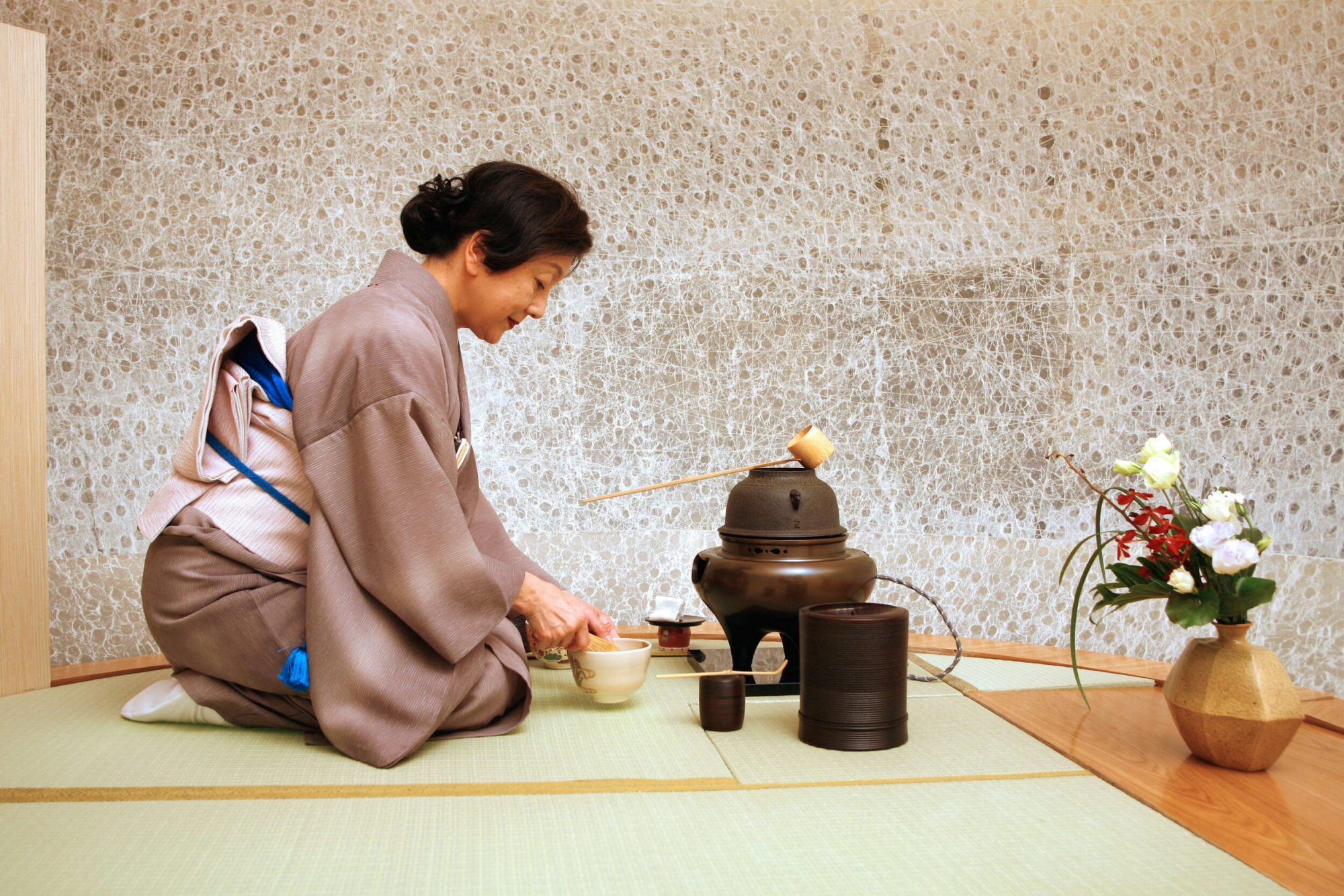
Shigoto is rooted in quality. In the sense given to it by this fascinating culture, quality comes from meditative practice, exemplified by the tea ceremony. Calm and elegant, this simple art takes years to master. You learn to choose utensils and tea, to move with precision and decisiveness, and to contemplate.

Sociologists say that Japanese culture has been changing, with the lifting of lifetime employment and the prevalence of hikikomori — young Japanese who refuse to work — but the basic value is still shigoto. And we still see it in Japanese products. And especially in certain Japanese films, which I think we don’t watch enough of.
The Japanese show us the close connection between service, personhood, and morality. Work as we Filipinos understand it, doesn’t define Japanese culture. What defines it is quality service.
But what is quality? And how does one achieve it in daily life?
Quality is a central and foundational concept in a book that has become a bestseller: Robert Pirsig‘s Zen and the Art of Motorcycle Maintenance. Pirsig seeks to define Quality throughout the book, but says it defies definition in the traditional sense.
Pirsig begins by distinguishing between two types of Quality: Classical and Romantic. Classical Quality pertains to the underlying form or function of a thing; it’s the logical, analytical understanding of how something works. Romantic Quality, on the other hand, relates to the immediate, surface perception of a thing; it’s the intuitive, emotional response to something.
However, as the story progresses, Quality transcends these initial categories to become a metaphysical concept, something beyond the classical and romantic perspectives. Pirsig says that Quality is the “knife edge” of experience, existing before the division into subject and object or observer and observed. He describes it as an event that happens in the present, in response to the environment around us. It’s not something that can be measured or quantified, but rather it’s something to be experienced.
What I found interesting was Pirsig’s insight that Quality, in its most profound sense, is not derived from anything. It’s not a product of the mind or the senses. Instead, Quality is the source of everything. It’s the pre-intellectual awareness, the immediate contact with reality before it’s processed by our conscious and rational mind.
I immediately thought about Aristotle’s (384-322 B.C) act of being.
The Aristotelian concept of act of being is rooted in his metaphysical distinction between potentiality (what he called potentia or dynamis) and actuality (act or energeia).
Let’s break these concepts down to simpler terms:
- Potentiality: This refers to what something could potentially be or become. It’s the capacity or possibility within a thing that’s not yet actualized. For example, an acorn has the potentiality to become an oak tree, or a child has the potentiality to become an adult.
- Actuality: This refers to the realized state of a thing – when its potentiality has been actualized. When an acorn grows into an oak tree, it has actualized its potentiality. Similarly, when a child grows into an adult, it’s actualizing its potential.
Aristotle’s “Act of Being,” then, refers to the process or state of actualizing potentiality – of becoming what something can become. He saw everything in the universe as being in a state of movement from potentiality to actuality.
To illustrate, consider a block of marble. This block has the potentiality (potentia) to be sculpted into a statue. The artist, through their skill and effort, can actualize this potentiality, turning the block of marble into a statue. This transformation from potentiality to actuality is the Act of Being.
In humans, the Act of Being can be understood in terms of personal growth and development. A person has the potential to learn a new skill, like playing the piano. When they practice and eventually master this skill, they are actualizing this potentiality. The process of learning and mastering the piano – of turning the potentiality into actuality – is their Act of Being.
But the Act of Being is more than just perfecting a skill to actualize a potential. Mastery only brings us farther but never to reach the end. It would seem that this end was not mere potency, but something able to draw us to it. This drawing is “participation”, a concept developed by St. Thomas Aquinas.
St. Thomas Aquinas (1225-1274), a prominent theologian and a student of Aristotelian philosophy, developed a metaphysical framework around the concept of participation in the act of being, to refer to the relationship between God and His creation.
Aquinas viewed God as the ultimate source of existence or being itself. God doesn’t just exist, God is existence. In this sense, God is “Pure Act,” a term Aquinas uses to describe God’s absolute actuality, meaning He is completely and fully actualized, without any potentiality.
Aquinas’ idea of “participation” refers to how creatures, or all created things, share in God’s existence or being. Unlike God who is “Pure Act” and whose essence is to exist, created beings have a received existence, which means their existence is contingent, or dependent, and not necessary.
So, when Aquinas talks about “participation in the act of being,” he means that all creatures, in some way, partake or share in the being of God. The act of being of any creature is a limited, participated form of God’s infinite act of being. In other words, creatures don’t have existence in and of themselves; they derive their existence from God and continue to exist by continually participating in God’s existence.
To make this easier to understand, let’s use an analogy. Imagine the sun as God and its rays as creatures. The sun generates light and heat on its own – it’s the source. The sunrays don’t generate light or heat themselves, but they carry or participate in the sun’s light and heat. Similarly, God is the source of existence, and all created beings participate in this existence.
This view integrates the Aristotelian concept of “act of being” with the Christian theological concept of creation. It provides a philosophical explanation of how creation emerges from and continues to depend on God.
I think it is also what gives the craftsman hope that his practice will lead to further and further improvement. At every stage he participates more in the divine perfection (without ever reaching it). In a way that was hard for Pirsig, or anyone, to describe, you can just feel that some objects are of very high quality. Something in the worker brought this object closer to perfection, and it has nothing to do with the external appearance of the object. Or else, Pirsig would have been able to measure quality.
But because it is felt, not all men feel it. We’re like cups made at different sizes. The bigger ones can capture more, the smaller less, even if they are both full. In other words, an untrained mind cannot put more into itself. Training increases the size, and that’s how a trained man can detect quality where a novice can’t. A trained man knows in an instant that a painting is bad, even one that a less trained man might spend millions to buy.
Nonetheless, Pirsig tries to tell us how to perceive quality right now, enough perhaps to deeply enjoy a beautiful IG photo.
To achieve Quality in one’s life, one must learn to perceive it, to be open to it, and to respond to it. Pirsig suggests that this requires a balance of logic and intuition. On one hand, we must be aware of the underlying structures and mechanisms that make things work (classical). On the other hand, we must be in touch with our immediate, sensory, and emotional experiences (romantic). It’s the dynamic interplay between these two perspectives that allows us to engage with Quality.
The practice of mindfulness is also a way to cultivate the perception of Quality. It would seem that outside events and internal emotions can cloud our vision of quality, hence museums are quiet places. Mindfulness emphasizes direct, unmediated experience, which aligns with Pirsig’s understanding of Quality. The practice of meditation can help one to quiet the rational mind and open up to the direct experience of Quality.
An dedicated, attentive engagement with one’s experiences increases Quality in our life. Activities such as careful craftsmanship, focused and mindful learning, attentive relationships, or meditative practices, and my favorite — exercising without headphones. The key is to be present and responsive to the Quality that emerges in each moment.
Do you have a craft? Love it for its own sake; study, practice, experiment, innovate: these are the path to Quality. Are you a writer? Write 2000 words everyday. To achieve quality you will have to fail. A lot.
Mix seriousness and playfulness.
(Calamba, 230720)
 jaylazzo
Great realizations! 👏🏼👏🏼👏🏼
LikeLike