I remember this song by American singer-songwriter Michael Johnson (1944-2017), I’ll Always Love You. The bridge goes:
Time like a river keeps on
Michael Johnson, “I’ll Always Love You” (1979)
Rollin’ right on by
Nothing left for me to do
So I watch the river rise?
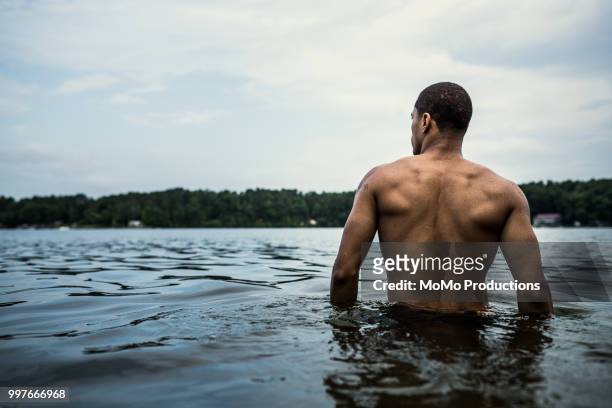
I imagine myself standing about waist-deep in this river of time, facing downstream. The past flows away in front of me, the future arrives from behind me. I think it’s better to think of the future as coming from behind rather than arriving from the front, which would mean you could see what’s coming. In my analogy I can only guess what the river will bring, but I don’t see it.

So, what arrives? Everything. Every event, success or failure, everything anyone tells you, whether to your face or behind you. Every mistake, embarrassing act, bad investment. The consequences of decisions. One by one they roll right on by…
Then make their way to the sea, to disappear forever.
That is, they don’t matter in the end. Only one thing matters.
The one who stands in the river. He or she possess one thing: character. All the events that rolled on by matter in whether and how it changes character. I would like that these events build my character, but some events will damage it. I get to decide in the present and only in the present what will it be.
Only character remains. Every success, failure, accomplishment, every kind or abusive word anyone has ever said against me, every awesome thing I did and every shameful thing I did or was done to me, every award I receive — disappear forever.
What about decisions I make in the present? Do they affect what arrives? Yes, but we have have to put some perspective to this. We saw that the decisions we make matter in how they change our character. All the other effects don’t, but decisions today can affect what will arrive tomorrow.
Future events do result from present decisions. But there are different ways of looking at this. Obviously, if I cut into a stone to make a statue, all the future possibilities of the stone are constrained by that cut and then further limited by subsequent cuts. Still, the lasting value of a statue is how sculpting it and then contemplating it made you a better person; the statue itself will crumble to dust.
Here’s another way it happens. A man chose to become a doctor 20 years ago and thinks this is the cause of his becoming rich today. It is ONE cause, and as a profession and vocation, the decision constrained subsequent cuts. But that decision to take medicine is not the only cause specifically for his wealth. Most of our explanations for how things came to be are fantasy. In any case, what matters to the doctor is whether is profession made him a better man. All other accomplishments will disappear.
What about death? When a man dies, he is as it were taken out of the river, out of time into eternity. From which he has a view of the entire river. But he doesn’t possess the river, only his character. If his character is good, then he will be gladdened by the sight. If he lived a bad life and destroyed his character, he still sees the river, but won’t stand the sight of it.
This view of things is very practical. I have a major presentation coming up next week. I will either kill it, or be killed. These things used to make me anxious. Still do. But I know that whatever happens will sooner or later be lost at sea. This presentation and the reviews I get will matter only in whether they will make me a better person. Besides, that presentation is only one of many other events that will arrive. I have to approach each one as a chance to make me a better person.
Bad reviews, by the way, are like mud and debris. One has to capture it, enjoy it all, because there’s gold there. You’ll probably need to process a lot of mud to get enough gold to make you rich. The point is: don’t delay facing danger.

Johnson is best known for the song Bluer Than Blue (1973).
(Q.C., 240106)
 jaylazzo

Great essay! The lyrics of those 2 songs by M. Jackson put me a big smile on my face! 💋💋 Good luck your presentation next week! 😊🥰😍
LikeLike