An anecdote is told about former U.S. President Bill Clinton, often cited as a charismatic leader. This incident happened at a White House Correspondents’ Dinner.
During dinner, a journalist had a brief opportunity to speak with President Clinton. The room was filled with hundreds of people all engaging in various conversations, with the background noise almost deafening. Yet, when the journalist started speaking with Clinton, he noticed something remarkable. Despite the hustle and bustle of the event, Clinton gave him his complete, undivided attention. Clinton didn’t glance around the room, didn’t look over the journalist’s shoulder for the next person to talk to, and didn’t interrupt. He simply listened.
The journalist later reported that he felt like he was the only person in the room during that conversation. He was deeply impressed and influenced by Clinton’s ability to block out all other distractions and focus completely on their conversation.
By focusing on one thing at a time – in this case, a conversation – Clinton was able to make the person he was speaking with feel seen, heard, and important. This is a crucial aspect of charisma, and it demonstrates the wisdom of the advice, “If you listen, listen.” Doing one thing at a time and doing it completely can have a profound impact on how others perceive us.
#2 Make decisions, stick to them, and take responsibility for them One compelling anecdote is the story of Apple’s late CEO, Steve Jobs regarding the development of the iPhone.
Jobs, with his talent for predicting what consumers would want before they knew it themselves, decided in the early 2000s that Apple would enter the mobile phone industry. This decision was met with considerable skepticism, both internally and externally. After all, Apple was a computer company, not a telecommunications company. The mobile phone industry was already crowded, and it was dominated by giants like Nokia and Motorola.
Jobs, however, had a vision. He didn’t just want to create another phone; he wanted to create a phone that would revolutionize the industry.
Jobs stuck with his decision, in spite of the numerous challenges the team faced during the development phase. These ranged from technical issues (like creating a touch-screen interface that could handle multiple points of contact), to design obstacles (like crafting a device that was sleek and user-friendly). There were numerous times when the entire project could have been scrapped, but Jobs held firm.
When the iPhone was launched in 2007, it was far from perfect. Yet, instead of shirking responsibility for the device’s flaws, Jobs acknowledged them and promised improvements. Over time, the iPhone was refined and it ultimately reshaped the mobile industry, solidifying Apple’s place as a leading innovator in tech.
Jobs’ decision, his persistence in the face of adversity, and his willingness to take responsibility for the end product are all testament to his charismatic leadership. He demonstrated the power of decisiveness, commitment, and accountability, all crucial qualities for those who aim to lead and inspire others.
#3 Listen first, speak later Consider the example of Alan Mulally, the former CEO of Ford Motor Company.
When Mulally took over as CEO in 2006, Ford was in serious trouble. They had lost market share and were facing losses amounting to billions of dollars. Mulally, however, didn’t rush in with immediate solutions. Instead, he took the time to listen and understand the problems from the inside out.
One of the first things he implemented was a weekly meeting with all the top executives. Rather than leading with his own opinions, he encouraged every executive to share their insights and problems. These meetings were designed to give everyone a voice and to facilitate open, honest communication.
One notable anecdote from this period is a story involving Mark Fields, who later succeeded Mulally as CEO. In one of these meetings, when all the other executives were claiming that everything was going well in their divisions, Fields admitted that a launch of a new model had to be delayed because of serious issues. Instead of criticizing Fields for the delay, Mulally applauded him for having the courage to be honest and transparent about the problem.
By creating an atmosphere where people felt safe to voice their concerns and problems, Mulally was able to gather a clear, unfiltered understanding of what was happening at Ford. This informed his strategic decisions, which included focusing on the Ford brand and selling off other brands like Jaguar and Aston Martin.
These measures ultimately led to a successful turnaround at Ford. Mulally’s approach demonstrates the power of listening before speaking. His leadership helped create an environment of trust and openness, which are crucial for the success of any organization.
#4 Speak low, walk slow A clear example is former U.S. President Barack Obama. Known for his charismatic presence, Obama has a distinctive speaking style that includes slow, thoughtful delivery and regular pauses.
During his 2008 presidential campaign and subsequent terms in office, Obama became known for his ability to inspire and influence through his speeches. One reason for his effectiveness as a speaker is his deliberative pace. Obama often pauses between sentences and even in the middle of sentences, giving weight to his words and allowing his audience time to absorb his message.
Consider his speech on the night of his election victory in 2008. He delivered a profound, impactful message that resonated deeply with the American public and the world at large. Yet, he did not rush through his words. Instead, he used measured, unhurried speech, which amplified the power and resonance of his message.
Similarly, Obama’s movements and body language typically exude a calm, collected demeanor. His stride is confident and unhurried, whether he’s walking on stage for a speech or disembarking from Air Force One. This measured physical presence complements his speaking style and contributes to his overall charisma.
This slow, deliberate style of speaking and moving can convey a sense of calm, control, and authority.
Note: The “Russian Mafia boss” played by Finnish actor Andrej Kaminsky was probably inspired by real life mob boss Semion Mogilevich, a Ukrainian.)
I did an experiment recently that literally, as in literally, tried to turn work to prayer.
I took an extract from a sermon by Pope Benedict XVI (1927-2022), On the Universal Religious Sense given on May 11, 2011. And then wherever the word “prayer” appeared, I replaced it with the word “work”.
The result of the transformation is interesting.
“St Thomas Aquinas, defines WORK as an “expression of man’s desire for God”. This attraction to God, which God himself has placed in man, is the soul of WORK, and it takes on a great many forms in accordance with the history, the time, the moment, the grace, and even the sin of every person WORKING. Man’s history has known various forms of WORK, because he has developed different kinds of openness to the “Other” and the “Beyond”, and thus we may recognize WORK as an experience present in every religion and culture.
“Indeed, dear brothers and sisters, WORK is not linked to a specific context, but is written on the heart of every person, in every civilization. Of course, when we speak of WORK as an experience of the human being as such, it is necessary to bear in mind that it is an inner attitude before being a series of practices and formulas — a manner of being in God’s presence before performing acts of worship or speaking words.
“WORK is centered and rooted in the innermost depths of the person; it is therefore not easily decipherable and, for the same reason, it can be subject to misunderstanding and mystification. In this sense, too, we can understand the feeling that WORK is difficult. In fact, WORK, is the place par excellence of free giving, of striving for the Invisible, the Unexpected, and the Ineffable. Therefore, the experience of WORK is a challenge to everyone, a grace to invoke, a gift of the One to whom we turn.
“In the experience of WORK, the human creature expresses all his self-awareness, all that he succeeds in grasping of his own existence and, at the same time, he turns his whole being to the One before whom he stands. He directs his soul to that Mystery from which he expects the fulfillment of his deepest desires and help to overcome the neediness of his own life. In this turning to Another, in directing himself beyond lies the essence of WORK: an experience of a reality that overcomes the tangible and contingent.”
It doesn’t exactly make for expert theology, but consider what prayer is and how different it is from other activities we do.
Prayer is a spiritual practice that involves communicating with a higher power or divine entity, often with the aim of expressing gratitude, seeking guidance, requesting assistance, or simply developing a deeper connection with the divine. It’s a deeply personal, often introspective activity that requires a sense of reverence, humility, and openness.
Prayer is distinct from other activities primarily because of its spiritual or religious nature. While other activities like working, eating, exercising, or socializing serve various practical, physiological, or social needs, prayer caters to our spiritual needs. That is, it is aimed at transcending the mundane and connecting with something larger than ourselves: spirit.
Moreover, unlike many of our daily activities like work, which are outward-facing and involve interacting with the external world, prayer is often inward-facing. It requires introspection, self-reflection, and a focus on our internal spiritual state.
Work and prayer, two seemingly separate entities, start to become interconnected when we approach our work with mindfulness, devotion, and a sense of purpose. By introducing a higher dimension of purpose and fulfillment, viewing work as a spiritual exercise may enhance our professional experiences .
A substantial body of research suggests a link between spirituality, mindfulness, job satisfaction, and overall well-being, which could indirectly support the idea.
Spirituality and well-being: Many studies have found a positive correlation between spirituality and mental health (Koenig, H. G. 2012, ISRN Psychiatry; VanderWeele, T. J. 2017, Proceedings of the National Academy of Sciences, 114(31)). People who are more spiritual often report higher levels of happiness and life satisfaction.
Job satisfaction: Research also suggests that people who find a sense of purpose or meaning in their work tend to be more satisfied with their jobs (Steger, M. F. et al. 2012, Journal of Career Assessment 20(3); Rosso, B. D. et al. 2010, Research in Organizational Behavior 30). If viewing work as a spiritual activity adds a greater sense of purpose, this could potentially increase job satisfaction and happiness.
Mindfulness: Turning work into a form of prayer often involves mindfulness – a deep, focused attention to the task at hand. Mindfulness has been linked with reduced stress, better emotional regulation, increased focus, and improved job satisfaction, all of which can contribute to overall happiness (Good, D. J. et al. 2016, Journal of Management 42(1); Hülsheger, U. R. et al. 2013, ). Benefits of mindfulness at work: the role of mindfulness in emotion regulation, emotional exhaustion, and job satisfaction. Journal of Applied Psychology 98(2)).
How one perceives one’s work can be influenced by various factors, including individual beliefs, personal values, workplace environment, and the nature of the work itself. What works for one person may not work for another. And while these practices can contribute to increased happiness, they aren’t a guarantee for all work-related challenges. The pursuit of happiness, particularly in the context of work, is a complex and deeply personal process.
This discussion thus far has focused on the profit aspect of having a good habit. But what seems to make prayer truly spiritual in the religious sense is transcendence: what happens in the here and now — the benefits — are secondary to the idea of living within a timeless reality where success and failure as we know them are less important than serving an eternal and timeless God no matter what. This would be closer to the idea of worship. In religious traditions, work performed with the right intent and integrity — “it’s more important to do the right thing than to do the thing right” — can be considered a form of prayer or worship. For example, in the Bhagavad Gita, a sacred text of Hinduism, Lord Krishna advises Arjuna to fulfill his duties without attachment to the fruits of actions – a concept known as Karma Yoga. Here, work becomes a path to spiritual enlightenment, emphasizing the importance of duty and righteousness.
Similarly, in Christianity, the apostle Paul in his letter to the Colossians says,
“Whatever you do, work at it with all your heart, as working for the Lord, not for human masters.”
Colossians 3: 23-24
This conveys the idea that work done with passion and integrity can be an offering to God, elevating daily labor to a form of divine service.
Considering work as prayer has far-reaching implications. First, it infuses our work with a greater, and by this I mean a timeless sense of purpose. When we perceive our work as a spiritual practice, even mundane tasks acquire even the sense of a meaning whose fruits extend through time, and even as expiation for past wrongs.
Secondly, it encourages a stronger commitment to ethics and integrity. If we view our work as an offering to the divine, we are likely to be more conscientious, honest, and committed to high standards. This is especially true when one considers rewards in their eternal sense, e.g., in Christianity, the idea of heaven and hell. Also, work as an offering to the divine has a priestly aspect, when the offering is made so that the community walk with or return to God.
Thirdly, work as prayer can help cultivate joy. Here I speak of a joy that is not dependent on the contingencies of the here and now. In other words, a joy compatible with the busyness, stress, and even tragedies of life.
By embracing this divine perspective, we transform our work from a mere means to an end into a fulfilling, spiritually enriching practice. The blurring of the lines between the sacred and the profane invites us to experience the divine in our everyday lives, making our work itself a form of prayer, a spiritual journey towards self-discovery and enlightenment, for our good and for our community.
And then, something else: we realize that work transforms us.
Changing the words of Pope Benedict’s sermon had OK, including some of that transformative effect, which I choose not to detail. Such intimate matters of the soul are rarely appropriate in a blog. But do try this experiment of replacing prayer with work in any relevant text, and meditate on how this lexical transformation might affect your life.
The architect of the great Sagrada Familia Cathedral in Barcelona, Antoni Gaudi said:
“Man does not create, he discovers.”
Antoni Gaudi (1852-1926)
His disciple Etsuro Satoo (1953- ), currently the chief sculptor at the Sagrada Familia said in an interview:
“Why do we build the temple of Sagrada Familia? A simple question: why do we build? We do not seek beauty in the vanity of men. No. The Sagrada Familia is a tool for building us. Gaudi left the temple half finished. The temple of Sagrada Familia, perfectly built the man Gaudi.”
Etsuro Sotoo
Etsuro Satoo joined the Sagrada Familia team in 1978. He was so transformed by the project that he joined the Catholic Church in 1991.
A movie I loved a lot is Arrival (2016). It is an exploration of the idea of what happens when we try to communicate with aliens. Our languages may have nothing at all in common; they might not use “words” as we do. The difference highlighted in the movie is how we express time. We communicate essentially in 1 dimension. A sentence in our languages would use words like later or yesterday to refer to some event behind or forward on a linear time scale. The past is a remembered fact, and the future is an imagined possibility. Time in the language of the Hexapods, however, is not linear but circular — past, present, and future are all there. In their language, the aliens remember the future.
This is, of course, in incomprehensible to us. But it does gives an idea why I love Ted Chiang who wrote the short story that provided the basic plot of Arrival: The Story of Your Life. Chiang is not only extremely talented. He is philosopher who combines a rich imagination and a mastery of the language that makes for great and thought-provoking reading.
Among the several stories in the collection Stories of Your Life and Others was one that intrigued me from the beginning: The Tower of Babylon. It is a speculative retelling of the Biblical story of the Tower of Babel.
In Chiang’s story, the world is envisioned as a closed system: a set of nested earth and heavens; literally the dome of the heavens is a physical vault. The Babylonians, being expert builders and miners, embark on an audacious project to build a tower tall enough to reach the vault of heaven, using brick and bitumen. It took 4 months for a worker to climb it.
The protagonist is a miner named Hillalum, who is sent with a team to climb the tower and dig through the vault of heaven. He is specialized in working underground, so the notion of ascending instead of descending is initially disorienting for him. The miners live on the tower during their journey upwards, cultivating crops on its sides, and raising livestock.
When they reach the vault of heaven, it appears as a solid, curved surface above them. They start digging into it, dealing with peculiar conditions like the slowed time, which is a consequence of being closer to God’s heaven.
After weeks of digging, Hillalum is the one to break through to the other side. Instead of finding what they expected, God or angels, he is shocked to find another earth, upside down relative to their own. He realizes they’ve dug straight through the vault of heaven only to arrive back at another part of their own world.
In the end, the miners return to Babylon, their expectations and understanding of the universe profoundly shaken. The heavens were not what they expected, and their immense endeavor seems simultaneously remarkable and futile.
The Babylonians’ attempt to reach heaven by building a tower reflects human audacity, ambition, and thirst for understanding, even when faced with the divine. But like the Biblical story, The Tower of Babel is also a reflection on man’s hubris. Man always wants to know “more” when he really wants to know “more than anyone”. He wants to “adore God” but really also wants to be adored. The miners discover that crossing to the other side of Heaven’s vault brought them back to earth, to square one.
“It is true that we work with the purest of aims, but that doesn’t mean we have worked wisely.”
Ted Chiang
But does this story not undermine the natural drive of the intellect to discover truth, and the natural drive of the will to attain good?
While the story suggests that the quest for truth can be seen as hubris, it also underscores the role of such a quest in human development, progress, and enlightenment. The Babylonians’ drive to discover the truth leads to a broader understanding of their universe, even though it’s not the revelation they expected.
The justification for humanity’s natural drive to discover truth could be seen in several ways.
First, seeking truth enables personal intellectual and spiritual growth. On a collective level, it leads to societal progress and development.
Second, gaining knowledge or truth often means gaining an understanding of our surroundings, ourselves, and the universe. This understanding can provide a sense of control or at least preparedness in dealing with various aspects of life.
Third, human beings are innately curious. The pursuit of truth is a response to the wonder and awe that the universe inspires in us.
And fourth, Seeking truth is also a way to solve problems, to improve conditions, and to create advancements in fields such as technology, medicine, and social justice.
The story prompts us to question our motivations and expectations in our quest for truth. It suggests that while it’s essential to seek knowledge and truth, it’s equally important to remain humble. Hubris creates a negative mirror image to the four benefits above. Namely,:
The fallacy of progress, where real progress in some areas like technology are not matched by a similar progress in ethics, leading to abuses we see in how, for example, we use nuclear weapons, information technology, and social media.
The understanding we acquire can be used to control others through violence and fear, e.g., with the weaponization of microbes and social media technology.
Misdirected or deliberately unjust use of curiosity that finds expression in such behaviors as as stalking, identity theft, and cyberbullying.
And, access to technology such as medicine and software is being denied to poorer countries through the intellectual property system, while attempting to force a tax on them for carbon emissions.
This is far from saying that the search for truth is amoral. No, in so far as every step of research and development involves a choice, work is always moral. It is always either formative or deformative.
I recently bought a copy of Psychology of Intelligence Analysis by Richards J. Heuer Jr. (1927-2018), a career intelligence officer who served for 45 years in the CIA. He worked in collection operations, counterintelligence, intelligence analysis and personnel security. His book outlines how mental models and natural biases impede clear thinking and analysis. He described ACH (in Part II of the book) as a method for overcoming intelligence biases. The book, first written to help intelligence officers improve their analytical thinking skills, has become widely influential in diverse fields where decision-making and problem-solving are critical.
Heuer delves into the cognitive processes behind perception, memory, and analysis, using research from cognitive psychology to shed light on the biases and mental shortcuts that can lead to inaccurate or incomplete analysis.
The key points:
1. Perception: Heuer discusses how our perceptions can be influenced by our past experiences, expectations, and contexts. Our brain tends to see what it expects to see, which can lead to misconceptions and errors in analysis.
2. Memory: Memory is fallible, and this unreliability can affect the way we process and recall information. The availability heuristic, for example, can cause more readily available memories to unduly influence our judgments.
3. Biases in Evaluation of Evidence: Heuer explores various cognitive biases that can distort our interpretation of information, such as confirmation bias (the tendency to favor information that confirms our existing beliefs) and anchoring (relying too heavily on an initial piece of information).
4. Biases in Perception of Cause and Effect: Humans tend to oversimplify cause-and-effect relationships, often attributing complex events to single causes, or to causes that are familiar or that they understand.
5. Cognitive Biases: The book delves into the role of cognitive biases in decision-making, such as the tendency to perceive patterns where none exist, or to overly focus on negative information.
6. Analysis of Competing Hypotheses: Heuer presents ACH as a method for mitigating cognitive biases in evaluating multiple competing hypotheses to reach a decision.
7. Tools for Thinking: Heuer introduces tools such as decision trees and matrices that can aid in systematic and objective thinking.
The book doesn’t provide a solution to every analytical challenge but instead aims to increase awareness of the inherent limitations of human cognition. By understanding the mental processes and biases that can influence analysis, individuals can develop strategies and techniques to compensate for these biases and improve their decision-making abilities.
Let me focus now on ACH.
Analysis of Competing Hypotheses (ACH) is a systematic method for analyzing and assessing multiple hypotheses in order to reach a decision. It’s useful in intelligence analysis, but can be applied in various fields where critical decision making is required.
The steps involved in ACH are the followin:
Identify the possible hypotheses. List all the potential explanations or outcomes you can think of, even those that seem unlikely.
List the significant evidence and arguments. For each hypothesis, list all relevant evidence, along with arguments for and against.
Prepare a matrix. Create a table with hypotheses across the top and evidence or arguments down the side. Evaluate each piece of evidence or argument for its applicability to each hypothesis, marking inconsistent ones and leaving blanks for non-applicable ones.
Refine the matrix. Reconsider the evidence and arguments, looking for diagnostic evidence that helps discriminate between hypotheses.
Draw tentative conclusions. Determine which hypotheses are most likely and least likely, keeping in mind that you are trying to disprove, not prove, hypotheses.
Analyze how sensitive your conclusion is to a few critical items of evidence. Consider how your conclusion might change if key evidence or arguments were wrong, misleading, or subject to different interpretation.
Report your conclusions. Discuss the relative likelihood of all hypotheses, not just the most likely one, explaining why some are more likely than others.
What are the strengths of ACH?
It’s auditable.
It encourages reconsideration of evidence in light of each hypothesis and can reveal diagnostic information.
It’s particularly helpful in complex situations with many variables and uncertainties.
ACH also has some weaknesses:
It can be time-consuming and require a significant amount of information to apply effectively.
It might not be applicable in situations requiring rapid decision-making.
It requires discipline and intellectual rigor, which might be difficult under certain circumstances.
It doesn’t entirely eliminate biases; subconscious biases can still influence the selection and evaluation of evidence and hypotheses.
The evidence can be unreliable, or can change.
Now let’s look at a hypothetical situation.
Suppose you are a manager in a company, and you have noticed a decline in the productivity of your team over the last quarter. You are trying to understand why.
Use ACH.
Step 1: Identify the Possible Hypotheses You propose three potential hypotheses:
H1: The team is overloaded with work.
H2: The team is not motivated.
H3: The new software tool that was recently implemented is causing difficulties.
Step 2: List the Significant Evidence and Arguments You gather the following evidence:
E1: The team has been working overtime frequently.
E2: The team’s workload has increased over the last quarter.
E3: Recent survey shows decreased job satisfaction within the team.
E4: Complaints have been received about the new software tool.
E5: Productivity started declining around the time the new software tool was implemented.
E6: The team’s incentives haven’t changed.
Step 3: Prepare a Matrix You create a table with the hypotheses at the top and evidence on the side. You mark each piece of evidence against each hypothesis.
H1: Overworked
H2: Not motivated
H3: Difficult software
E1: Frequent overtime
+
+
+
E2: Increased workload
+
+
+
E3: Decreased satisfaction
+
+
+
E4: Software complaints
NA
NA
+
E5: Prod down with software
NA
–
+
E6: Incentives haven’t changed
NA
+
NA
ACH of three hypotheses to explain decreased productivity. “+”: E compatible with H; “-“: E not compatible with H; “NA”: E irrelevant to the H.
Step 4: Refine the Matrix Review the matrix, looking for diagnostic evidence that helps discriminate between hypotheses, i.e., which evidence can rule out, or are incompatible, with some of the hypotheses. Evidence E5 “Productivity started declining around the time the new software was implemented” is not compatible with H2 “Team is not motivated” and may rule it out.
Step 5: Draw Tentative Conclusions The remaining H1 and H3 are probably linked. Learning, optimizing, and fixing the new software may be adding to the workload.
Step 6: Analyze Sensitivity Consider how your conclusion might change if certain pieces of evidence were wrong, misleading, or interpreted differently. For instance, if we took a survey and found that E3 (decreased job satisfaction) is due to personal reasons rather than work-related factors, this would weaken H1 and H3. If the personal reasons included “finding it hard to adjust to new software,” it would strengthen H3. One needs also to ask questions like: “What evidence are we not seeing but should see if this hypothesis were true? Why are we not seeing it?” These questions help us to identify gaps in our matrix.
Step 7: Report Conclusions Based on the evidence, it’s likely that the decline in productivity is due to a combination of increased workload (H1) and difficulties with the new software tool (H3). The report should also mention why H2 is unlikely. The report will also identify indicators or evidences that could signal a change in the conclusions.
The ACH isn’t so much aiming at the right explanation, but at proposing alternatives and eliminating what’s incompatible with the evidence. For Heuer states that ACH is about disproving hypotheses, not proving them. The scientific method does the same: when we rule out the null hypothesis, we do not say that the alternative IS the explanation. Instead we say it is “more likely”.
ACH can be refined to include probability values. Software may be useful in some cases.
ACH is a useful tool for analyzing complex problems with many variables, especially when the stakes are high. However, it does require significant time and discipline, and it might not be applicable in all situations.
The word the Japanese use for work is shigoto, ; literally a service done to others. But shigoto is more than a service; his work, his craft defined the person himself. The craft demanded dedication and focus. The values of shigoto are represented in the profession of the warrior; the word samurai itself means “servant”. The samurai spirit informs all craft, from ikebana, to sweeping the streets, to running the state.
Shigoto is profoundly spiritual, a matter of conscience. Hence, Japanese are proud if their work contributes to someone else’s, and ashamed if it doesn’t.
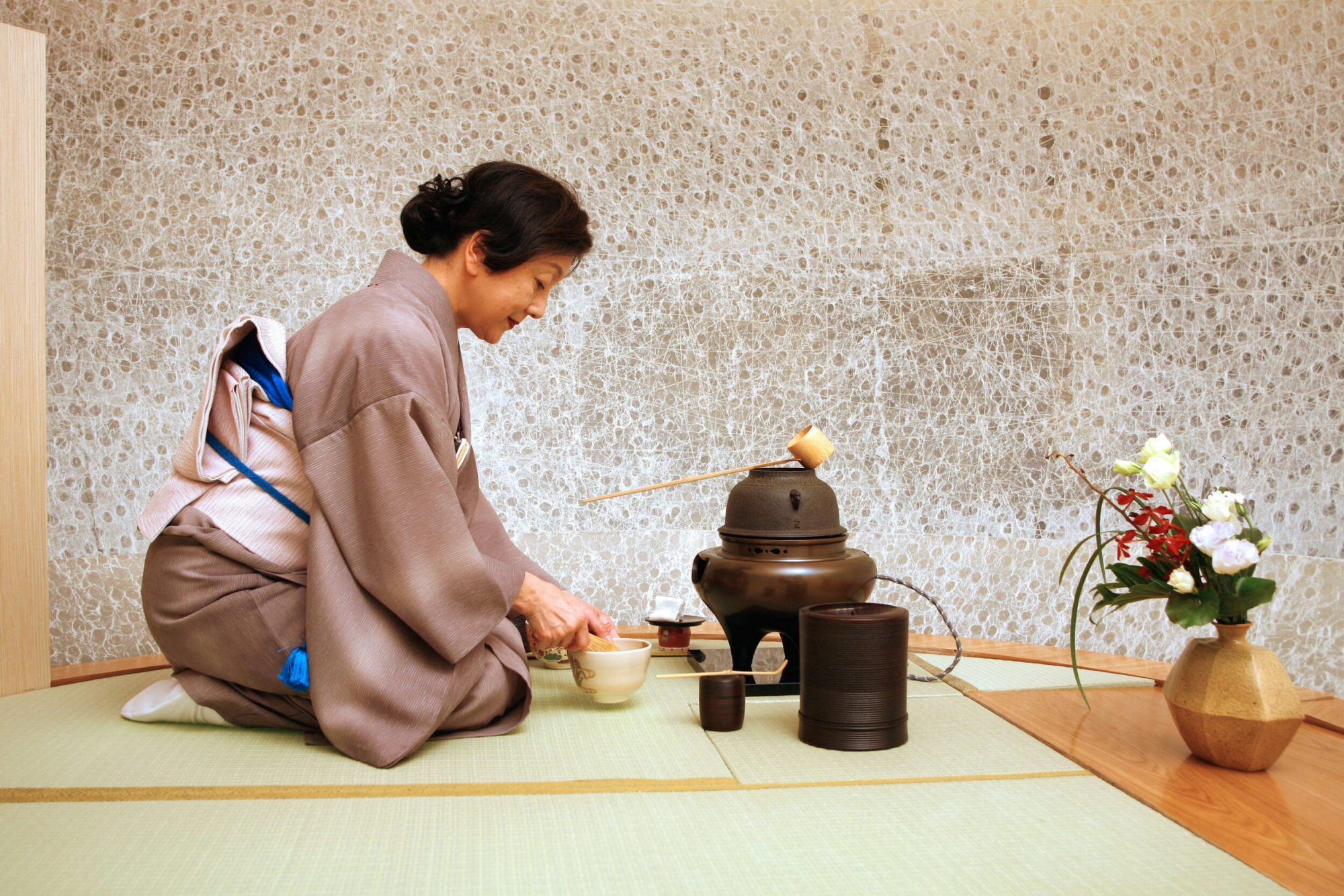
Shigoto is rooted in quality. In the sense given to it by this fascinating culture, quality comes from meditative practice, exemplified by the tea ceremony. Calm and elegant, this simple art takes years to master. You learn to choose utensils and tea, to move with precision and decisiveness, and to contemplate.
Sociologists say that Japanese culture has been changing, with the lifting of lifetime employment and the prevalence of hikikomori — young Japanese who refuse to work — but the basic value is still shigoto. And we still see it in Japanese products. And especially in certain Japanese films, which I think we don’t watch enough of.
The Japanese show us the close connection between service, personhood, and morality. Work as we Filipinos understand it, doesn’t define Japanese culture. What defines it is quality service.
But what is quality? And how does one achieve it in daily life?
Quality is a central and foundational concept in a book that has become a bestseller: Robert Pirsig‘s Zen and the Art of Motorcycle Maintenance. Pirsig seeks to define Quality throughout the book, but says it defies definition in the traditional sense.
Pirsig begins by distinguishing between two types of Quality: Classical and Romantic. Classical Quality pertains to the underlying form or function of a thing; it’s the logical, analytical understanding of how something works. Romantic Quality, on the other hand, relates to the immediate, surface perception of a thing; it’s the intuitive, emotional response to something.
However, as the story progresses, Quality transcends these initial categories to become a metaphysical concept, something beyond the classical and romantic perspectives. Pirsig says that Quality is the “knife edge” of experience, existing before the division into subject and object or observer and observed. He describes it as an event that happens in the present, in response to the environment around us. It’s not something that can be measured or quantified, but rather it’s something to be experienced.
What I found interesting was Pirsig’s insight that Quality, in its most profound sense, is not derived from anything. It’s not a product of the mind or the senses. Instead, Quality is the source of everything. It’s the pre-intellectual awareness, the immediate contact with reality before it’s processed by our conscious and rational mind.
I immediately thought about Aristotle’s (384-322 B.C) act of being.
The Aristotelian concept of act of being is rooted in his metaphysical distinction between potentiality (what he called potentia or dynamis) and actuality (act or energeia).
Let’s break these concepts down to simpler terms:
Potentiality: This refers to what something could potentially be or become. It’s the capacity or possibility within a thing that’s not yet actualized. For example, an acorn has the potentiality to become an oak tree, or a child has the potentiality to become an adult.
Actuality: This refers to the realized state of a thing – when its potentiality has been actualized. When an acorn grows into an oak tree, it has actualized its potentiality. Similarly, when a child grows into an adult, it’s actualizing its potential.
Aristotle’s “Act of Being,” then, refers to the process or state of actualizing potentiality – of becoming what something can become. He saw everything in the universe as being in a state of movement from potentiality to actuality.
To illustrate, consider a block of marble. This block has the potentiality (potentia) to be sculpted into a statue. The artist, through their skill and effort, can actualize this potentiality, turning the block of marble into a statue. This transformation from potentiality to actuality is the Act of Being.
In humans, the Act of Being can be understood in terms of personal growth and development. A person has the potential to learn a new skill, like playing the piano. When they practice and eventually master this skill, they are actualizing this potentiality. The process of learning and mastering the piano – of turning the potentiality into actuality – is their Act of Being.
But the Act of Being is more than just perfecting a skill to actualize a potential. Mastery only brings us farther but never to reach the end. It would seem that this end was not mere potency, but something able to draw us to it. This drawing is “participation”, a concept developed by St. Thomas Aquinas.
St. Thomas Aquinas (1225-1274), a prominent theologian and a student of Aristotelian philosophy, developed a metaphysical framework around the concept of participation in the act of being, to refer to the relationship between God and His creation.
Aquinas viewed God as the ultimate source of existence or being itself. God doesn’t just exist, God is existence. In this sense, God is “Pure Act,” a term Aquinas uses to describe God’s absolute actuality, meaning He is completely and fully actualized, without any potentiality.
Aquinas’ idea of “participation” refers to how creatures, or all created things, share in God’s existence or being. Unlike God who is “Pure Act” and whose essence is to exist, created beings have a received existence, which means their existence is contingent, or dependent, and not necessary.
So, when Aquinas talks about “participation in the act of being,” he means that all creatures, in some way, partake or share in the being of God. The act of being of any creature is a limited, participated form of God’s infinite act of being. In other words, creatures don’t have existence in and of themselves; they derive their existence from God and continue to exist by continually participating in God’s existence.
To make this easier to understand, let’s use an analogy. Imagine the sun as God and its rays as creatures. The sun generates light and heat on its own – it’s the source. The sunrays don’t generate light or heat themselves, but they carry or participate in the sun’s light and heat. Similarly, God is the source of existence, and all created beings participate in this existence.
This view integrates the Aristotelian concept of “act of being” with the Christian theological concept of creation. It provides a philosophical explanation of how creation emerges from and continues to depend on God.
I think it is also what gives the craftsman hope that his practice will lead to further and further improvement. At every stage he participates more in the divine perfection (without ever reaching it). In a way that was hard for Pirsig, or anyone, to describe, you can just feel that some objects are of very high quality. Something in the worker brought this object closer to perfection, and it has nothing to do with the external appearance of the object. Or else, Pirsig would have been able to measure quality.
But because it is felt, not all men feel it. We’re like cups made at different sizes. The bigger ones can capture more, the smaller less, even if they are both full. In other words, an untrained mind cannot put more into itself. Training increases the size, and that’s how a trained man can detect quality where a novice can’t. A trained man knows in an instant that a painting is bad, even one that a less trained man might spend millions to buy.
Nonetheless, Pirsig tries to tell us how to perceive quality right now, enough perhaps to deeply enjoy a beautiful IG photo.
To achieve Quality in one’s life, one must learn to perceive it, to be open to it, and to respond to it. Pirsig suggests that this requires a balance of logic and intuition. On one hand, we must be aware of the underlying structures and mechanisms that make things work (classical). On the other hand, we must be in touch with our immediate, sensory, and emotional experiences (romantic). It’s the dynamic interplay between these two perspectives that allows us to engage with Quality.
The practice of mindfulness is also a way to cultivate the perception of Quality. It would seem that outside events and internal emotions can cloud our vision of quality, hence museums are quiet places. Mindfulness emphasizes direct, unmediated experience, which aligns with Pirsig’s understanding of Quality. The practice of meditation can help one to quiet the rational mind and open up to the direct experience of Quality.
An dedicated, attentive engagement with one’s experiences increases Quality in our life. Activities such as careful craftsmanship, focused and mindful learning, attentive relationships, or meditative practices, and my favorite — exercising without headphones. The key is to be present and responsive to the Quality that emerges in each moment.
Do you have a craft? Love it for its own sake; study, practice, experiment, innovate: these are the path to Quality. Are you a writer? Write 2000 words everyday. To achieve quality you will have to fail. A lot.
I recently watched this video from HealthyGamerGG (https://www.youtube.com/watch?v=uDDeves6Crs) where he explains an interesting aspect about motivation. He says that people who can’t help but tell the world about their plans end up not fulfilling many of them. It seems that the enjoyment one gets with broadcasting good things about oneself is the reward; there is no further motivation.
What is interesting about HealthyGamerGG’s explanation is that he models ideas as energy. A good idea is positive energy; broadcasting it is to leak that energy. Hence, even if we write out our plans, we leak energy. We have to bring it back in, by reading what we wrote. On the other hand negative thoughts are best brought out, either by telling other people about them or writing them out and then not reading them.
All this is part of a general discussion on discretion.
Discretion as a virtue refers to the ability to make wise decisions or judgments, particularly in situations that require sensitivity, caution, or restraint. It involves knowing when to act, how to act, and what to reveal, often considering the potential consequences of different choices. It’s about discernment, carefulness, prudence, and good judgment.
Discretion is exercised in many facets of life, including personal interactions, professional settings, and moral or ethical situations. It enables us to navigate complex situations tactfully, to respect the feelings and privacy of others, and to avoid unnecessary conflict or harm.
For instance, a manager may need to exercise discretion when dealing with sensitive issues, such as personnel problems or confidential company information. They would need to carefully consider who to involve, what information to share, and how to act in a way that is fair, respectful, and compliant with ethical standards and legal obligations.
In a personal setting, discretion might involve knowing when it is appropriate to share certain information with friends, or when it’s better to keep things private. It could also involve making decisions about how to spend money wisely, how to manage time effectively, or how to handle sensitive issues within relationships.
Discretion is associated with other virtues such as wisdom, integrity, and respect. It’s about not only knowing right from wrong but also understanding the nuances of different situations and making decisions that reflect balance, consideration, and prudence. Despite being a challenging virtue to master, it is highly valued in various cultural, professional, and social contexts.
Simon Sinek, a British-American author, motivational speaker, and organizational consultant, has shared a powerful concept regarding communication and leadership: be the last to speak.
He said that great leaders are those who listen more than they speak, and often, they are the last ones to voice their opinions or ideas. His idea comes from the understanding that when a leader speaks first, they may unintentionally shape the direction of the conversation or influence the opinions of their subordinates. By speaking first, leaders may discourage open communication and stifle the expression of diverse perspectives, which can be detrimental to problem-solving and innovation.
On the other hand, by being the last to speak, leaders can benefit in several ways:
They hear all perspectives: By listening first, leaders can understand the full range of opinions, ideas, and insights from their team. This diversity of thought can lead to more innovative and effective solutions.
They foster an inclusive environment: When team members see that their leader values their input, they are likely to feel more engaged, respected, and motivated.
They can make better decisions: After hearing everyone else’s viewpoints, leaders can make more informed decisions that take into account different perspectives and ideas.
They can guide the conversation more effectively: By understanding everyone else’s thoughts, leaders can more effectively guide the conversation or debate towards a productive conclusion.
Sinek’s idea of “being the last to speak” emphasizes the power of listening in leadership and the value of understanding all perspectives before making decisions or passing judgment.
Holly Burns adds another dimension to silence: its power, and why it shouldn’t be wasted. In an article on Always Be Silent in Five Situations she describes 5 situations when we must keep silent.
Misunderstood feelings. Misunderstanding happens. Sometimes, particularly when emotions are running high, it isn’t wise to continue arguing because doing so will only escalate the situation. Keep quiet, let things calm down first.
Unspoken understanding. Words are not all we have to express. Especially among close friends, few words are enough to convey rich ideas and feelings. It’s possible to enjoy a conversation where hardly anyone speaks.
Choosing silence over nonsense. We will encounter people who will never change their minds. To engage them in conversation (understood as friendly debate) is a waste of time. They might come around, just not yet.
Silence as a response to the unworthy. And there are some for which that time may never come. They may prove incapable of entertaining what we have to offer, and so we remain silent than waste energy on them.
Silence for clarity and truth. This is strategic silence, used to emphasize a point of importance. It is also room to reflect.
To be more specific, certain personal information about us are never shared because they can be used against us:
One’s sorrow and helplessness
Past mistakes and future plans
Home affairs
Weakness
Income and savings
Humiliation
Fans and enemies
I do not assume anyone will keep my secrets, unless they have proven it: guilty until proven innocent. As for those who have proven that they are capable of stalking, gossiping, speaking about others behind their backs, and in general being inappropriately curious about the personal affairs of others, such are never to be trusted with one’s secrets.
Of course, when one has to speak out against an injustice or tell someone that he is doing the wrong thing, one may have a grave duty to say it to the person. Privately, as much as possible.
For professional reasons I have had to review professional plans officially. I remember reading the professional plan of this person about 5 or 6 years ago. It was 3 pages long. It spelled out in detail what his plans were after law school. The plans included three alternative branches; one of them included working in a foreign embassy, if not being an ambassador himself. It was one of the most convoluted plans I ever read and my head ached. You now the outcome: he either has not fulfilled 99% of it, or he’s still waiting for the perfect time.
I, too, wrote professional plans for review by my mentor, with the same effect: I’m doing something else. If I have to write one out again, it will be one sentence long: that’s the public version. And it’s vague. What’s in my head is a little more clear, but still vague, enough to set direction but not the details of the paths.
As to sorrow, helplessness, humiliation, and the rest of the list above. What does it serve to talk about them if they are in the past? If it’s to do with present day helplessness, only open up to someone who can actually help you, who will have some perspective to provide. Detail the negative stuff, but don’t detail the positive unless there really is a need for it, which is rare.
And only to those who have proven themselves worthy of carrying the burden of your secrets.
This talk takes material from the paper Public Opinion in the Church by Gonzalez Gaitano published in Church, Communication and Culture, 2016.
Gonzalez begins by saying that there is public opinion WITHIN the Church. We normally apply the term public opinion to a state or a democracy, which the Church isn’t. But the Church is a communion, necessarily requiring communication. All communication brings with it the possibility of debate.
Gonzalez Gaitano’s article looks at an important problem: what is debatable, and how do you debate it? Concretely, he suggests that members of the Catholic hierarchy committed a communication error by treating the issue of sexual offenses as non-debatable — we have transferred the priests, case closed. The message that got out was that the bishop’s authority over priests was a matter of dogma. It’s not.
The error was not just one of communication. It was ecclesiological as well. How? Since the Church is a communion its leaders are not despots. Hiding the accused priests also failed with respect to the victims, who were also in the charge of the bishops.
Gonzalez Gaitano’s analysis is relevant in the Philippines today where rational debate often gives way to sensationalism and strong emotions.
Let’s dive into that analysis now.
We begin with a given: the Church is a communion. As such, the public opinion issues it faces can be grouped into three: issues that are necessary i.e., dogma, issues that are opportune i.e., governance, and issues that are contingent, free and open to dispute.
Issues of governance and contingence are debatable. “Should I eat with the Gentiles?” is a contingent issue that can be debated on nearly every platform. The opportune issues, on the other hand, require a certain competence on the part of those discussing it. Issues pertaining to governance and how spending priorities are debated in meetings, pastoral councils, courts of law, synods. “Where do we reassign this priest? How much do we offer as settlement?” is something for specialists with access to key information: you cannot productively debate this issue in Facebook. It is not proper for the faithful to publicly dissent on such matters. It is not the act of a good son to publicly criticize a bishop’s rule regarding them. He just doesn’t have access to the right information.
I would like to highlight two important differences between Church and State that impact public opinion in the Church. First, Because the Church is a communion, rulers and ruled deal with each other with charity. The faithful obey the bishops, voluntarily and responsibly, and the bishops care for the faithful and listen to them. This is pastoral care, which by the way, we cannot apply to government officials even if in this paternalistic country we support candidates like they were our dad or mom, if they weren’t actually our dad or mom or fifth cousin.
Second difference, unity of doctrine. From the public opinion point of view, having dogmas makes it simpler to communicate about the Catholic Church in contrast to other religions. We don’t have to keep repeating our arguments. The problem, however, is when people consider debatable issues as being part of the non-debatable issues.
This, in essence, is the problem with the pedophile scandals. The issue on the whole is a governance issue. A complex one for sure, but we can infer from the consequences that the hierarchy appears to have made a big mistake in handling it.
We recognize the bishops wanted to protect the faithful from scandal and to protect the accused as well. But by “protecting” the priests the message the public got was that the hierarchy is despotic and acting dogmatically. Certainly wasn’t the intent, but the public interpreted Church authority on this specific matter as part of its non-debatable issues. And, the world did not quite get the part that charity informed the Church’s decisions. The Catholic Church attracted SEVERE NEGATIVE public opinion. We saw drastic reduction in donations, and scores of defections. The position of the victims, many of whom continue to suffer today, also appeared to have been disregarded.
The Pope himself had to repair it. Let’s let Gonzalez Gaitano take over from here:
“The common opinion shared by reporters was that the visit of Benedict XVI of April 2008 had changed the media perception and that of public opinion about the will of the hierarchy of the Catholic Church to resolve the problem. The fact that Pope Benedict XVI confronted the question directly, in a way that neither the bishops nor the media expected made it clear. Ever since the press conference on the plane, responding to one of the reporteŕs questions, he showed what turned out to be an entire government program in this thorny issue. To everyone’s surprise, the German Pope spoke openly, forcefully and repeatedly about the crisis. He apologized for the abuses, almost as if he took the blame personally. He received in private a group of victims of abuse in the Nunciature of the Holy See in Washington, an event that was referred to by the Vatican spokesman and by the moving declarations of one of the victims. This was the first in a series of gestures that were to come and in whose wake Pope Francis has continued.
The trip of Benedict XVI received more attention from the media and public opinion than any other religious event until the visit of Pope Francis to the U.S. in September 2015: 84% of Americans ‘saw, read or heard something about the visit of the Pope in 2008’ and 61% of those interviewed thought that the trip ‘had met or exceeded expectations.’
Also, this trip changed the perception of the public opinion about the normal life of the Catholic Church in the United States in the following months. I select the principal conclusion of this data:
Before the visit of Benedict XVI, the frame ‘sexual abuse of minors’ ranked second, behind ‘social life of the rich,’ among the most frequent story frames related to the normal life of the Church, that is other stories not regarding the sex abuse scandal. After the visit of the Pope, it fell to number 9. Not only this, the almost neutral image that the Church had in the news (+0.02 on a scale of −1 to +1) began to be clearly positive (+0.36).
Of course the Church is interested in the transformation of consciences. And, although it is difficult to evaluate the image of an institution with only statistical methods, one must not dismiss the effect in the reputation or the public image of the Church as an institution. Now, speaking in terms of ‘reputation,’ the courage, humility and sincerity of Benedict XVI did more for the reputation of the Church in the United States than all its communication resources, which are not a few. Naturally, other studies are needed in distinct periods to prove the affirmation over time.”
What about the issue of elections? Who to vote is a contingent matter and can be debated on any platform. Can a priest support a candidate? Yes. Can he talk about it? Yes. As a private citizen and on any platform.
But he must be careful: Filipinos are culturally sensationalist and sentimental. It’s a gossip culture. And feudalistic. From the public opinion point of view, when a member of the clergy supports specific candidates risks, he risks sending a message that will be interpreted as moral and NOT debatable. I get it: some support candidates because the opponent is associated with great evil. Still, this is not dogma. Besides, there are well meaning Catholics supporting all the candidates. What? Alienate them?
The Church hierarchy has indeed made a public stand against Communism and Nazism, but these are grave moral issues involving an opponent able to enforce its will and kill. But what were the issues faced in the Philippine presidential elections in May 9, 2022, that put Ferdinand Marcos, Jr. as president of the nation? Notable in this election was an attempt to make it a moral fight, a dictator’s son battling a saintly woman. A president is supposed to be competent, not pedigreed, not saintly. A candidate might be personally pro-abortion, or pro whatever, but it’s not like he or she is the head of a movement all out to destroy the Church.
Speak out, even call people out if you must. Debate the debatable issues on the right platforms. St. Paul publicly called St. Peter out for snubbing the Gentiles. Debatable does not mean false; rational and respectful don’t imply all opinions are equal. Playing by the rules, you must provide evidence that matches the quantity and quality of what your opponents will offer. Catholic debate on issues such as evolution, death penalty, social justice, human rights, world peace, nuclear disarmament, the causes and solutions to child abuse, are highly respected.
In spite of that, the Church runs the risk of being represented in the media in a simplified and exploitative way because of our unity of doctrine. We need people who can communicate strategically and skillfully. Personal qualities like sincerity, respect, and a sense of humor are useful, too. Be that St. Paul who called St. Peter out. Or the Pope skillfully facing the issues in public.
Finally, I’ll quote again from Gonzalez Gaitano: In necessary things, unity; in disputable things, diversity; in all things, charity.
This essay was originally a talk on social relations and naturalness.
I will talk about the basic requirement for practicing the skill of building relationships, that is, embracing your own uniqueness. I won’t talk about how to actually deal with people. We will talk about unhealthy relationships. Then we close with a critical but often misunderstood aspect of this skill, which is to know into what kind of relationship you want to put people in with regard to yourself and thus manage your expectations, your growth, and theirs.
Loving well and deciding well require more than awareness. It requires more than intentions that are actually carried out. It requires intelligence, acumen, specifically, relational intelligence. Relational intelligence is not a personality type or trait like extroversion. Extroverts are energized by people, introverts by being alone. But neither determines whether you are GOOD at dealing with people. It is a myth that extroverts are high in relational intelligence and introverts low. Relational intelligence is a skill that helps you optimize relationships to be in the best interest of you and of the person you are in a relationship with.
Relational intelligence skill can grow incrementally or exponentially. Peter was impulsive, unreliable, temperamental. But after Pentecost he is totally changed by grace. That’s exponential growth. More often, growth happens over a long time. To grow, we need to understand, embrace, and unleash our God-given uniqueness. If we do not understand, embrace, and unleash our God-given uniqueness we will not be able to properly love others with their uniqueness. Just like you and I have uniqueness, others have it. If we don’t understand this, differences become demonized.
There are 5 ways in which a person’s uniqueness manifests itself.
First, unique design. Jeremiah in the Bible had some hesitation. Like us, he felt that some of his differences made him deficient. He’s probably looking at his age, probably at his passions, his confidence, assessing his own competencies. He’s telling God: “You’re telling me to do what the prophets are doing, but I’m not wired the way they are wired.” God talked him out of his inadequacy, to get him to accept His calling. God uses other ways to show us in which areas to grow. One way is to ask “What irritates me about people?” Often, we are irritated by traits we see in ourselves but deny. It is important not to ignore the areas where we can grow, and to correct them if needed. Introversion, for example, is not a trait to be corrected; antisocial behavior, however, is. It is important to love these parts of us. If not, we won’t be able to see it and affirm it in others.
Second, unique desires. God doesn’t give a heart everything it wants, but God gives a heart what to want. Hannah wanted a child, a desire that was insatiable not only because she wanted it, but because God needed a prophet. He put that want in her. Some of the things we want, God needs.
Third, unique discontentment. I can take any person here, go into a space, and there will usually be something there that agitates you but does not agitate me at all. Why is this important? Because your purpose, my purpose, is always an answer to a problem. David goes into the field and hears Goliath hurling all those insults against God, and the Israelites were like “Oh, we’re used to it.” David’s like, “No one’s having a problem with THAT???” He’s uniquely agitated by it, because he’s assigned to address it. If a person does not love that about himself, he won’t be able to embrace and love that in others.
And so we have unique design, unique desires, unique discontentment. Fourth, unique dreams. We’ve got unique visions for the world.
Finally, unique destiny. That’s the ultimate impact a person is supposed to make in the world. The unique expression of a unique contribution.
How can I love people in all their uniqueness if I haven’t learned to love me in mine? The beginning of relational intelligence begins with God helping me love me.
As we practice building relationships, we will find that there are no neutral relationships. All relationships either push us forward into our God-given purpose or hold us back. To know if a relationship holds us back, we can ask ourselves three questions.
First, Does this relationship add value to my life or decrease my assets or strengths? Prov 13:20 says “Walk with the wise and become wise, for a companion of fools suffers harm.” I don’t have to be a fool to suffer harm, I just have to hang out with them.
Second, “Does this relationship make withdrawals only, or does it make withdrawals and deposits?” Some people are partners, some people are parasites who demand your time, attention, yours ears, your brain, your energies but give you nothing, not thanks, not even the satisfaction of knowing you actually made a difference in their life. There should be withdrawals AND deposits. The exchange doesn’t have to be equal.
Third: “Does this relationship help me bury, or does it resurrect parts of me I need to keep in the grave? These are the friends we call bad influences. The flesh, the sin nature. It’s never evicted, it has to be arrested.
Do we reject these people? No. All are children of God, but not all add the same value to you. Don’t treat everyone equal, but do treat everyone right. This means, we have to decide how to deal with them and know how to manage our expectations. This part of relational intelligence is often misunderstood. To help us along this decision let’s talk about the four kinds of people you will relate to in your life.
The first are Friends. The same soul in different bodies. These get your life, they get the real you. You’re more likely to be the real you with friends. They are the ones you will uniquely invest in, and they will uniquely invest in you. This level of reciprocity means friends can have a stronger bond than family. It implies friends will be few. Though many saints are known to have a genius for making many true friends.
Unlike the Friend whose self giving is maximal, for each of the next three kinds of people self giving will come in degrees.
The second kind of people we relate with are associates. Associates are relationships formed by intersecting schedules, common goals, and common interests. Colleagues, for example. Associates can become friends, but they are not yet friends. Associates are often confused with friends, leading to disappointment and frustration.
I once had an associate who expected everyone she worked with to be her friend and dealt with them with inappropriate familiarity. As a result, she was constantly frustrated, constantly hurt; always having something bad to say about anyone who she thought offended her. And she voiced it. She was hard to work with. I met yesterday with other associates and discovered that everyone independently picked up this negative vibe from her from early on. As no one was eager to work with her, she couldn’t flourish, and left.
This is an extreme example. Still, we should be happy to have many associates and to hang out with many kinds, be they punks, professors, gays, straight, gay professors, straight punks. As long as they are living their best lives and aren’t harming others I’m totally cool with that.
The third are assignments. Assignments are people you’re helping. If you’re just one step ahead of someone, you can help him. Sometimes, if you’re TEN steps ahead you’re less effective. Helping others can add value to us by making us feel fulfilled, useful. Adding value to our life directly, however, is the job of the fourth person…
The Advisor, or mentor. Advisors are experts who can give you in days what will take you years to learn on your own. You can pay for an executive coach. A person who pays doesn’t really invest in a coach, however. He invests in himself. Some people pay a lot, but don’t tell the truth. A mentor can’t help someone who doesn’t want to be helped.
I do not include in this list strangers who don’t have any relationship with you. I don’t include enemies because we are talking from Christ’s perspective. Christ who loved his enemies and who treated Peter, James, and John differently from the other Apostles.
Knowing where to put people in regard to their relationship with you — friend, associate, assignment, mentor — is important to optimize your growth with them.
The French mathematician and spiritual writer Blaise Pascal once wrote:
“There is enough light for those who only desire to see, and enough obscurity for those who don’t want to.”
Blaise Pascal (1623-1662)
Faith as tiny as a mustard seed, the smallest of all seeds, can grow into a giant tree, with God’s grace and our willingness.
One man read those words of Pascal with the tiniest of faith that later blossomed into holiness. He was an atheist, a doctor and a soldier in the Imperial Japanese Army, who saw the brutality of World War II yet treated both friends and enemies, a man who saw his own wife incinerated by the atomic bomb, a man who is now a Servant of God.
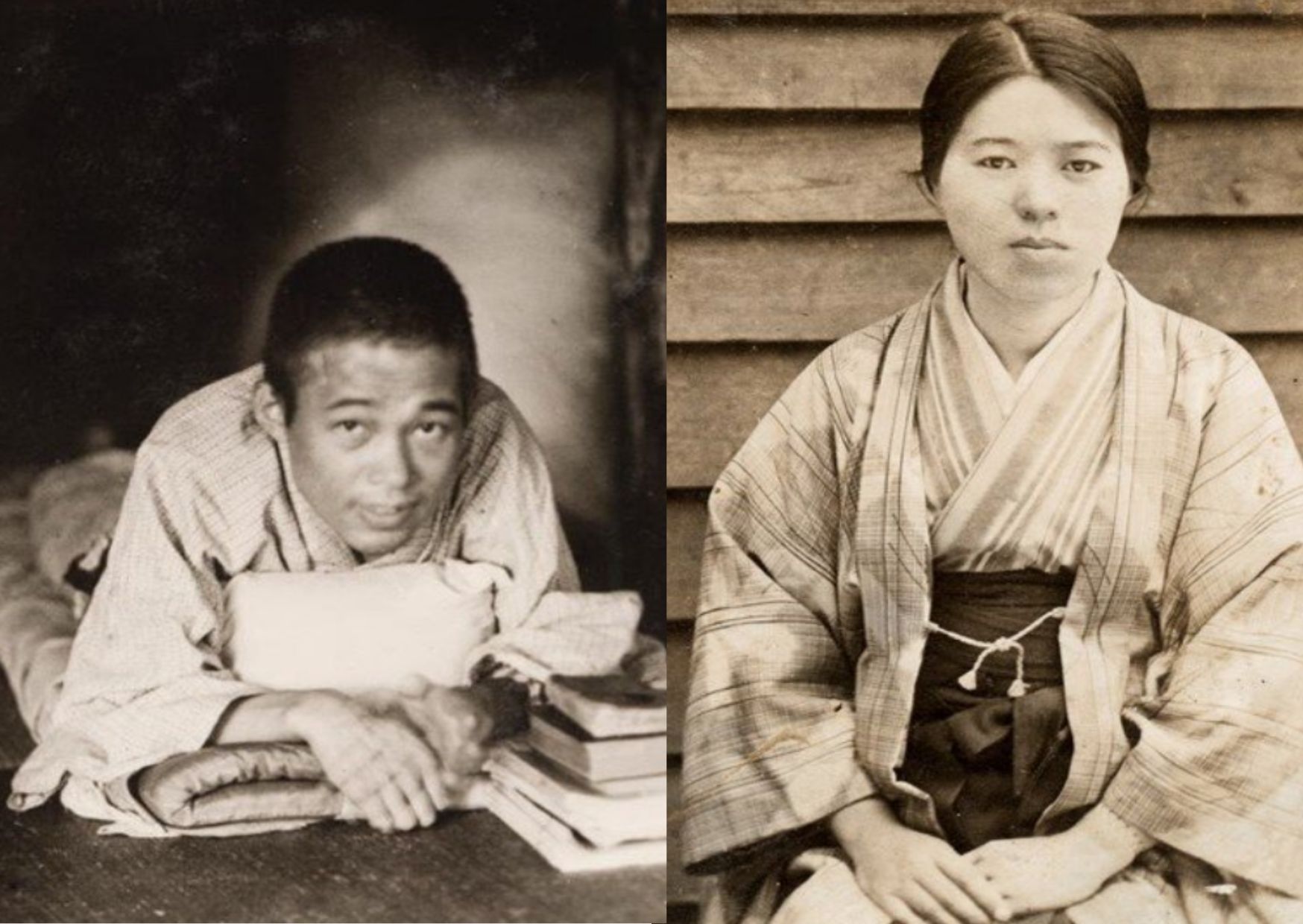
Dr Nagai was born in Japan in 1908, of a samurai family. He was one of the world’s first radiologists and an expert in X rays.
In 1928 Nagai entered the Nagasaki Medical College. There he rented rooming space with the Moriyama family, who for seven generations had been hereditary leaders of the Hidden Christians or Kakuri Kirishitan. The Kakuri Kirishitan had gone underground, keeping their faith for hundreds of years between 1614 and 1873, without contact with the Church hierarchy. When the hidden Christians were allowed to return to the mainland, they reconnected with Church emissaries and joined the rest of the Catholic Church.
In 1932, he attended Christmas mass with the Moriyamas and was deeply moved by the faith and piety he saw. He read Blaise Pascal. His faith took a big turn when he read the words of Pascal: “There is enough light for those who only desire to see, and enough obscurity for those who don’t want to.” I guess he was attracted to Pascal because they were both men of science. He studied the Catechism as thoroughly as he studied science.
Nagai was baptized on June 9, 1934, choosing the first name Paul, and married Midori Moriyama, his landlord’s daughter.
In 1937 war broke out between Japan and China and Dr. Nagai was sent to China as a surgeon. There, he treated both Chinese and Japanese soldiers and civilians. He created a small conduit of relief aid that served Chinese families and orphans. He was also a decorated soldier, but his faith in Japanese culture was severely shaken by the brutality he witnessed.
He returned to Japan in 1940 and got his doctorate in 1944. In June 1945, he was diagnosed with leukemia and given three years to live. At this time people were not aware of the dangers of X rays. He told Midori about it, who said in reply: “Whether you live or die, it is for God’s glory.”
On 9 August 1945, the atomic bomb struck Nagasaki. Dr. Nagai was working in the Nagasaki Medical College Hospital. He received a serious injury but joined the rest of the surviving medical staff in dedicating themselves to treating the atomic bomb victims. Returning to his house 2 days later, he found it destroyed and his wife dead. In her hands was a melted object: Midori had been praying the rosary. Months later, Nagai’s injury worsened. According to him, he heard a voice urging him to pray to the priest Maximilian Kolbe, who died in Auschwitz in 1941. St Maximilian Kolbe lived in Nagasaki between 1930 and 1936, and Dr. Nagai was almost certainly his radiologist.
In the following years, Dr. Nagai, seriously ill, spent his life in a small hut, in prayer, contemplation, and work. He continued teaching and wrote books, including the bestseller The Bells of Nagasaki about the bombing. Referring to the Nagasaki Cathedral, he wrote: “These are the bells that did not ring for weeks or months after the disaster. May there never be a time when they do not ring! May they ring out this message of peace until the morning of the day on which the world ends.”
In July 1946 he collapsed and henceforth remained bedridden. He continued to write. He received a visit from Helen Keller in October 1948 and from Emperor Hirohito in 1949. He died in 1951. Some 20,000 attended the funeral. The city of Nagasaki observed one minute of silence while the bells of all the religious buildings rang.
What can we learn from the life of Takashi Nagai?
We learn that Christ goes to find us where we are on the road of life and death. What we call a life of faith is when we decide to walk with Him.
I remember this cartoon. It shows a man kneeling in prayer. And then a rock strikes him from behind. He immediately complains “Jesus, why did you let that rock hit me?”. Then he looks behind and he sees Jesus, standing, with arms outstretched, with hundreds of rocks hitting Him from behind. Jesus tells the man, “Sorry, that one got through.”
Christ is there when we must deal with a loss of millions in our business, when we must discipline our teenage children. He is there when we are diagnosed with cancer. Jesus is there to celebrate with us when our youngest kid graduates college, when you are promoted, when you are able to visit family abroad.
He is there even when you think you don’t want Him to. Or when you think He has abandoned you. Dr. Nagai’s atheism, his wounds, the horror of war, the loss of all his property, the death of his wife, the terrifying effects of radiation—God was present there.
Silent, perhaps. But Dr. Nagai was in the habit of listening, and if it seemed he was not listening, he was doing good, which is also prayer. And so he heard God.
If that sounds familiar to you, it’s because you heard God’s voice. In quiet, you heard His voice. Whatever good deed you may be doing, such as attending a talk, or driving, eating, fulfilling your tasks as a husband or father or friend, all are God’s chances to get through to you.
We can hear Him better. By making an act of the will. Tell God at the beginning of your day “Oh Jesus, through the Immaculate Heart of Mary, I offer You all my prayers, works, sufferings, and joys of this day for all the intentions of Your Most Sacred Heart, in union with the Holy Sacrifice of the Mass throughout the world, in reparation for my sins, for the intentions of all our associates, and in particular, for the intentions of the Pope.”
Each time you say these words, you lift your work to God.
You could fill your day with such words. Or even without words. When we see a beautiful sunset we might say, “Wow, Lord, what a beautiful sunset!”. But sometimes, you just watch the sunset without saying a word. That sunset today might be your wife, your children, or the contract you just drafted that inspires you to say “Thank you Lord.”
I understand that having God in my life does not mean my life will have zero problems. But I know those problems will be opportunities. However, I heard the same from my management consultant. So what difference does it make?
A lot. When you work with Jesus Himself, it’s as if He does the work Himself, and so the work has unimaginable effects.
Like what effects? Merits. One way to understand how merits work is by comparing them to bank accounts and real estate. Merits are what you put in the bank account in heaven that Jesus opened for you when you got baptized. When you do good, you deposit. When you do bad, you withdraw. When you die, the balance determines your real estate in heaven.
Now what does that mean, real estate? There’s no real way of putting in words what no man has ever seen, but I’m quite sure that the smallest property you can own in heaven is at least the size of a galaxy. If you had more merit you would own and operate thousands of that. But it’s no cause for jealousy. I have another analogy for that. In heaven, the least of the saints has a small cup filled to the brim, while the greatest saint has a gigantic cup filled also to the brim. Both are immeasurably happy.
What happens to that account when you are on earth? You deposit and withdraw, but the amount you deposit depends on two things: the love for God with which you do things, and whether you’re in the state of grace, a state of friendship with Him. The deposits and the interest are massive when you love God and when you are in the state of grace. We’ll get to that later.
But first, what happens when you’re NOT in the state of grace? First, of all this state disappears when we commit a grave sin for which we are not sorry. When that happens, we are keeping our distance from the bank. When you’re not in the state of grace, your account probably still grows by small amounts whenever you do good, but you can’t touch your assets. When you die without repentance, you can’t touch the real estate that should be yours.
Instead, you go to Hell. It is a place where nothing has value: one has no freedom of movement, one can’t grow, one can’t be happy. It’s a place where everyone just hates everyone else. We traditionally describe it as a place of fire, because really, the misery of what I tried to describe is impossible to picture otherwise.
But God doesn’t want you to go to Hell. He wants you, all of us, in heaven with as big an account as possible. He won’t force you, though. What He does is to whisper, and when we quiet down, we get to hear Him.
And He stands ready for our return. He has made it easy to get back that state of grace, and restore access to our account, through the Sacrament of Confession.
He also makes it super easy for our account to grow. Many small things we do have great value in the eyes of God. You think your act of kindness is worthy of a million likes on Youtube? That’s nothing to Him; to God, you get a galaxy. And not because of you, but because Jesus is your friend. Recall, when you work with Jesus, it’s as if He was the one earning that value, then accrues it to your account. Every good work, every prayer, with or without words, increases your assets. The value is so big that it can be the start of the conversion of even the toughest souls.
Dr. Haywood Robinson and Blessed Bartolo Longo (1841-1926) are two men who were very far from God once. Dr. Robinson is a Pro-life advocate. After performing hundreds of abortions, he and his wife had a conversion, ending their practice. Blessed Bartolo Longo was an Italian lawyer, and a former satanist priest who, after his conversion, spent the rest of his life promoting the Holy Rosary.
But are merits any good on earth? Yes. Jesus said “Blessed are the poor in spirit, for theirs is the kingdom of heaven,” as the introduction to the Beatitudes in Matthew 5. He said “theirs IS”, meaning, love God and you will be rewarded right NOW. This reward comes with an even greater reward: the chance to suffer with Jesus. Hence, the Beatitudes end with “Blessed are you when people insult you, persecute you and falsely say all kinds of evil against you because of me. Rejoice and be glad, because great is your reward in heaven, for in the same way they persecuted the prophets who were before you.”
So, the more good work you do, the more good work you CAN do. You may not know it, but the patience you showed in traffic today might have brought about the conversion of a criminal.
Imagine what it would be like: you are changing the world and the people around you without you realizing it. You are also changing yourself. When doing good becomes a habit, chances are God will find you doing good at the moment of your death. Death itself becomes a good work, even a prayer.
Living in faith means being afraid of nothing, not even death. Let me correct that. We are afraid of things, we are afraid of death. But a man of faith faces his fears in peace.
The Blessed Virgin’s merits are exceedingly enormous. So enormous that we can think of Her as heaven’s top banker for being the saint closest to God. She can distribute her richesse to anyone, snatching sinners from the gates of hell at the very last minute. The merits of children, of old people, and of the sick are also very large, and this makes it wise to ask them to pray for us.
It is clearly in our interest to do good and to earn grace. Since we work all the time, the opportunities to do good are superabundant. Can I grow and grace and merit by, say, sitting in my car? Yes, if offered up to God. It’s not easy sitting in the car waiting for someone who is late. It’s a passive good work.
If I could grow in grace working my own stuff, why should I pray? Well, God still wants to spend time to converse with you one-on-one. These exclusive face-to-face times with God are what we normally understand as prayer. Here we can praise God, ask for forgiveness, thank God, ask for things, without any other thing on our mind.
We also express our love for God in community, as a family. God wants us to participate in what we call the liturgy, such as the Mass. He wants us to model our lives on the cycle of Jesus’ life. A cycle that goes from birth (Christmas), to suffering and death (Lent), and redemption and resurrection (Easter).
These moments of exclusive time with God are necessary to stay in friendship with God. The Mass and the Eucharist, in particular, are so necessary that the Church requires all Catholics to go to Mass on Sundays and to receive the Holy Eucharist at least once a year, at Easter time. The Church also requires that the faithful confess their sins at least once a year, during Easter time.
Other face-to-face prayers include the Rosary, the Angelus, prayer at meals, making the Sign of the Cross when you pass by a church, making a reverent bow of the head whenever you see an image of the Blessed Virgin or Our Lord. You might also have devotions to a saint like Fr. Pio or Mother Teresa of Calcutta. It’s good to have few of them, as long as they are constant.
Now the catch: What do I have to give up in order to live a life of faith? What do I give up?
St. John the Baptist answered that question: He must increase, and I must decrease (John 3:30). Jesus provides a more graphic description of what it actually means to live a life of faith. He equates it with the Beatitudes, meaning, a life of happiness. And this is what it looks like:
Blessed are the poor in spirit, for theirs is the kingdom of heaven.
Blessed are they who mourn, for they will be comforted.
Blessed are the meek, for they will inherit the land.
Blessed are they who hunger and thirst for righteousness, for they will be satisfied.
Blessed are the merciful, for they will be shown mercy.
Blessed are the clean in heart, for they will see God.
Blessed are the peacemakers, for they will be called children of God.
Blessed are they who are persecuted for the sake of righteousness, for theirs is the kingdom of heaven.
Matthew 5: 1-10
Now, get a Bible and look it up Matthew 5: 1-10.
Let’s illustrate how we might practice reflecting on these words. Again, let’s take the first, Blessed are the poor in spirit, for theirs is the kingdom.
First, begin by understanding the meaning of the words, in their literal sense, and in their extended sense. Poor in spirit could mean a spirit that is not attached to earthly things. It can mean not attached to ideas, or to people, or to ego. Theirs is the Kingdom of Heaven. For people on earth, heaven is not a place. Instead, it is a state of being in the presence of God.
Second, ask What does it mean to YOU right now? God might be telling me that if I detach myself from my wealth or my pride or my projects I will give Him a chance to take greater possession of my soul. We know how much pain pride can bring.
Realize also that closeness to God does not mean one will never suffer temptations. Also, poor in spirit and possessing the kingdom of heaven here on earth does not shield me from hardships, from the possible loss of all my wealth, from my personal humiliation. But, the life of faith gives you the key to facing temptations and hardships with joy and peace. Faith teaches me to detach myself so that I can be attached to God. The reward will be the peace and joy of knowing I have done God’s will, and that He has my back.
Third, make a resolution to do something. I therefore resolve to be detached from my wealth, my pride, my achievements. As an immediate resolution I will be generous with my time and money, spend more time with my family and with God, and give more alms to the poor and to the Church. And if I want to give more, then it’s just natural that I will want to earn more. Material wealth is not incompatible with faith.
Certain consistent practices of prayer keep the faith alive. Mental prayer is one. There are many other signs, such as regular acts of piety. I’ve often heard it said that a common sign is that a person is more cheerful and more peaceful. Often, the person becomes a better worker, a better friend, a better father. Yet another sign is the you bring others the Good News.
So, let’s wrap it all up. A life of faith is a life lived walking with Jesus Christ. It is shown through thinking, feeling, and acting like Jesus Christ, in whatever profession or situation you find yourself. It has consequences, especially joy and peace. A life of faith on earth will be a life of suffering and joy, shadow and color, a chiaroscuro worthy of the best artists.
And one day God, we will see God himself. And this vision and presence will be without end.






 jaylazzo