What makes your heart sing

Chris Gardner asked: “What makes you want to wake up in the morning and then do it all over again?”

A lot what we do we do because we need to. Administrative tasks, firefighting, routine activities like doing the groceries. We’re not very good at these. Gardner, however, directs our attention to perhaps just one activity during the day that makes everything else worth going through.

We need to identify what that is.

Now, before going further I may need to adjust some of my narrative surrounding the issue of whether writing is what makes my heart sing. Although I do need to write as PART of my professional tasks, I keep telling myself that it’s not the kind of writing I dream of, that is, to write as my PROFESSION.

Carmine Gallo, in The Storyteller’s Secret, tells the story of a man who had such doubts, Joel Osteen. He didn’t think he could be a good speaker. His father was a pastor and a great preacher who had a spot on a network. When his father died, Osteen thought about giving up the spot thinking he could never sustain it. But thanks to his wife, Osteen kept the slot, and soon found that he could speak. Joel Osteen is now one of the most successful public speakers in the world.

Osteen had more than talent. His wife, she is essential. He had contacts, an audience, and a reputation. His success represents 1/10,000 of all those who will try to replicate his history, because they do not have all these other factors that are not emphasized in a communications book.

Osteen is not the best public speaker in the world. But having these other factors surrounding him means that he occupies a high place in a “hyphenated” niche. In other words, he may be in the top 25% of public speakers, and at the top 25% of pastors, but at the top 1% of public speaker-pastors. Hyphenated.

So, an aspiring writer can succeed if he were in the top 25% of writers in terms of skill, and then be in the top 25% of something else. Find out what these areas are, and we could answer Gardner’s question confidently.

I would put myself in the top 25% of writers in terms of skill with the English language, because I actually teach technical writing. Like anybody else, I put myself in the top 1% of people who know my perspective on things. But having a perspective is not the same as being good at telling it. Specifically, telling a good story around one’s idea requires skill in storytelling and faith in the story.

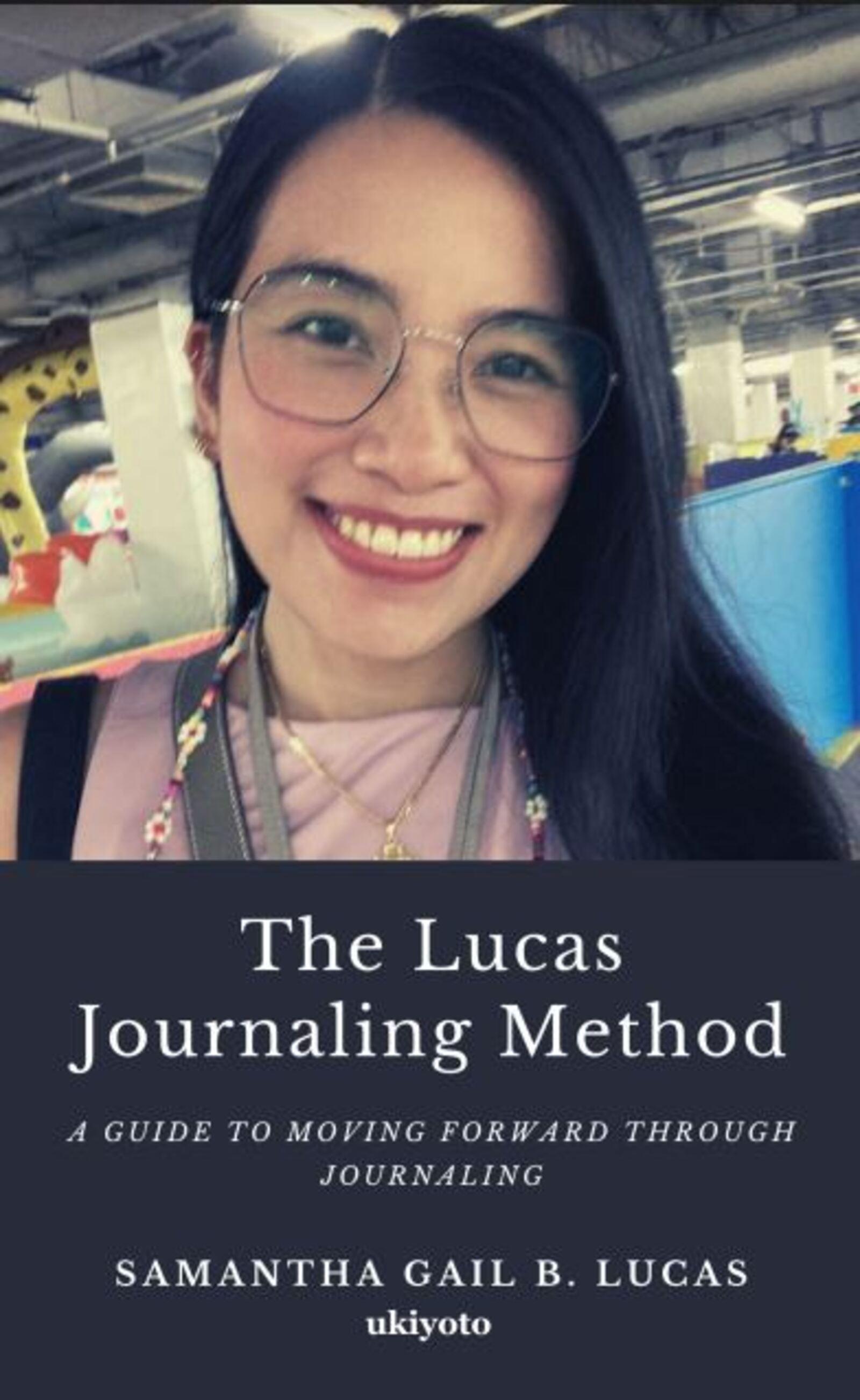
Samantha Gail B. Lucas, The Lucas Journaling Method (Ukiyoto, 2023). Image downloaded from: https://dwtr67e3ikfml.cloudfront.net/bookCovers/0188107-78c1f0ab-34b7-46a6-b113-5bc0746fb7dd.jpg

One of my friends is very good at storytelling, Samantha Lucas. She approached the publishing company Ukiyoto with a proposal to talk about life, relationships and the craft of writing from her perspective. They liked it, and now they’re doing all her marketing. Her books are sold in Amazon, Barnes and Noble, and others. Her 13th book under Ukiyoto was released in January 2023, The Lucas Journaling Method. A large part of her success is that she blogs and posts of Facebook daily, and whenever we meet she always has a ton of interesting stories to tell.

A firm, consistent belief that one’s story is interesting– this requires one to truly embrace everything about oneself. This does not imply saying that everything about oneself needs no improvement or change. Thus, if one is very good at analysis now, then embrace it; embrace it as well if today one is mediocre. Embracing is caring, and caring leads to improvement. Good writers are always looking to improve some aspect of their being.

Most people would be very good at more than two things, and because of that they can potentially exploit more than one hypthenated niche. One of the world’s favorite authors, Stephen King, is a master of English-Horror (fiction) who also wrote a wonderful book On Writing where he displays strength in the niche English-Writing Craft (non-fiction).

Belief in one’s story gives life to that story, but ultimately, what one is known for will depend on which part of one’s portfolio gets the most readership. It could take a lot of time to find that out. Therefore, it is more important to start something sooner rather than later — propose to a publisher within a month or two of coming up with an 8,000-word book — and adjust along the way.

(Q.C., 23_0207)

What if you don’t have a support group

Sissies complain that their CURRENT job is not really for them. They have the talent and experience. But they might not have a support group.

For some, the lack of a support group is reason to quit.

I’ve got to give myself credit for sticking with bossa nova guitar even without such a group. If I were living in Brazil this might actually become a thing. It’s wise I don’t think of it as more than a hobby.

But support is not altogether lacking. Sites like Cifra Club and Youtube make learning so much easier today than when I started more than 20 years ago. And with Duolingo I can understand Portuguese. The only thing lacking now is to visit Brazil.

I haven’t been practicing much lately. If I were part of a band I would have others pushing me out of my couch and out of my comfort zone. Without practice I’ve forgotten many songs. But I have them on record. I’ve learned that relearning them is not difficult.

I have not quit because I lowered my expectations to fit the lack of a support group.

To summarize,

  1. Lower your expectations. Define your output to comprise a set of songs that you like, that are unique for their musical qualities like having unusual harmonies, yet are easy to play. Liking something gives an added push when inertia sets in. And don’t think about being another Toquinho. Don’t rush to learn everything.
  2. Learn from others. Listen to many versions of the same song. Girl From Ipanema is the second most recorded song in history, with fast and slow versions, and versions in different keys. Many pop songs are also covered in bossa style. By listening to many versions one doesn’t get trapped into thinking there’s a best way of doing this.
  3. Build on simple, powerful techniques that you can easily check. I found that the unique right and left hand techniques of bossa nova are much easier to learn when you can see them as well. These techniques provide a pattern that is easy to apply across projects.

I might get gigs one day. It would add an important level: dealing with performance anxiety and the fear of being judged. To this I only say one thing: feedback is data, use it.

(Q.C., 23_0203)

Always be writing

I once thought I could not draw; yet I drew continuously for 2 years. I should be able to do that with writing. The time spent is not even that different. Think: I used to draw even on weekends and into the night just to complete the day’s plate. I used to draw even in restaurants.

I want to write exactly the way I drew.

In order to do so I need to fight excuses. Those were coming from three areas: 1) expectations; 2) infrastructure; and 3) need,

Expectations

The key strategic decision that made daily drawing possible was the decision to use A5 paper instead of A4 or higher. The smaller format made it possible to complete a work faster. Since my objective was to draw everyday, it did not matter that the work was unsellable. I have, however, given them out as gifts. Framed even.

I had already decided that I didn’t need to draw “beautifully”. The key expectation I threw out the window was perspective: forget the lines. Later I learned that the eye does not actually “see” according to perspective lines that many artists, and that I, used.

I just drew what pleased me. I may not have produced sellable stuff, but I did make a few appreciative contacts on Instagram.

Infrastructure

What ignited my drawing project was an optical device, a mirror which, combined with my cell phone, allowed me to trace photos on paper. This device eliminated the excuse that “I can’t draw what I see.” With practice I no longer needed the device.

SuperSave was another minor app that I found useful. It allows copying pictures from Instagram into Gallery on the Android. With this I could line up drawing projects, usually in groups of 20.

A very important tool is the drawing board. What this allowed me to do was to design a simple ritual: taping my paper down with masking tape. Once this was done, it was much easier to finish the drawing project.

Whenever I felt lazy, I just began by taping my paper on the board (easy). And with SuperSave and my pipeline of pictures, I no longer needed inspiration. Inspiration came in the course of actually making the works.

Need

Did I need to draw? Not for professional or any utilitarian reason. I went into this project telling myself that if I could do it, I could do anything. I needed to see that it was possible.

When I look at all those drawings now on Instagram, and many more that are not, I could not believe I actually did it.

Now writing.

What I expect in writing is to post on WordPress once a day, for the next two years at least. Some of the posts are private, and so there are gaps. Just before this one, I posted an article that is visible only to certain people. And a post is not very long.

The infrastructure that is enabling my writing are two apps: JDarkroom and Scrivener. JDarkroom I have been using for some years now. It emulates the green-on-black screen reminiscent of DOS. I like it because it has few distractions.

Scrivener is new. It is a great app for organizing content. My posts form part of a bigger Scrivener project that is designed to become at least one book. At the moment I’m not fully optimized yet because I lost a number of Scrivener files migrating from Dropbox to OneDrive.

And, of course, I have notebooks that I scribble on at any time. I transfer the contents to Scrivener or JDarkroom later.

I need to write for professional reasons. The “small” writing I do, the posting, the Scrivener and JDarkroom work, these are warm up exercises for the bigger task: scientific journal articles. Once I start writing, it doesn’t take much to continue writing. Scientific articles are just more difficult to write because they combine research and data analysis.

A new development: ChatGPT. I used it to write two posts. ChatGPT took 20 seconds to do its thing, and I spent 20 minutes editing what it did. An exothermic reaction needs an initial energy investment called the activation energy. A catalyst lowers that cost. Coffee is a catalyst that kickstarts the day but is not the product of the day. ChatGPT for me is the coffee of writing.

Finally, how do I envision the final product?

I do not normally describe my more important goals publicly. However, I could say this: 365 x 2 articles in WordPress between December 23, 2022 and December 22, 2024.

(Calamba, 23_0202)

Beautiful Burnham Park in Baguio City

Make no little plans. They have no magic to stir men’s blood and probably will not themselves be realized.” (Daniel Burnham)

https://en.wikipedia.org/wiki/Daniel_Burnham#/media/File:Daniel_Burnham_c1890.jpeg

Daniel Hudson Burnham (1846-1912) was an American architect and urban planner in the late 19th and early 20th centuries. He was a prominent figure in the City Beautiful movement, which aimed to create urban spaces that were functional, beautiful and inspiring. Burnham’s designs emphasized grand public spaces, such as parks, plazas, and boulevards, meant to bring people together and create a sense of community.

Burnham’s most famous works include the World’s Columbian Exposition in Chicago (1893), the Flatiron Building in New York City (1902), and the Union Station in Washington, D.C. (1907). He also worked on the design of several cities, including San Francisco, Chicago, Manila, and Baguio.

https://baguio.ph/things-to-do/rain-or-shine/burnham-park-day-and-night/

Burnham Park in the center of Baguio was developed in the early 1900s and has since been a popular recreational area for both locals and tourists. It features a man-made lake, a skating rink, gardens, playgrounds, and picnic areas. It is an important cultural and social hub for the people of Baguio City, as it serves as a venue for various events, festivals and performances. The park is surrounded by lush vegetation and scenic views of the city, making it a popular spot for picnicking, relaxing, and photo-ops.

The Annual Conference of the Philippine Society for Cell Biology will be held in Baguio on 26-27 October 2023.

See: https://www.facebook.com/PhilippineSocietyForCellBiology

(QC, 230130)

Beauty in Shantytown

The phrase “the beauty of poverty” is often used ironically, suggesting there is no beauty in poverty. Poverty implies a lack of basic necessities such as food, shelter, and clothing. It burdens individuals, families, and communities. It can lead to poor health, lack of education and job opportunities, and increased crime and violence.

These circumstances can make it difficult for individuals to improve their lives, leading to feelings of hopelessness, despair, and low self-worth.

However, some argue that need brings about a certain beauty in the resilience and resourcefulness of those living in poverty. Strength and community often arise in the face of adversity. Many think that the poor are often happy, finding joy in social activities and actual play. However, this is not accurate. Research has shown that poor individuals face a higher risk of chronic diseases, depression, and other mental health conditions.

People living in poverty are diverse and have a wide range of experiences and emotions, just like anyone else. Some may find resilience and joy in their community and family, while others find no rest from daily struggles.

Poverty is not a choice for most; it is not something that should be romanticized. Rather, it is an evil that affects millions of people around the world and one that needs to be addressed through policies and programs aimed at reducing poverty and increasing economic opportunity.

Poverty is a complex issue affecting not only the material well-being of individuals but their emotional and mental one as well. Rather than perpetuating stereotypes, efforts should be made to understand and address the root causes of poverty, in order to improve the lives of those living in poverty.

When I drew these shanties I said to myself, “Shanties are colorful!” I could make rust look pretty, but I know that the roofs leak. I know the walls do not hide the private noises inside nor drown the public din from outside. I know these homes could be eliminated by one bad wind.

Yet shanties are beautiful in these snapshots. Happiness is not always absent in the life of a poor person, just as misery is not always absent in the life of a rich one.

(QC, 230128)

Write to fail

We asked our classmate, Teddy Corpuz of Rocksteddy, why he joined improv class. He said that he did so in order to fail.

I thought to myself, I’ve made many writing resolutions but completed less. Did I tire of it? Did I think a regular schedule was untenable? Was I afraid of being criticized or corrected, worried that I’m not good enough? That I’m pretentious and amateurish?

So many questions like these cross my head. Turns out, they cross every writer’s head. It’s a lot of material to write about: perhaps we should just write whatever happens to be there.

The Most Dangerous Writing App (Squibbler) forces you to do just that. Set a time, say 10 min. The app then prompts you with, say “A journey of a thousand miles begins with a single step.” Chew on that a bit. Then hit the keys, and do not stop. If you do for just 5 seconds everything you typed before the 10 min is over will disappear forever. That’s the only way to fail with The Most Dangerous Writing App.

Not everyone has warmed to it. I know a few who jump off the cliff and since they can’t do anything about it anymore, just enjoy the flight. What I like about this app is that it changes your focus from “Can I finish this assignment in an hour?” to “Will I risk stopping for 5 seconds?”

The draft, well, should be bad. You need to polish it, obviously. And here find the real insight: editing is the true art of writing.

William Zinsser wrote in On Writing Well: “I don’t like to write; I like to have written. But I love to rewrite.” We think our heroes are such good smiths they produce good drafts. Some probably do, but no one publishes a draft. Before a work goes in print it goes through rounds and rounds of editing and review.

Traditional writing and publishing has long been changing. Grammarly makes editing much easier and can even be used to teach correct usage. WordPress, Twitter, Facebook and others allow anyone to make their works accessible to the public, from unedited tweets of a few words to whole novels. Kindle Direct Publishing allows writers to publish and sell their works online. More recently we see are seeing Artificial Intelligence programs generating novel controversies such as “Should ChatGPT be acknowledged as an author in a scientific publication?”, to which journals have answered “No.”

So, is traditional writing dead? It isn’t. I think that coaches today should emphasize that writers should write mainly for themselves and only secondarily for their audience. I know this is not standard teaching. But if you can automate the writing process almost to perfection from the get-go, the justification for people to write is because it is as good for their cognitive skills as gyms are for their bodies.

We have this concept at the gym called “lift to failure”, meaning, go for a weight that you can only barely lift, because that is the most efficient way to become strong. And so, write to fail.

Cebu Restos with character

I met up with some friends whom I had not seen since the pandemic. They fetched me at the Seda in the Ayala Business Park in Cebu City, then we drove up to Busay.

In less than half an hour we were zigzagging through the mountains. We stopped for coffee at the “21-km Cafe” on the side of the road. We took a table overlooking a deep drop, Lake Bensis in the distance, beyond that the sea, and across the sea the island of Negros.

We talked about work. Me about my lab. M. and J. just got their MS degrees and were waiting for their microbe project to get the green light. D., a chemist, was also waiting for a polymer project to begin. Everyone had some side project, too. I had my blog, M. was running a food business (“Just start something,” her dad said) , J. consulted with a marketing group (“No blue on a menu”), and D. had some gig on game design.

After coffee we stopped for lunch at Nomad’s Refuge.

Nomad’s Refuge has great food, excellent service, and character. Character happens when you can hold a sit-down on anything — “walkers”, “Only Fans”, “e-girls”, and “psilocybin” (minus the actual goods), for example. In between the jokes we talked drama, of personal ones and of that which bonded us in the first place. Character makes a place memorable, not from the architect’s design, but from the memory of an experience.

On our return to Cebu city we bought a birthday cake for M.’s employee at Bondad’s, located on a busy street between the I.T. Park and the Ayala Business District. We thought she should dump her laminated menu for a blackboard if she wanted to get rich. Next stop was at an arcade called Crossroad to see an art exhibit at the Qube Gallery, and then savor coffee at the Abaca Coffee shop, where we concluded based on evidence that M.’s for-a-time boyfriend from Bhutan was not a spy, assassin, or child molester. He was, in fact, a finance geek. Then it was off to Pukot in Banilad for dinner.

Pukot (“net” in the Visayan language) is a local legend. I introduced the guys to Bailey’s. Another friend, P., joined us, and we pursued our reflections on the concepts of “walkers” and “Only Fans”, hikikomori, and the pros and cons of having a relationship with a manga character. Why is there a dipping pool in the middle of the restaurant? And how on earth do you upscale microbial metabolite production without a liquid broth?

We topped the day with cocktails in Ambience at the I.T. Park. I ordered a Long Island Tea because Sheldon Cooper downed it in the Big Bang Theory. Then we went our separate ways by 9:30 pm: J. to a marketing conference via Zoom, M. to home, P. to prepare for a meeting the next day, and me to Seda to get in condition for my return to Manila…

… Dan Brown’s “gates of hell” (Inferno, 2013).

(Cebu, 230125)

Rome and my office were not built in a day

I was impressed, then despondent when I saw this beautiful office. Why is mine not like it?

Don’t compare; it’s easy to feel discouraged when we only see the destination. The little steps people took everyday were ordinary for the day. What one does everyday is small, achievable, within budget for that day. It’s taking this step, or not taking that one, daily that leads to a destination.

Whatever work we might be involved in, we are in the business of marketing and of giving information. A very good sign that a workplace is productive and healthy is when it celebrates its achievements. These can come in the form of brochures and giving talks. Most of all, it comes in the form of collaborations. Collaboration in turn accelerate output and increase the quantity and the quality of the marketing and information.

What simple things can we do everyday?

  1. Talk to people. See what they are doing, what results they are getting, what ideas they have, what plans they have. Decide, brainstorm, assess. Ask for funding, support, and advice.
  2. Inspect the state of the facilities. Identify what needs replacement or repair, and thinks about additions.
  3. Write, plan to write, edit, send material out for comment or publication. Read. Analyze information.

Assistant do most of the work in an office or lab. They know what they want to do, what they have to do, and are able to do them consistently and well. They should also get the resources to do them. In most cases they will also want to build fulfilling relationships, get mentoring, and get connections and recommendations that move them along their own career plans. We get a glimpse of how healthy an office is by looking at how supplies are kept and the neatness of the workplace.

Signs that things are not going well include state of the equipment, the lack of marketing materials, absenteeism (perhaps even of the boss himself). White elephants are not only revealing; they take up space and serve as a constant reminder of a lack of productivity. And of bad decisions.

An important cause why offices degenerate is the lack of conscientiousness on the part of the boss who does not do the things I listed above. He may do them extremely well at times, but what matters more than excellent work is consistent work.

It’s not even about drive. I agree that we have to do what we love, or love what we do. No one has a problem with getting excited. It’s what happens after that which gives us problems. The mood will often go dark, frustration will eat into resolve, and discouragement will rear its ugly behind. Love is where the energy will come from to get through all that.

Love and smarts. I have many ideas. More recently I found two software that make work more fun. Scrivener makes writing fun (I’m using Scrivener to write this), and the Obsidian note taking app turns reading into a game. We have our favorites. Do share.

There is a place for hobbies and recreations even in an office. These, too, have to be done consistently — like weekly jogs or monthly excursions. Although they are not part of the external marketing of the unit they are part of the internal marketing essential to the healthy ambiance of the team.

(Cebu, 230125)

The mind only thinks in one of two ways

Perhaps Mel Robbins is right: the mind only thinks in one of two ways: Put on the Brakes, or go into Autopilot. Neither is itself better than the other. So in a case of analysis paralysis (Putting on the Brakes) it is useful to count down, “5-4-3-2-1” and jump into action at 0 (Autopilot). The countdown shuts the Braking mode. Similarly, when one is angry (Autopilot), counting to 10 can bring one back to one’s senses (Putting the Brakes).

Thus, people at any time in any given situation are able or not able to shift the gears of their mind. Control can be trained.

Counting up or down depending on the case appears to be one of the easiest and most effective ways of shifting between gears. Training, on the other hand, aims at a sustained Autopilot mode in specific situations, while Putting the Breaks acts to expand the range where Autopilot can be enjoyed.

An example of a situation where one can enjoy Autopilot is music. A good musician does not think of every move. In fact, just a fraction of second’s shift of focus towards where his fingers are placed could spell disaster for a performance. But our musician should also be able to thoughtfully choose to place an unusual harmony to enhance the performance. This and unexpected changes in tempo, loudness, musical key and other ingredients make music interesting, researchers from McGill University in Montreal, Canada found.

Why in particular is Brian May of Queen so interesting? His guitar skills are the equal of the best. What made his playing charismatic is the short length of his phrases. Whereas most rock leads would last for many measures — I saw a video of Nuno Bettencourt doing a 10-minute solo — May’s phrases would last about 2 to 4 measures then pause.

Brian May doesn’t play the guitar. He sings with it.

David Wallimann explains that just as singing requires breathing, May’s breaks between phrases had the time signatures of breaths. He is not playing like this for every song, which is what makes him unpredictable, and therefore interesting.

I know many skilled people who have a hard time Putting the Brakes even while thinking. Brilliant lecturers who don’t know how to shift from equation to versification, who can’t meet their students at their lower levels. I know someone who is so brilliant she can’t stop talking about her achievements.

In contrast are some whose brilliance is all the more obvious in their unpredictable shifts between quiet and enthusiastic. This may be one reason I can’t stand most Filipino films: they verbalize and emote too predictably. Like, why do Filipino characters always have seem to have to tell us they’re pissed off, sad, happy?

I carry this thought with me as I sit here waiting for my flight. I have spent the last few weeks talking science in Reading, Manila, Los Banos, Baguio (twice). I spent this day in Iloilo talking an amazing lot with a gifted mind. A day in Cebu will be a welcome break.

(Iloilo International Airport, 230126)