Busyness

Image: https://businessmagazinegainesville.com/wp-content/uploads/2018/03/inventionofbusyness_preview.jpeg

“Kind of like the opposite of procrastination, is extreme work,” began Coach. “Busyness is that state of having a lot of activities, tasks, or responsibilities to deal with at once. While being busy can sometimes be productive and fulfilling, and we certainly promote you for extraordinary output, work and ambition can also become overwhelming and lead to stress, burnout, and reduced quality of life when not managed well. We don’t want to lose people that way.

“Risk factors? Here are a few,

Risk Factors for Chronic Busyness:

  1. Overcommitment: Making too many promises, whether in personal or professional life.
  2. Workplace Culture: In some work environments, there is a culture that values busyness as a sign of importance or dedication. We try to balance things in this company. If we have to work overtime, at least it is seasonal, and you very well know how we encourage breaks.
  3. Poor Time Management: Some people just don’t know how to manage their time. They procrastinate, meaning they do low priority work first. I remember a video I saw when I was in college. It was about how to make a to-do list. He said, “Start with A’s, not with C’s”.
  4. Technology: Constant connectivity through phones and emails can make it difficult to disconnect and lead to an incessant sense of busyness. That explains our filters.
  5. Fear of Missing Out (FOMO): The desire to be involved in everything can cause individuals to overextend themselves. This happens mostly to our younger employees, but even some of our older ones too, except they tend to manage them better. I and all the other executives do NOT have serious social media activities. I have a FB account that I visit rarely. In fact, don’t contact me there.
  6. Perfectionism: Wanting everything to be perfect might lead to spending too much time on tasks. In this company, though, we discourage this through our policy of being encouraging towards making mistakes. Creative people with initiative make more mistakes. I tell them “Fail fast.”
  7. Personal Identity: Some individuals tie their self-worth to being busy. I used to be in this crowd, until I met Mr. D. He makes record sales and still plays golf twice a week. The guy won a tournament two months ago.

Symptoms of Chronic Busyness:

  1. Constantly Feeling Rushed: Always hurrying from one task to another.
  2. Increased Stress Levels: Constantly feeling overwhelmed or anxious due to the volume of tasks. By the way Jed, your annual physicals are in three months, don’t forget, it’s part of your performance review.
  3. Decline in Performance and Quality of Work: Not having enough time to properly focus on each task.
  4. Fatigue and Burnout: Physical and emotional exhaustion from the continual workload.
  5. Reduced Personal and Family Time: Neglecting personal relationships and hobbies.
  6. Difficulty in Relaxing: Even during downtime, feeling like you should be doing something productive.
  7. Frequent Illness: A weakened immune system due to chronic stress.

Techniques to Manage and Overcome Chronic Busyness:

  1. Prioritization: Determine which tasks and responsibilities are most important and focus on those.
  2. Time Management: Use tools such as calendars, planners, or apps to organize and allocate time more efficiently.
  3. Learn to Say No: It’s important to understand your limits and decline additional responsibilities when necessary. Learn to say NO.
  4. Set Boundaries: Create clear boundaries, especially with technology. This might include setting specific times for checking emails or social media.
  5. Delegate: If possible, delegate tasks to others to lighten your workload. It’s also a form of training others.
  6. Mindfulness and Meditation: Practice mindfulness or meditation to stay present and reduce stress.
  7. Schedule Downtime: Actively schedule time for relaxation and activities you enjoy. In fact, I encourage you to goof off every time you make a big sale.
  8. Re-evaluate Goals and Responsibilities: Periodically assess your commitments and goals to ensure they align with your values and desired lifestyle.
  9. Seek Support: Talk to friends, family, me, or any competent professional about your experience. Sometimes just talking about what you’re going through can be very helpful.
  10. Focus on Efficiency: Look for ways to accomplish tasks more efficiently. This might include batching similar tasks, eliminating unnecessary steps, or using technology to streamline processes.

“Strike a balance between productivity and well-being. Chronic busyness is not sustainable in the long term, and taking steps to manage it is crucial for maintaining health and happiness.

“Let’s talk next about a contrasting issue, a phobia for making commitments.”

(Baguio, 230624)

Procrastination

“I don’t want to postpone this session, Jed,” began Coach.

“Thanks, Coach,” replied Jed, laughing.

“Procrastination,” began Coach, “is the act of delaying or postponing tasks or actions. It involves avoiding doing something that needs to be done, often in favor of doing something more enjoyable or comfortable. While it’s common for people to procrastinate occasionally, chronic procrastination can have negative effects on productivity, performance, and mental health.

Image: https://www.manastha.com/wp-content/uploads/2022/08/procrastination-2.jpg

Risk Factors for Procrastination:

  1. Lack of Motivation: Clearly, not being motivated or interested in the task at hand can make individuals more likely to give up difficult tasks for easier ones.
  2. Fear of Failure: When people are afraid that they might not succeed, they might avoid even trying.
  3. Perfectionism: The belief that everything must be perfect, all your tools, all your data should be there, can be paralyzing.
  4. Decision Fatigue: I think that most people avoid the tedious stuff because they’re just tired. And when you’re tired, the thought of more effort causes you pain. Procrastination is an analgesic. And what’s the cause of the tiredness? Decision fatigue. That’s also why you delegate.
  5. Impulsivity and Poor Time Management: Being impulsive can lead to prioritizing immediate gratification over long-term goals, and poor time management skills can contribute to procrastination, although I think it’s more out of fatigue of some sort.
  6. Low Self-Efficacy: Believing that one lacks the abilities to successfully complete a task can lead to procrastination. What else can I say, Jed? Your thoughts lead to actions. You can choose to believe and trust your training, or you could choose not to. You choose!
  7. Mental Health Issues: In some cases, anxiety, depression, or ADHD can make procrastination more likely. We’ve seen more of these coming out of the COVID pandemic. The jury is still out on the why’s of that.

Symptoms of Procrastination:

  1. Chronic Delaying: Regularly putting off tasks for later.
  2. Lack of Focus: Having trouble concentrating on the task at hand.
  3. Guilt and Anxiety: Feeling guilty or anxious about not completing tasks.
  4. Low Productivity: Despite being busy, not much gets accomplished.
  5. Missed Deadlines: Consistently failing to meet deadlines.
  6. Decline in Performance: A noticeable drop in the quality of work or performance.
  7. Avoidance Behavior: Engaging in alternative activities to avoid the necessary task.

Techniques to Overcome Procrastination:

  1. Break Tasks into Smaller Steps: Large tasks can be overwhelming. Breaking them down into smaller, baby steps are more manageable. And they build up a pattern of success more easily, which is very good for motivating.
  2. Set Specific Goals and Deadlines: Set clear goals and deadlines. You know what writers say? There’s nothing like a deadline to boost productivity! And here’s another thing they say. When you end your writing for the day, end it as an unfinished sentence in the middle of an unfinished paragraph. You’ll wake up the next day wanting to finish that! And then do it all over again. Smart, if you ask.
  3. Use a Timer: We saw the Pomodoro Technique that involves working for short, focused bursts, followed by a break. Other related techniques include putting down your pencils the moment you see the sun set.
  4. Minimize Distractions: Create a conducive working environment by removing distractions like social media, or noisy environments. What some people do is escape to an unknown place, known only to their secretary in case of emergencies. They stay there for an hour or two to get work done in total quiet. I had a colleague who disconnects his internet between certain hours. And for writing I sometimes use JDarkroom.
  5. Reward Yourself: Set up a system of rewards for completing tasks. Ice cream.
  6. Change Your Mindset: Sometimes, changing the way you think about a task can make it seem less daunting. The same task, you can make look challenging and fun. Focus on the benefits of completing the task rather than the effort it takes. The Japanese also taught us the method of just starting. Instead of thinking about going to the gym, just think about putting on your sneakers. Things follow from there.
  7. Seek Support or Therapy: In cases where procrastination is linked to mental health issues or deeply ingrained habits, seeking the help of a psychologist or counselor can be beneficial.
  8. Time Management Techniques: Use calendars, to-do lists, or other tools to help manage your time effectively. We have different ways of doing that. Some like doing it precisely. I like scheduling in blocks, say, “Administrative email and all things administrative” between 9 and 10:30.
  9. Practice Self-compassion: Be kind to yourself. Understand that it’s okay to not be perfect and that making progress is more important than perfection. It might help to think that mediocrity is not necessarily a shame. You can’t have all excellent people in this world.
  10. Prioritize: Determine which tasks are most important and focus on those first.

“Remember, Jed, that overcoming procrastination is something you’ll have to manage all your life. It’s a not usually a moral fault, it’s not laziness. It’s more of pain, tiredness. If you can think differently, and get a bit of rest, that should be very effective.”

(Q.C. 230622)

Perfectionism

“Perfectionism,” said Coach, “is the tendency to set unrealistically high standards and excessively critical evaluations of your own performance. It can be influenced by several risk factors, has a range of symptoms, and can be managed through various techniques, as we saw earlier.”

Image: https://www.verywellmind.com/thmb/3g8RoJINwfxMSjtFDfkvxq3xeTg=/1500×0/filters:no_upscale():max_bytes(150000):strip_icc()/signs-you-may-be-a-perfectionist-3145233-2b67932d0b344cb1b1313ef42753d955.jpg

Risk Factors for Perfectionism:

  1. Parental Expectations and Criticism: Children who grow up with parents who have very high expectations and are critical of their efforts may develop perfectionistic tendencies.
  2. Cultural Pressures: Certain cultures or social environments that highly value achievement and success may contribute to the pressure to be perfect.
  3. Educational or Occupational Environment: High-pressure educational or work environments where only the best is accepted can foster this stressful mindset.
  4. Personality Traits: Individuals with traits such as high neuroticism, anxiety, or conscientiousness are more likely to develop even what may appear as personality disorders.
  5. Fear of Failure or Rejection: An underlying fear of failure or rejection can lead individuals to try to be perfect, and to crucify themselves otherwise.

Symptoms of Perfectionism:

  1. Procrastination: The perfectionist avoids projects due to fear of not meeting high standards. He is waiting for everything to be in place, or so he excuses himself.
  2. Excessive Checking and Re-doing Tasks: I knew a man way back who could never finish because he spent too much time checking or redoing his work. We stepped in to finish it. He was, fortunately, brilliant. But we couldn’t fix the other demons in his head. He resigned.
  3. Reluctance to Delegate: There’s this other guy in our team who just couldn’t ask for help! We’d see him languishing, sometimes complaining but generally telling us everything was fine. Until we knew it wasn’t. He had high standards, all right, but only he could meet them, he thought.
  4. Chronic Dissatisfaction: I had a boss once who could not be satisfied by nearly everything we did, and could not be satisfied with anything she did. Eventually she was promoted, then fired.
  5. Excessive Worry and Anxiety: My grandmother used to worry a lot, but that was not really a problem because we could see she was not immobilized by it. In fact, we think it’s why she lived to 104. Constant worry about making mistakes or not meeting standards and then being paralyzed, that’s the problem.
  6. Physical Symptoms: Man, we see this all the time: headaches, muscle tension, or digestive problems due to constant stress. Doc Martin says even cancer, and serious complications from COVID are part of this, too.
  7. Depression or Low Self-esteem: The worst thing about repeated self-criticism and the feeling that one is never good enough is that it leads to a vicious cycle that in the worst cases leads to the worst possible outcomes. Fortunately, no one in the history of this office has ever thrown himself into the path of a train.

Techniques for Managing Perfectionism:

  1. Set Realistic Goals: So, this is where we begin solving the issue: the perfectionist should assess his goals to ensure they are achievable and realistic. Break them into smaller, more manageable steps. It’s like eating in a fiesta. A little here, a little there.
  2. Practice Self-compassion: Take breaks, man. Be kinder to yourself. Recognize that everyone makes mistakes and that it’s a normal part of life. Later on I’ll tell you about being completely free in choosing your thoughts.
  3. Delegate and Trust Others: Understand that it’s okay for others to take responsibility, and in fact, this is one way that will make you a great leader. Trust, and if you have good people, they will not do it exactly as you would. And you’ll be glad.
  4. Embrace the “Good Enough” Principle: You don’t have to be perfect in everything! Accept that sometimes good enough is sufficient for the task at hand. I would even suggest that sometimes, where it’s not dangerous or counterproductive, you deliberately mess things up a bit. Explains why my desk is sometimes disorderly.
  5. Limit Checking and Re-doing: I love this question: when do you stop editing? Set a time limit to the number of times you will check your work. The Pomodoro technique is an excellent tool. Get a timer and set it for 25 min. Work intensely within that time, then stop. Take a 5 min breather. Then repeat the cycle. Two cycles in total should be average.
  6. Seek Feedback: Ask trusted colleagues or friends for feedback on your work to gain a more realistic perspective. In fact, do more than that: ask them what’s wrong about your work. Then ask them for help. You’ll be surprised how people generally feel good about themselves when others give them the opportunity to help.
  7. Mindfulness and Relaxation Techniques: Engage in practices like meditation or deep breathing to manage anxiety. I know a good place where you can practice Zen meditation in this office: in your office.
  8. Professional Help: In cases where perfectionism is severely impacting one’s life, we might be seeing a manic-obsessive condition. It will require the help of a psychologist or counselor in the worst of cases.

“Let me emphasize, it’s important to strive for excellence, but don’t let the pursuit of perfection destroy you. Work was made for man, not the other way around.

“I said to take breaks. Now there’s a version of that which is a problem. We will look at procrastination next,” said Coach as he finished his coffee.

(Q.C. 230622)

Imposter syndrome

Coach told Jed that he might be at risk for Imposter’s Syndrome. What is this syndrome? What causes it? And how can we address it?

Image: https://www.verywellhealth.com/thmb/otwqoJ3HstZgmwYzRsZYT8wYrjo=/1500×0/filters:no_upscale():max_bytes(150000):strip_icc()/imposter-syndrome-5089237-Final-d5b53a0d2f9b4a568022933d5f267930.jpg

Imposter Syndrome refers to the psychological pattern where individuals doubt their accomplishments and have a persistent, internalized fear of being exposed as a “fraud.” It can affect people from various backgrounds and professions. Here are the risk factors, symptoms, and techniques for managing Imposter Syndrome:

Risk Factors for Imposter Syndrome:

  1. High Achiever Personality: Individuals who are high achievers or perfectionists are more likely to experience imposter syndrome as they might set unrealistically high expectations for themselves.
  2. Family Expectations and Dynamics: Growing up in a family with high expectations or where worth is equated with achievement can contribute to the development of imposter syndrome.
  3. New Challenges or Environments: Starting a new job, entering a prestigious academic program, or taking on new responsibilities can trigger imposter feelings.
  4. Belonging to a Minority Group: Members of minority groups or those who feel different from their peers in terms of race, gender, or other characteristics might feel like outsiders and question their achievements.
  5. Lack of Representation: Not seeing others like oneself in similar roles or fields can exacerbate the feelings of being an imposter.

Symptoms of Imposter Syndrome:

  1. Constant Need for Validation: Seeking excessive validation and approval for one’s work or actions.
  2. Attributing Success to External Factors: Believing that successes are due to luck, timing, or deceiving others into thinking one is more competent than believed.
  3. Fear of Failure: Avoiding challenges due to the fear of not meeting one’s own or others’ expectations.
  4. Overworking: Putting in long hours to avoid being discovered as a fraud.
  5. Downplaying Achievements: Minimizing or ignoring one’s achievements, often feeling like they are not enough.
  6. Avoiding Showcasing Expertise: Holding back from contributing to discussions or projects for fear of being exposed as unknowledgeable.

Techniques for Managing Imposter Syndrome:

  1. Acknowledge and Reflect: Recognize the thoughts and feelings associated with imposter syndrome and reflect on how they may be irrational or exaggerated.
  2. Reframe Thoughts: Shift the narrative in your mind from negative self-talk to more positive and realistic thoughts.
  3. Celebrate Achievements: Take time to acknowledge and celebrate your achievements, however small they may be.
  4. Build a Support Network: Surround yourself with supportive friends, mentors, or colleagues who understand your experiences and can offer perspective.
  5. Seek External Feedback: Request feedback from others to gain a more objective view of your abilities and accomplishments.
  6. Develop a Growth Mindset: Understand that everyone is continuously learning, and it’s okay not to know everything. View challenges as opportunities for growth.
  7. Practice Self-compassion: Treat yourself with kindness and understanding, acknowledging that no one is perfect and everyone makes mistakes.
  8. Professional Help: If imposter syndrome is severely impacting your life or mental health, don’t hesitate to seek the help of a psychologist or counselor.

Understanding and acknowledging Imposter Syndrome is the first step in overcoming it. Employing these strategies can help in building confidence and a more realistic assessment of one’s abilities and achievements.

“Powerful, Coach,” said Jed. “Which makes me wonder, I have all these issues, how many of them are legit?”

“All of them!”, replied Coach. “But then, of course, I’ll try to simplify it. You’ll have to listen carefully, though because they have many names. But it really boils down to one thing: putting yourself in the center of the universe. So let’s look at you in that bad place. Let’s look at Perfectionism.

(Q.C. 230618)

What beliefs are holding me back?

Back to Coach and Jed.

Jed: Coach, as you see I’ve been making 1 or 2 more cold calls everyday. I suppose you’re gonna tell me that I shouldn’t really expect a big change in sales until I make a lot of calls?

Coach: Yes, and no. Yes because, as a numbers game, your chance of making a sale goes up. No, because it takes more than just calls to make a sale.

Jed: I’ve been trying holding a pencil between my teeth while talking, the forced smile does make me feel a little more cheerful after a while. It feels kinda fake, though.

Coach: But it works! But what really tips the chances in your favor is belief: the conviction you can do it. Outcomes are not preordained. They unfold. You always have your hands on the mallet. The question is what’s on your mind when you’re about the strike the chisel.

Jed: You’re saying whatever image I have on my mind about the outcome, my belief that I strike well, and the desire to produce real art is what makes the statue? I’m having trouble with that, Coach.

Coach: OK. You need to have a studio, of course, resources, the help of others like myself. But what truly matters is belief, and training. Every time the artist puts his hands on the mallet he imagines the end result, hears the pounding in his mind and tells himself “This strike is going to be right” . Michelangelo said it best:

“The sculpture is already complete within the marble block, before I start my work. It is already there, I just have to chisel away the superfluous material.”

Michelangelo (1475-1564)

What’s holding you back?

Jed: I sometimes tell myself, “I can’t do this,” “What if I fail?”, “Who am I to even think I can do this better than anyone?” Michelangelo’s a big guy, Coach. “Where is this leading to?”

Coach: And you may thought: “It’s not as interesting as I thought it would be?”

Jed: (nodding)

Coach: OK. One by one.

First, You think you can’t do it? Well, not in one step. Maybe 10,000 steps, who knows? Instead, tell yourself “I can do this. I will put one foot in front of the other”. You can do that. Even if you feel like you want to leave things for tomorrow, just think of something that will take just 1 minute of your time. Only the start is hard. If you think you don’t know how to proceed, ask for help! People are more willing to lend a hand than you think.

You can’t do it because you don’t have the resources? Then tell yourself “I will find the resources!” We often do in the end. If not, we change the terms.

Second, What if I failed? Change that to “What if I succeeded? What if I won? What if I found the solution?” It’s just a What If but that’s a creative question that artists and scientists ask all the time.

What if you already failed? Same: ask yourself What if I succeed in reversing this? Your current “failure” is not the end of the story, which again, is not preordained.

Third, “Who am I to think I can do this well?” That’s the impostor syndrome. You’re probably someone who can tell who’s the real deal on the floor. You should give yourself credit for that. But comparing yourself to others? Don’t get in there. Let your bosses do that. You should really only be comparing yourself to your goals for the day. The question you should ask is: “How can I do this better than yesterday?

Although, do try to be the best, or else you’ll never be good. The operational word is try.

Jed: What if I got a bad review, really screwed up? It’s not important that I’m actually the best, just trying to be the best?

Coach: Yes. If we give you an award, fine. If we don’t, fine. If we sanction you in some way, go through some administrative s**t because you screwed up big time, fine. If we are unfair, you think you could make a case if you shot yourself in the foot before facing the boss? If you really, truly try to be the best everyday, you will be able to make your case, believe me.

Fourth, “Where is this leading to?” It might not be clear to you; maybe you got it wrong. Ask for advice. Remember, communication is how people respond. If you didn’t respond well, maybe we are the ones who failed to be clear. But you might also be unclear because your priorities have changed, you’ve learned stuff about yourself and the work. These don’t necessarily mean you drop your dream, get it? Optimize, maybe, but not drop.

Jed: I do ask myself sometimes “Where do I want to take this?” I’ve written my vision out, Coach; I know I want this life. I don’t need to change everything at once; small incremental improvements add up. Focus!

Image: https://images.pexels.com/photos/6714390/pexels-photo-6714390.jpeg?auto=compress&cs=tinysrgb&h=627&fit=crop&w=1200

Coach: You know, a sculptor cannot be distracted. Otherwise he strikes badly; he breaks the stone, he hurts himself. I take it you haven’t seen the inside of a workshop? It’s full of the statues that didn’t work out.

The samurai have a saying: Think only about cutting. Don’t think about winning, don’t think about being killed. Miyamoto Musashi said as much in The Book of Five Rings. Remember, the outcome is never preordained.

Image: https://samurai-katana-shop.nl/img/cms/japanse%20samurai%20katana%20zwaarden%20.jpg

Jed: Then finally, as you put it correctly, I do feel my goals are no longer as exciting as they once were.

Coach: We call that the marathon of the middle. After you’ve made significant progress, a point comes where you ask “Why did I even get into this in the first place?” Happens to me to, happens to everyone. It even happens to people who are already at the top of their game. But that’s precisely when you have to push. That decision, in the middle, is a mature decision, compared to the decision we made at the start of our quest, clear but still in many ways childlike. The quality of your work owes much more to the decisions you make in the middle. A runner is defined by crossing the finish line, not the starting line.

Tell yourself the truth: “This is worth it.”

Jed: And maybe I just lack sleep; I usually feel down on those days.

But, I suppose I might be held back by things like, the company asks me to do unethical stuff, or my supervisor hates me, or I could see the company is sinking. Yet even in those, I ultimately have control over what happens to me. I like your idea of sculpting. And I think the samurai analogy is so cool!

Coach: One more, then. The samurai have a saying:

If the spirit is straight the sword is straight also.

Samurai saying

(Q.C., 260614)

What goals do I want to achieve? The SMART system

Let’s imagine this conversation between “Coach” and his student, “Jed”.

Jed: Coach, I hear a lot on the floor about achievement and activity. What’s the difference? And why does it matter?

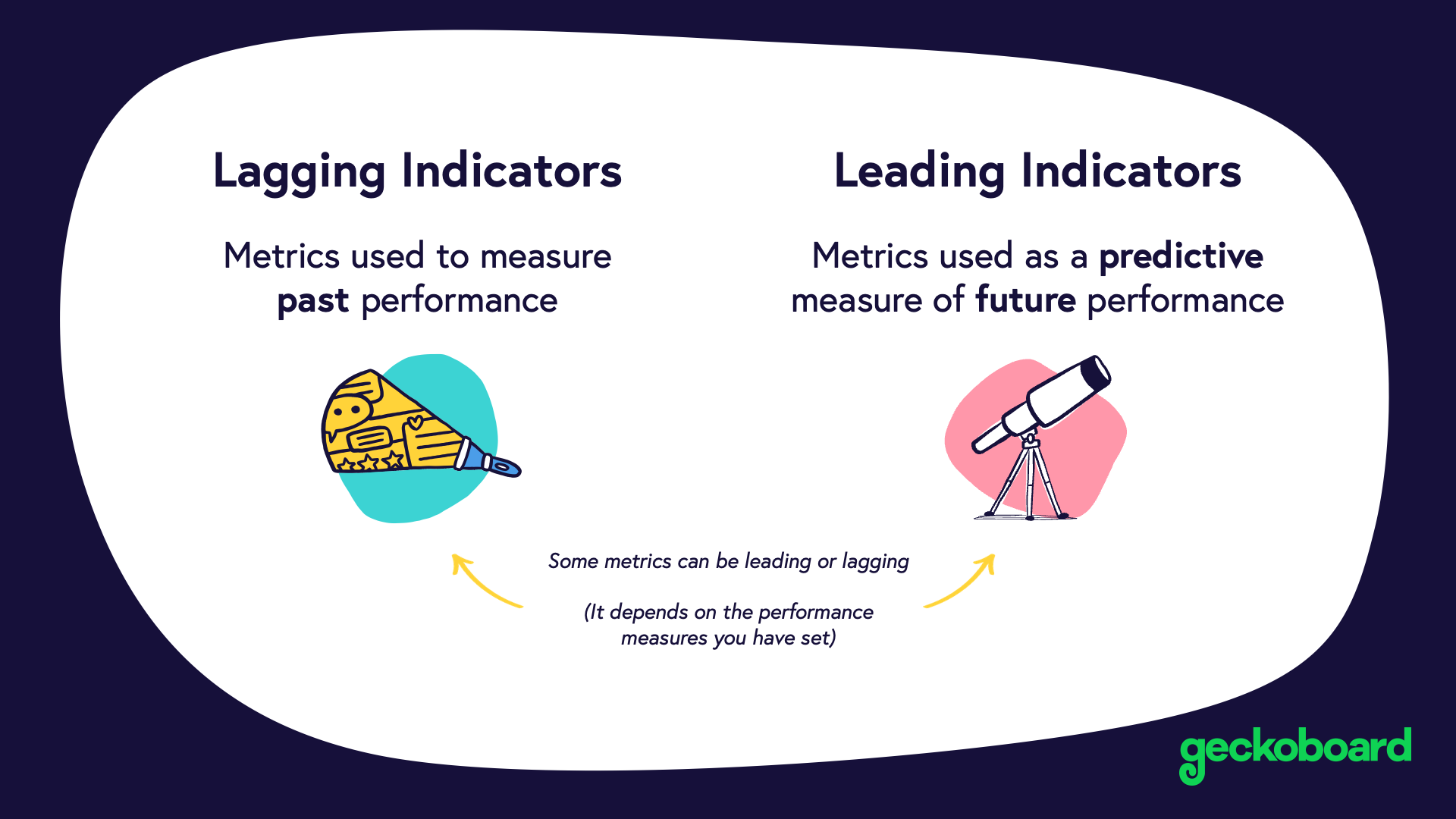
Coach: Jed, an activity is what you do, an achievement, what you’ve never done. You need activities to get an achievement. You do need to know whether a “goal” belongs to which. Goals for activities are called lead measures, and those for achievements are called lag measures. For example, you’ve never deadlifted more than 170 lbs; it would be an achievement to do 180 lbs. You’re making monthly sales of $20,000; $30,000 would be an achievement. But you must focus more on activities because you have more control over them. Achievement, not as much; in sales, you don’t control if a client will buy. We can predict from your activities what achievements you will make.

Image: https://www.geckoboard.com/blog/content/images/2021/11/Leading-lagging-indicators-explained-1.png

Jed: Activities are more doable than achievements?

Coach: Just more control, direct control. And easier to meat because of it. But goals of any kind must be SMART. SMART means Specific, Measurable, Achievable, Relevant, Time-bound. Let me illustrate by way of example. You can work out the explanation yourself.

  1. Specific. You don’t want to just be “better”. You want to “deadlift a bigger weight”. You don’t want to be “richer”. You want to “increase your sales”. Specific goals are easier to imagine.
  2. Measurable. You want to lift 180 lbs in 3 weeks. You want to increase your sales to $30,000 by the end of this month.
  3. Achievable. KC from Marketing, he deadlifts 200 lb and he’s smaller than you. You already lift a 1 rep max of 160 lbs, your form is good, and you’re motivated. Next week, we will add 10 lbs; the week after, 5 lbs; on the 3rd week, another 5 lbs. All doable. You’re already at $20,000, you will have 2 months of experience by tomorrow, you’re highly motivated, and Orly, who we hired just two months ago is now doing $35,000. Doable.
  4. Relevant. Your 1×1 rep max is the big attempt, the achievement in 3 weeks. But, let’s work on our activities. Your strength activity is to do a 3 sets of 3 reps per set, at 135 lb, 3x a week for 3 weeks. You’ll attempt 180 lb for 1 rep at the end of that 3 weeks. For your sales activities, you are going to focus on increasing the number of daily cold calls. You’re now at 50; you’re going to increase that by adding 50 progressively. Wrecks makes 150 cold calls a day, and he’s our top guy. Sales is a numbers game: more calls, more sales.
  5. Time-bound. We will get you to 180 lb working out 3x a week, 1.5 h each time, for 3 weeks. On March 8 we will attempt 180 lb. We will use this Excel sheet to track the number of cold calls you’re making everday.

Jed: Got it. What’s going to be our working arrangement?

Coach: I want you to click the following checklist on your journal. Did I dream today about what I want to achieve? Did I review my activity goals for the day? Do I visualize successfully enjoying my next cold call? Do I enjoy the thought so much I can’t wait to make my next call? Do I imagine hearing the next client telling me he is eager to buy? And while I’m on the phone, do I keep a smiling face? If you find that last one hard to do, hold a pencil between your teeth while taking.

Visualize, hear, act: what we coaches call the VAK system. Let’s review your journal every Friday.

Jed: Isn’t this like daydreaming Coach?

Coach: Yes, and no. If you mean fantasy, it’s not that. Fantasies are not SMART in some way, usually, they are not achievable or relevant. But what you’re doing is relevant to your health and income. By doing what I outlined here, you’re telling your brain what you’re imagining can be real, is real. You’re just taking advantage of the fact that your brain can’t tell if what you’re imagining is in the past, future or present..

But, you can be delusional. I’m here to stop you from biting off more than you can chew.

Still, it’s good to be ambitious. It might even be good to be a bit absurd. Read 2001: A Space Odyssey if you have the time. Clarke wrote:

The only way to discover the limits of the possible is to go beyond them into the impossible.

Arthur C. Clarke (1917-2008)

(Q.C., 230613)

You can be all at once whatever you choose to be: The VAK System in NLP

That we can be all at once whatever we choose to be means that a lot of what goes on in us is something we choose. I’m not saying that if a tsunami disintegrates your house, or your best friend betrays you, that you are responsible for the damage done to your property or to your body. However, you are responsible for how you will think about it, how you will feel about it, and how you will act on it. My mentor Prof. Dadufalza made me promise to never forget this.

That said, we can choose to react in a positive way to a negative event. Same event, different reaction, what I’m saying. But because some fears are habits, the way to reverse these fears is to create a new habit, and then to practice that habit. The system I will describe here is based on creating a habit of speaking to ourselves that will lead to positive behaviors. One way to set-up such a habit is to use the VAK system.

Image: https://thepeakperformancecenter.com/wp-content/uploads/2012/09/VAK-Image.jpg

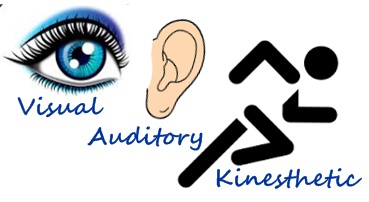
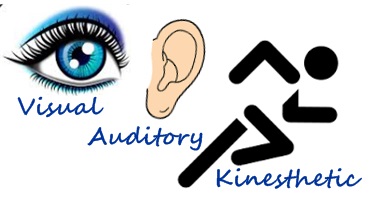
The VAK system in Neurolinguistic Programming (NLP) refers to three primary modes of sensory perception: Visual, Auditory, and Kinesthetic. According to NLP, people tend to prefer one of these modes when processing information.

  1. Visual (V): People who are visual learners tend to prefer and process information that they can see. They often think in pictures and are sensitive to visual details. They use language like “I see your point,” “Let’s look at the big picture here,” “The future is bright.”
  2. Auditory (A): Auditory individuals prefer listening and learn best through verbal instructions or discussions. They often think in sounds and are sensitive to tone and rhythm. They use language like “I think it sounds good,” “I hear you,” “Aristotle said this.”
  3. Kinesthetic (K): Kinesthetic learners prefer to learn by doing. They are sensitive to the physical world and often think in terms of physical sensations. They need to move or engage in a physical activity to process information effectively. They use language like “I feel this is going to work out,” “OK, guys, let’s get moving,” “You need to practice you speech.”

The theory behind the VAK system is that our thoughts must use sensory information to make a judgment. The sensory information can happen now, or it happened in the past (memory) or will happen (imagination).

Now, here’s the powerful idea: the brain will believe whatever judgment you make. That judgment often comes in the form of an internal dialogue. Say, you see a “ghost” on the stairway. If you tell yourself “Oh s**t, a ghost!”, your brain will go “Yes, it’s a ghost”, and you will start a series of involuntary reactions beginning with increased heartbeat, decreased skin temperature, and then a full scale panic attack at worst. But if you tell your brain this “ghost” is “I just got a bad hangover”, then you will act in an entirely different way. You might experience a temporary surprise at first, but it will rapidly evaporate as you focus on something other than the “ghost”.

In time, you will view all “ghosts” as harmless distractions at best, the sign you should sober up at worst.

Here is a more realistic example of how the VAK system might be used to get rid of many have called the second biggest fear after the fear of death: public speaking.

You want to become more confident. But don’t limit your confidence to only looking confident. Hear confident, feel confident. Apply the VAK system to make a movie in your head using all three sense modes. [You may ignore the parts where I refer to the actual event, but I include them here because you can also practice how to react to a hostile audience.]

  1. Visual: Imagine a great public speaker; say, Barack Obama. If you have aphantasia, a condition where you can’t visualize images in your mind, turn on a Youtube video of him giving a speech, or guesting in a talk show, like Between Two Ferns with Zach Galifianakis. Pay attention to Obama’s posture and facial expressions. Notice how he uses his hands, how he breathes. Then visualize yourself in his place, with the same confident posture, expressions and gestures, breathing pattern. Imagine your audience listening with great attention and clapping. During the actual speaking event make eye contact with individual people, first this guy on the right, and then this other one on the left. See their faces showing enormous interest. If they show discomfort or hostility, imagine them becoming calm.
  2. Auditory: Using your imagination or a video, pay attention to how Obama uses his voice: his speed, tone, pitch, inflections, rhythm. Does he say uhms? How does he use pauses? What does his body show when he listens to Zach? Then put yourself in Obama’s place, doing exactly what he is doing. The applause is directed at you. During the actual event, pay close attention to the sounds in the hall, the chit chat among the spectators. Imagine they are talking about you: they are looking forward to your talk. If you hear someone heckling, listen, then hold up your hand to him to say “Wait.”
  3. Kinesthetic: Practice. Write out your speech; sit down and read it aloud, with feelings. You may do this in front of a mirror. Then do it all over again standing up, making gestures, imagining yourself addressing this part of the audience, and then this other part. Nod your head at Zach or the emcee. Pause instead of saying uhm. Walk around the “stage”. As you get close to an actual speaking event, arrive early at the venue to pace around the stage and around seats. Breathe deeply, slowly, and rhythmically. Relax. When things become uncomfortable, do the same.

If you don’t have a speech ready, read from a book. You may also read from a shopping list or a telephone directory.

Practice, practice, practice. When you wake up in the morning, briefly imagine a speaking scenario with all VAK parts. At work, be “greedy” for the chances to speak. I tell my students, “When the teacher asks if there are any questions, raise your hand, stand up, and then figure out what question you want to ask.”

You will soon notice your internal dialogue change from negative self-talk to positive self-talk. As you become more and more confident in more and more aspects of your life, the normal dialogue you have with yourself will be: “This is not a problem, but an opportunity. This is not impossible, just hard. I can do this!”

People who are unable to listen to internal dialogue could write it out instead.

Some events in life are genuinely life threatening. The best thing to do in a mugging, as long as your life is not threatened, is to give your wallet. If your life is threatened, the best thing to do is scream (an explosive NO! will do), punch (the nose, for maximum pain) or kick (the nuts or the shin), and run, in that order, without thinking. I had a friend who knocked a mugger out. If you’re not this confident, you will want some training. Watch a violent movie. Imagine yourself kicking, punching, scratching, screaming and running. [Violent movies have a use!] I enrolled in basic krav maga to know what it actually feels like to be mugged. You might still get killed in a real situation, but at the moment where you have a fighting chance, fear will not paralyze you and ensure your demise. And if, in fact, you lost everything in a tsunami, again, when you need your wits to recover, fear will not paralyze you.

Finally, to say that we can be all at once whatever we choose to be does not mean we can be a genius at anything. Becoming great at something through technical practice is another subject. What is important here is this: that at the moment where you can act effectively, fear will not paralyze you.

(Q.C. 230611)

Coaching, NLP and CBT

Image: https://inlpcenter.org/wp-content/uploads/2016/10/what-is-nuero-linguistic-programming.png

A friend of mine recently retired from corporate and now works as a life coach. Leveraging his experience as an executive, he has since acquired skills in coaching, Neurolinguistic Programming (NLP) and Cognitive behavior therapy (CBT). His practice is pretty robust.

I will describe the work of a coach. Then I will describe the conceptual and practical features of NLP and CBT separately, before describing the pro’s and con’s of combining these disciplines into a coaching practice.

The field of professional life coaching involves working with individuals to help them set and achieve personal and professional goals, overcome challenges, and make positive changes in their lives. Let’s break it down:

Who are their clients?

Life coaching clients are pretty diverse, including:

  1. Professionals looking to advance in their careers, improve work-life balance, or transition to a new career.
  2. Individuals seeking personal growth and development of skills like time management or communication.
  3. Entrepreneurs who might need help with decision-making, business strategies, or managing the pressures of running a business.
  4. Young adults navigating education choices, career options, or personal development.
  5. People in life transitions, such as retirement, divorce, or relocation, who need guidance in adapting and setting new goals.

They might seek coaching for various reasons, including:

  1. Setting and achieving goals.
  2. Building confidence and self-esteem.
  3. Improving relationships and communication skills.
  4. Managing stress and finding work-life balance.
  5. Developing leadership and professional skills.
  6. Gaining clarity and direction in life.
  7. Overcoming procrastination and boosting productivity.

Qualifications of Coaches:

  1. Certification: There’s no one legal requirement, but many coaches undergo training programs accredited by organizations like the International Coach Federation (ICF) or the International Association of Coaching (IAC).
  2. Background: Coaches come from various backgrounds including psychology, business, human resources
  3. Experience: Good coaches often have experience working with a variety of clients and issues.

Skill Sets and Knowledge Background:

  1. Active Listening: Coaches need to listen deeply.
  2. Questioning: They ask powerful questions that provoke thought and self-reflection.
  3. Goal Setting: They help clients set realistic and achievable goals.
  4. Communication Skills: They communicate clearly and effectively.
  5. Motivation Techniques: Coaches motivate clients and keep them accountable.
  6. Problem-solving and Decision-making: Coaches helping clients develop these skills.
  7. Understanding of Human Behavior: They show basic knowledge of psychology.

What do sessions look like?

  1. Initial Consultation: The first session is often a get-to-know-you session, where the coach learns about the client’s background, challenges, and goals.
  2. Goal Setting: Early sessions typically involve setting goals and establishing what the client wants to achieve through coaching.
  3. Regular Sessions: These may be weekly, bi-weekly, or monthly, and generally last 45 minutes to an hour. They involve reviewing progress, addressing challenges, setting action steps, and sometimes doing exercises or activities.
  4. Action Plans and Homework: Often, coaches will assign ‘homework’ or action steps for clients to complete between sessions.
  5. Conclusion: As coaching progresses, there will be a wrap-up session where client and coach review the goals achieved and discuss next steps for the client.

Coaching is a collaborative process. Ultimately it’s the client who takes the action to make the changes they want in their life.

Now let’s look into two disciplines that commonly provide tools in coaching: NLP and CBT.

NLP consists of a set of tools and techniques that can help people understand how they think and feel, and how to communicate effectively.

Now, imagine your brain is a computer, NLP tries to teach you how to use the software to get the results you want in life. The name itself, Neurolinguistic Programming, means programming the language of the brain.

Professional NLP coaches are like personal trainers for the brain. They work with people to help them change the way they think, feel, and behave. They’re like your buddies helping with mental life hacks. Here’s what they might do:

  1. Setting Goals: They help you figure out what you really want. Like getting over a fear, boosting your confidence, or getting better at talking to people.
  2. Changing Thoughts and Beliefs: If you’ve got some thoughts that are dragging you down, they’ll work with you to flip the script in your head. They might help you change how you talk to yourself, so you’re more like your own cheerleader instead of your own worst critic.
  3. Improving Communication: They can give you tips on how to talk and listen better. This is cool because it can help you get along with people, whether it’s your boss, your partner, or the barista at your favorite coffee place.
  4. Handling Emotions: NLP coaches might give you strategies for dealing with emotions like anxiety or anger.

NLP is like a mixed bag, however. Some swear by it, while others think it doesn’t have strong scientific backing.

Some people say NLP is not scientific because it lacks solid evidence to back up many of its claims. Let’s dive into some reasons why it’s often criticized:

  1. Vague Theories: Some of the concepts and theories in NLP are not clearly defined. In science, it’s important for theories to be so defined that they can be rigorously tested and results compared across practitioners. However, in NLP, some of the ideas are kind of fuzzy and hard to pin down.
  2. Lack of Empirical Evidence: For something to be considered scientific, it usually needs to have a good amount of research and data to support it, and the results should be comparable. With NLP, there’s not a lot of solid, high-quality research. Some studies show positive results, but many are not considered reliable by scientific standards.
  3. Anecdotal Evidence: A lot of the support for NLP comes from personal stories and anecdotes. While these stories can be powerful, they aren’t considered strong evidence in science. In science, you need controlled studies to really say for sure that something is effective, and anecdotes don’t meet that bar.
  4. Over-hyped Claims: Sometimes, NLP practitioners make really big claims about what NLP can do, like radically change your life in a very short time, or help you master any skill effortlessly. These types of claims can make people skeptical.
  5. “One Size Fits All” Approach: NLP often presents itself as a cure-all for a huge range of issues, from phobias to relationship problems. In science, it’s rare for one approach to be a silver bullet for many different issues. This kind of overgeneralization is often seen as a red flag.
  6. Commercial Interests: NLP has been heavily marketed, and there’s a big industry around NLP training and certification. Sometimes, when there’s a lot of money involved, people worry that the claims being made might be more about selling courses than about solid science.

While some individuals find value in NLP for personal development or communication, the skepticism about its scientific validity mainly stems from the lack of rigorous, high-quality research supporting its techniques and the sometimes extravagant claims made by its proponents.

Keep in mind that NLP is not like getting a prescription from a doctor. It’s more like a set of strategies and techniques that some people find helpful. But, like everything, it might not be everyone’s cup of tea. It might not provide solutions to address psychological problems such as anxiety, depression and stress. For this, CBT might be more useful.

Cognitive Behavior Therapy (CBT) is a type of therapy that’s backed up by quite a bit of science. It’s like a practical tool kit for dealing with problems like anxiety, depression, and stress. Let’s get into the nitty-gritty of CBT:

  1. Scientific Basis: CBT is based on the idea that our thoughts, feelings, and behaviors are all connected. When you change one, you can change the others. There’s a ton of research showing that CBT can be effective for a range of issues, especially anxiety and depression. It’s the go-to therapy when psychologists are talking about evidence-based treatments.
  2. Structured and Goal-Oriented: Unlike some other types of therapy, CBT is pretty structured. It’s not just about talking about your problems; it’s about setting goals and making a game plan to tackle them.

What do professional CBT therapists do in their work?

  1. Identify Problematic Thoughts: CBT therapists help you become like a detective of your own mind. They help you pinpoint thoughts that are causing you trouble. Maybe you have thoughts like “I’m worthless” or “I’m going to mess everything up”.
  2. Challenge Those Thoughts: Once you’ve identified these sneaky thoughts, the therapist helps you challenge them. They might ask, “What’s the evidence for that thought?” or “Is there another way to look at this situation?” Just because you think something, doesn’t mean it’s true.
  3. Change Behaviors: Sometimes it’s not just about changing thoughts, but also about changing what you do. For instance, if you’re anxious about social situations, a CBT therapist might help you to gradually face these fears instead of avoiding them.
  4. Teach Coping Skills: CBT therapists often teach coping skills, like relaxation techniques or problem-solving strategies.
  5. Homework Assignments: You heard it right. But not the boring kind. Homework in CBT might include keeping a journal of your thoughts, or practicing a new skill you’ve learned in therapy to record what you do in therapy and applying it to real life.

CBT is not without its critics. Here are a few:

  1. Not suitable for everyone: CBT is a highly structured and focused form of therapy, and some individuals may not respond well to this approach. For example, people with more complex mental health issues, like severe personality disorders or chronic mental illnesses, may need a psychiatrist.
  2. Overemphasis on cognition: Some critics argue that CBT puts too much emphasis on thoughts and doesn’t pay enough attention to emotions. They feel that it sometimes ignores the underlying emotional aspects and focuses too much on changing thought patterns.
  3. Symptom-focused: CBT often targets specific symptoms rather than underlying issues. Critics argue that by focusing on symptoms, CBT might not address the root causes of psychological distress, and this could lead to recurring problems.
  4. Homogenization of treatment: Because CBT is often manualized, meaning therapists follow a sort of “treatment manual”, some believe it can lead to a one-size-fits-all approach. This might make it feel impersonal for some clients.
  5. Short-term effectiveness: While CBT is often touted for its effectiveness, some studies suggest that the benefits might not always last in the long term. For certain issues, the effects of CBT might diminish over time after the therapy ends.
  6. Over-reliance on techniques: Some argue that CBT relies too much on techniques and homework assignments and that this can sometimes detract from the therapeutic relationship, which is also an essential component of the healing process.
  7. Sociopolitical criticisms: Some critics from a sociopolitical standpoint argue that CBT is focused on helping individuals adapt to their circumstances rather than questioning or challenging the societal factors that might contribute to mental health issues.
  8. Accessibility and Cost: Even though CBT is effective, accessing it can be challenging for some due to cost, availability of trained therapists, and sometimes cultural barriers. This limits its reach to only those who can afford and access it.

While CBT is effective for many, it’s not a magic bullet (Nothing is.). Some of the criticisms can be addressed by integrating CBT with other therapeutic approaches to create a more tailored treatment plan for each individual.

CBT doesn’t drag on for years. In fact, the idea is for people to learn to take care of themselves after being equipped with these tools.

Many professional coaches combine NLP and CBT into their coaching program. This might have some benefits as well as drawbacks. Here’s a breakdown:

Pros:

  1. Diverse toolkit: With NLP and CBT, a coach can offer a broader range of strategies and techniques. This diversity might be helpful for clients who respond differently to various approaches.
  2. Enhanced communication skills: NLP is known for focusing on communication and rapport-building techniques. When combined with CBT, these skills can enhance the coach-client relationship and help clients communicate more effectively.
  3. Greater focus on goals and outcomes: Both NLP and CBT are goal-oriented approaches. The combination could lead to a strong focus on setting and achieving specific objectives, which can be motivating for clients.
  4. Personalized approach: Some clients may benefit from the cognitive restructuring of CBT but also find value in the NLP methods that address language patterns and belief systems. Combining the two can cater to different learning styles and preferences.
  5. Self-empowerment and mindset shifts: NLP often emphasizes empowerment and changing one’s mindset. When combined with CBT’s focus on restructuring negative thought patterns, this can be potent for personal development.

Cons:

  1. Lack of clarity and focus: Combining NLP and CBT may lead to a lack of focus on either approach. It might cause confusion for clients if not integrated properly, since the underlying principles are not always aligned.
  2. Dilution of evidence-based practices: CBT is strongly evidence-based, while NLP lacks robust scientific backing. Integrating NLP with CBT might dilute the evidence-based nature of the program, and some clients might question the scientific validity of the combined approach.
  3. Overcomplication: Trying to blend two distinct approaches can sometimes lead to an overly complex program. This could be overwhelming for clients who are looking for a more straightforward approach.
  4. Practitioner expertise: Finding a coach who is adequately trained and skilled in both NLP and CBT might be challenging. There’s also the risk of superficial understanding of both approaches.
  5. Cost and Time: Combining NLP and CBT might require more sessions or longer engagement, which could lead to higher costs and time investment.

The effectiveness of an NLP and CBT combo can be influenced by factors like the skills and expertise of the coach, the specific needs and preferences of the client, and the way the two approaches are integrated.

(Q.C., 230610)

On Rational Psychology as a profession

I’ll get a little personal.

A little more than a decade from now I will be retiring from empirical research. With no intention of continuing in academe but still with the energy to go riding at an old age like my friend Tex, what can I do to pay for gas?

I thought, I’ve been practicing rational psychology as a side interest for years. Is that even a thing nowadays? Can it be monetized?

What’s it about?

Rational psychology is this old-school way of thinking about the mind and soul. It comes from the 17th and 18th centuries, when people were trying to figure out what makes people tick. They were focused on the idea of an immaterial soul or mind that’s different from our bodies.

What’s the focus?

The rational psychologists like Rene Descartes (1596-1650) (after whom this blog is named) were in deep into the nature of consciousness and its origins in the soul. But, they weren’t looking under the hood. They didn’t have brain scans or DNA sequencing, or questionnaires; instead, they were deducing the nature of that mysterious stuff based on first principles, such as the operations of intellect and will.

How’d they go about it?

They mostly sat around thinking instead of doing experiments. They used logic and common-sense reasoning to deduce the nature of mind and soul and its relation with the body. It was a field of “mind experiments” more akin to mathematics than to clinical psychology.

What did they think was going on?

The rational psychologists thought that the mind (or soul) was like a ghost in the machine. They figured this mind-ghost was born with some built-in ideas like a program to explain why individual ghosts can even understand each other. Artificial intelligence researchers described their field as rational psychology at some point.

What about actions?

Actions were orders coming down from the mind HQ. If you grab a slice of pizza, it’s your soul making the call.

How does rational psychology compare with “other” psychologies?

We can put rational psychology side by side with three other important psychological approaches: Freudian, Jungian, and empirical psychology. Let’s compare them:

RationalFreudianJungianEmpirical
OverviewUses reason and logic to understand mental processes and behavior. Does not place much emphasis on unconscious motives or emotions.Emphasizes the unconscious mind and how it influences behavior. Unresolved conflicts from childhood have a profound impact on adult behavior.Emphasizes the role of the unconscious. View of the unconscious is more comprehensive and less focused on sexuality.Emphasizes empirical evidence and the scientific method to understand behavior and mental processes. Grounded in the collection of data through observation, experimentation, and measurement.
FocusLogical and rational thinking, decision making, and the cognitive aspects of behavior.Unconscious motives, defense mechanisms, sexual and aggressive drives, the influence of early childhood experiences.Concepts such as archetypes, the collective unconscious, individuation, balance of opposing forces (e.g. masculinity and femininity) within the psyche.Observable and testable behaviors and mental processes. Encompasses topics like memory, learning, cognition, emotions, and social interactions.
MethodsLogical analysis and argumentation. Closely related to philosophical psychology.Patients are encouraged to explore their unconscious thoughts through free association and dream analysis.Uses dream analysis, exploration of myths, and engaging with the imagination as therapeutic techniques.Experiments, surveys, case studies, employs statistical analysis to test hypotheses and draw conclusions.
CritiquesMay overlook the complexities of human emotion and the subconscious mind.Lack of empirical evidence, focus on sexual motives, as unscientific. Historically significant for having first emphasized the importance of the unconscious mind.Lack of empirical evidence, more akin to a philosophical or spiritual system than a scientific psychology.Can overlook the depth and richness of human experience, and may be limited in addressing aspects of the human mind that are not easily measurable.


Freudian and Jungian psychologies are historically significant, and continue to be influential in certain domains. But empirical psychology is considered to be the foundation of modern psychology; it dominates the field today due to its grounding in the scientific method and empirical evidence.

Rational psychology is like an old relic. But aside from science having its limits, rational psychology in its grounding in metaphysics continues to hold importance in the contemporary world of knowledge for the following reasons:

  1. Understanding fundamental concepts: Rational psychology deals with fundamental concepts such as being, nature, intellect and will. These concepts are used to build theories and models in empirical psychology and applied fields, e.g., human resources management.
  2. Basis for scientific inquiry: Empirical psychology often uses philosophical assumptions. For instance, the idea of will is a rational assumption that underpins the scientific method. Understanding the metaphysical foundations of empirical psychology can lead to a deeper understanding of scientific theories.
  3. Ethical and moral frameworks: Philosophical inquiries into the nature of mind and values play a significant role in shaping ethical and moral frameworks. This has practical implications in areas like bioethics, human rights, and social justice.
  4. Mind-Body problem: The central concern of rational psychology is understanding the relationship between the mind and the body. This has implications in neuroscience, artificial intelligence, and consciousness studies. The debate on the nature of consciousness and its relation to the physical brain is an area where philosophy directly intersects with science.
  5. Addressing limitations of science: While science is excellent at explaining the empirical world, it often falls short in addressing questions that go beyond empirical observations, such as “What is free will?” or “What is the nature mind?”. Rational psychology can provide frameworks and tools for engaging with these deeper questions.
  6. Critical analysis: Rational psychology helps in critically analyzing assumptions that underlie different systems of thought. For instance, it helps in analyzing the assumptions that underlie different economic theories, political ideologies, or interpretations of history.
  7. Interdisciplinary insights: Philosophical inquiry can provide insights that are relevant to various disciplines. For instance, discussions about the nature of intellect can be relevant to physics, philosophy, and even literature.
  8. Spiritual and religious understanding: For many, rational psychology and its emphasis on the immaterial mind provides a means to explore spiritual and religious questions, and to seek understanding or meaning in life.
  9. Innovation and creativity: By challenging established concepts and encouraging abstract thinking, rational psychology can stimulate innovation and creativity, leading to new ideas and perspectives in both the arts and sciences.

While rational psychology may not have the empirical basis that characterizes the empirical sciences, it continues to be an essential component of intellectual inquiry, providing depth and breadth to our understanding of the world.

It’s not a proper profession. But if it were, what would it look like?

Let’s imagine rational psychology as a mash-up of rational thinking and modern psychology. If it were a profession, here’s what it might look like:

  1. Critical Thinkers Meet Shrink: Professionals in rational psychology would be like the superheroes of critical thinking and psychology. They’d help people analyze their thoughts and behavior in a super logical way. Think Mr. Spock with a psychology degree.
  2. No BS Zone: They’d cut through the emotional clutter and help folks see things as they really are. Emotions are cool and all, but sometimes they make us see things through some whacky lenses.
  3. Decision-Making Ninjas: They’d be all about helping peeps make smarter decisions. They’d give you the tools to weigh the pros and cons, and not let emotions like fear or excitement make you do dumb stuff.
  4. Bias Busters: Our brains love to take shortcuts, and sometimes this leads to biases. A rational psychologist would be like a personal bias detective, helping you spot when your brain is trying to trick you.
  5. Emotional Intelligence Trainers: Even though they’d focus on rational thinking, they’d also be big on emotional intelligence. They’d help people understand their feelings, but in a super logical way, so emotions don’t go all Hulk-smash on their decision-making.
  6. Problem-Solving Pros: Got a problem? These guys would help you break it down, analyze it, and come up with a game plan that’s based on reason and evidence, not just gut feelings.
  7. Science-Backed Approaches: They’d probably be super into using research and data to back up what they’re saying, so it’s not just about thinking hard, but also about thinking smart.
  8. Real-Life Applications: They might work in various fields like counseling, business consulting, or even life coaching, using their rational psychology superpowers to help individuals and organizations think and operate more effectively.

Very similar to cognitive behavior therapy, actually.

Googling “rational psychology near me” is not likely to lead you anywhere. However, I can become a writer and consultant in this field. One day you might just find me and my Yamaha Vmax near somewhere close.

I’ll ditch my Mazda 3 and get this when I retire. Image: https://ultimatemotorcycling.com/wp-content/uploads/2019/10/2020-yamaha-vmax-buyers-guide-1.jpg

(Q.C., 230609)