A wise man believes only in lies

I read few books. One of them is The Art of Thinking Clearly by writer Rolf Dobelli.

Rolf Dobelli (1966 – )says that we should read few books, but each one at least twice: a subsequent later reading reveals much more than an earlier one. He recommends five to ten nonfiction books yearly, max. Younger people can do 50 per year because they are still discovering their taste. 

Another reason for reading fewer books comes from the fact specialists in today’s society are more valued than generalists. Specialists get better jobs, earn higher salaries, and rise in organizations that excel thanks to the way they use specialists. In another take, Entrepreneur Tim Ferriss (1977 – ), in Tools of Titans, recommends becoming a specialized generalist. He means try to combine a handful of skills that are rarely combined.

This is how it works. To be the best neurologist in the business, your chances of succeeding are perhaps 1 in 10,000, the top tiny fraction of a percentile. However, if you are a neurologist in the top quartile, and a public speaker in the top quartile of speakers, then you have a combination that can more easily put you at the top of public speakers who are expert neurologists. You can create a niche where you are the best in the world. And regardless of the combination, sooner or later you’re going to meet someone who’ll pay you money for it.

Now becoming good at anything requires a lot of time and practice. The industry is not very upfront about the fact that most people who read self-help books do not benefit from them. They don’t have the ingredients to make use of what they read.

What does it take to be good at something? The French say you need three things to be good. First, savoir, knowledge, usually from books. Second, savoir faire, technique, usually from repetition. And third, savoir faire faire, i.e., know how to make things work: leadership, management, connections. It means politics, logistics, risk, judgment calls. Timing. And luck. For convenience, let’s call the third “street smarts”. All three take years to master for most people.

It, therefore, makes sense to focus. Focus comes from knowing your taste, your special prejudice that tells you what you like and, just as importantly, what you don’t like. Focus is the best strategy for becoming and expert, and this strategy applies to choices from books to Youtube videos to movies, the music we listen to, the sports we practice, the food we eat, the clothes we wear. We consume a wide variety of stuff, just that we’re able to tell which of them is a serious and worthy investment, from those that we know we will do just once or twice. However, being too refined about tastes, too finicky, too artsy even if genuine, is borderline mental.  

Focus can be mentally harmful. Focused workers must guard against burnout and against narrow thinking. Having invested so much in an idea one often disregards evidence AGAINST that idea. Focused workers can fall into the danger of not seeing why something so clear to them isn’t to others. To balance this danger, it is wise to read authors and to converse with people we don’t agree with. This is not the equivalent of saying to have no opinions or to have no prejudices. Rather, as author G.K. Chesterton (1874-1936) said, these reading improve the quality of our prejudices.

Having recommended wide readings, should one have an opinion on everything? Dobelli says that having an opinion on everything is a waste of time, unless you are in it for the entertainment. Take politics: everyone including your barber becomes an expert during presidential elections. I’ve seen passionate arguments from “experts”, and frankly, this passion is laughable. Funny, but passion can be deadly. Among experts, on the other hand, outbursts are rare. For them outbursts are almost theatrical, a form of entertainment, suggesting that it takes much more than the pleasure motive to be entertained in any productive way. The more knowledge, skill, and street smarts, the more entertainment builds the soul. And the less chance of murder, because real experts don’t seek to crush their opponents.

The problem with Facebook and social media is that they democratize, bastardize expertise without the safety switches provided knowledge, skills, and street smarts that make expertise reliable or productive. Social media is emotion masquerading as logic. G.K. Chesterton said there was more fulfilling exchange between a Christian and a Muslim border guard debating doctrine in Moorish Spain than there are between most moderns. Besides, those soldiers had real weapons. But in social media one has a weapon with which to assassinate with total impunity.

Or to give advice with total impunity. Consider Dr. Google. Summarized, powerpointed medical knowledge does not reflect the exceptions, the conditions, the alternate hypotheses that would otherwise be second nature to those who have read a lot on the subject and have debated the information with peers and superiors over a long time. I know doctors who specifically instruct their patients NOT to look up Google. If the patient insists, well, read the horoscope. At least you know it’s a lie.

Nassim Nicholas Taleb (1960 – ) advices not even to look up the news. Just think: news has to be produced every 24 hours, whereas expert articles take weeks, years, to write. It would be better to read op eds from experts rather than the headlines, or Bloomberg or The Economist. If you’re serious about it, read multiple news from different political sides.

Different political sides because truth is rarely unalloyed. It comes mixed with nuances, optical illusions, wishful thinking, a history of false starts and dark endings. In nature there are no stories, only facts. All stories, all news, articles, even scholarly ones, are constructs, and most are wrong. For every story there is at least one alternate that also makes the cut. This might not be obvious because some stories are just so clear. But beware Menken’s law: for every problem there is a clear, simple, wrong solution.

But one might not have the time to look at all these nuances. Thinking like this during an emergency could get you killed. In a crunch, one must trust one’s training. If you do not have the relevant knowledge, skill or street smarts, then be prepared for the worst. Otherwise, if you survive, or have even a little time, use your brain to the max to think about important matters.

Image: https://sciencefiction.com/wp-content/uploads/2018/11/talesoftheunexpected.jpg

And that thinking will often lead one to conclude differently from most people. Writer Roald Dahl (1916-1990), in the foreword to Tales of the Unexpected wrote:

“A wise man believes only in lies, trusts only in the absurd, and learns to expect the unexpected.”

Roald Dahl, Tales of the Unexpected

Think about it for a while. It’s not something an ordinary person would say. It’s something an extraordinary person would say. 

“A wise man believes only in lies, trusts only in the absurd, and learns to expect the unexpected.” Dahl is not asking the reader to be a sucker. He is telling the reader: “Believe the horoscope, because you know it is a lie. For everything else, he is saying that the crowd is often wrong.

Where do you find these wise people? In good authors. Good scripts and lyrics. You find them wherever you find work well done. You find them among your team mates with whom you share a tradition that allows you to converse without having to run through every premise. You find wise men among people who you don’t agree with, who might even be hostile to you, or younger than you. Wisdom comes from hard, honest work regardless of where it lands a person in life. Everyone who has achieved something has found a particle of truth that you, in your unique path, did not encounter. 

A useful advice: have three kinds of friends — those inferior to you, whom you can teach; those at your level who can challenge you; and those who are above you from whom you can learn new things.

(Q.C. 230507)

On Frying the Nerves

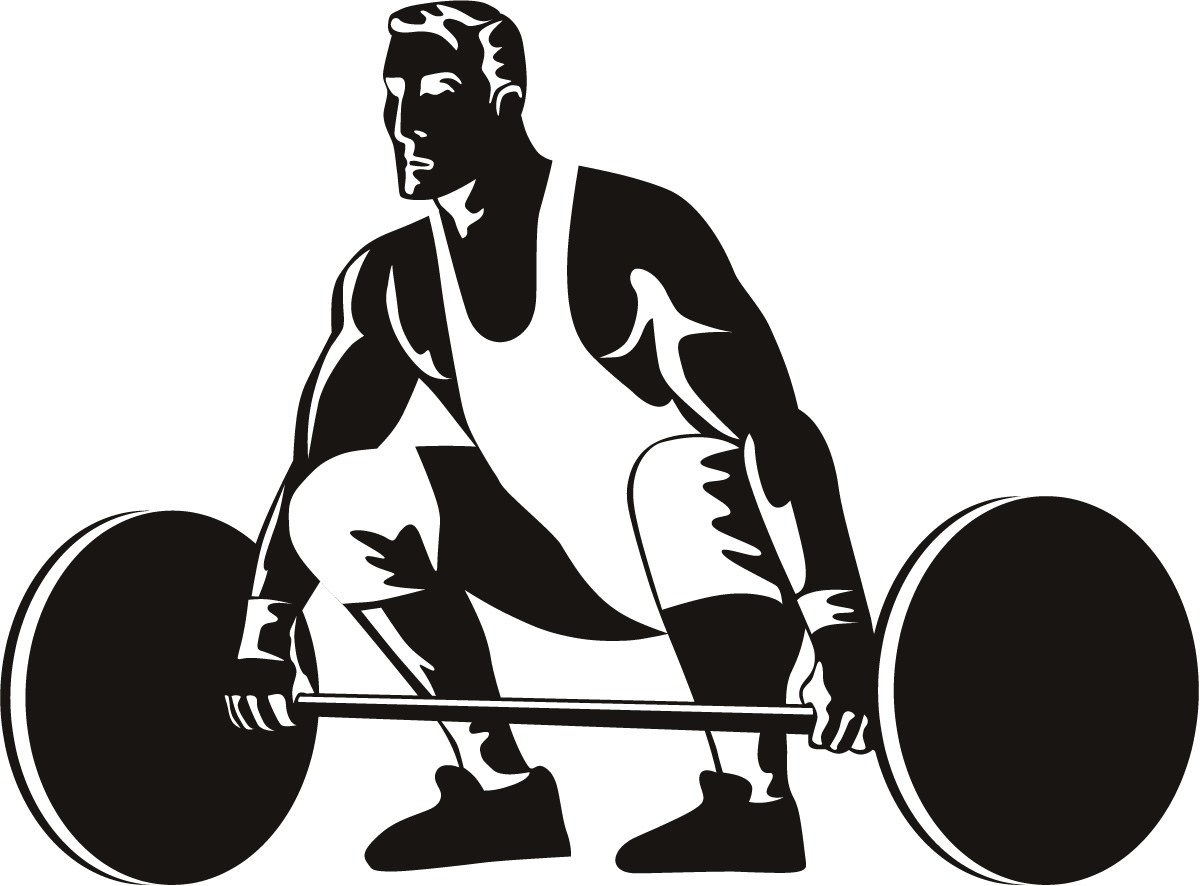
I started practicing Olympic weightlifting in 2007. Sixteen (16) years later, I’m still finding better ways of executing the moves. For it is a difficult sport. Technicality is what attracted me to to this sport. It’s what keeps me going to the gym. Everything else to me there is boring by comparison.

Image: https://cdn.wallpapersafari.com/50/43/UgepA9.jpg

Olympic weightlifting consists of two primary lifts: the snatch and the clean and jerk. These lifts require precise coordination, explosive power, and maximal effort to lift heavy weights in a controlled manner. As a result, they place considerable stress on the nervous system, particularly the motor neurons that control muscle contractions.

Too much of that causes what is sometimes called frying of the nerves.

“Frying the nerves” is an expression often used to describe the sensation of one’s nerves becoming overwhelmed, overstimulated, or excessively fatigued. While this colloquialism may not be rooted in scientific language, the concept it represents is not entirely unfounded. There are neurological phenomena that can cause sensory overload and overstimulation. I will describe the possible causes and consequences of this phenomenon and its implications in training

The possible causes of overstimulation can be broadly categorized into external and internal factors.

External Factors

External factors involve the stimulation of the sensory receptors due to external stimuli, such as bright lights, loud noises, strong odors, or excessive tactile stimulation. These can lead to sensory overload, which occurs when the brain cannot effectively process or filter the incoming sensory information.

Internal Factors

Internal factors refer to the physiological or psychological aspects that contribute to overstimulation. These may include fatigue, stress, anxiety, mental health conditions, or neurological disorders, which may render the nervous system more vulnerable to sensory overload.

These factors can have several consequences on both the peripheral and central nervous systems.

Peripheral Nervous System

Overstimulation of sensory receptors in the peripheral nervous system may lead to increased neural activity and the release of neurotransmitters, such as glutamate, which play a role in pain perception. Prolonged exposure to excessive stimulation can result in the activation of nociceptive neurons, potentially causing chronic pain and hypersensitivity.

Central Nervous System

The central nervous system, specifically the brain, is responsible for processing and interpreting sensory information. Overstimulation can overwhelm the brain’s ability to filter and process this information, leading to cognitive fatigue, reduced attention, and impaired decision-making. These impair an athlete’s ability to perform high-intensity exercises, like Olympic weightlifting, and may result in diminished performance or increased risk of injury.

To prevent CNS fatigue and the “frying the nerves” phenomenon, Olympic weightlifters need to allow sufficient time for recovery between lifts, training sessions, and competitions. This recovery time enables the nervous system to replenish its energy stores, repair damaged neural tissue, and restore optimal neuromuscular function.

Periodization

Olympic weightlifters often employ periodization techniques, which involve organizing training into distinct cycles with varying intensity, volume, and frequency. This approach allows for adequate recovery, preventing excessive neural fatigue and the “frying the nerves” phenomenon. I find that I need about 2 minutes between reps or else I lose my form, even when I feel I’m rested.

Autoregulation

With age I have had to cut down serious lifting to once a week, with shorter drills in between, and always a day of rest between workout days. Autoregulation is a training method that adjusts the intensity and volume of training sessions based on an athlete’s daily performance and readiness. There are bad days. By listening to their bodies weightlifters reduce the risk of “frying the nerves” and also the discouragement that comes with being too “ambitious” on a bad day.

Sleep and Nutrition

Getting enough sleep and nutrition is crucial for recovery and maintaining a healthy nervous system. Adequate sleep allows the body to best repair and regenerate neural tissue, while proper nutrition provides the essential nutrients required for optimal neural function and body repair.

As we’re in the topic of nutrition, let me describe my experience with xenobiotics, “drugs”, supplements. Specifically, caffeine, ibuprofen/paracetamol (Alaxan), and vitamin C (Berroca).

Caffeine. This drug, found in high amounts in regular coffee, is a stimulant. It stimulates the central nervous system, which can lead to increased alertness, concentration, and reaction time. It may enhance physical performance by mobilizing fatty acids from fat tissue and increasing adrenaline levels, thereby improving endurance and strength. By the time I start my work out I would have already taken two cups.

Ibuprofen/Paracetamol (Alaxan). Ibuprofen is a non-steroidal anti-inflammatory drug that provides short-term relief from pain caused by sports injuries, such as overuse injuries. Paracetamol is a drug that relieves pain and reduces fever, and is not an anti-inflammatory drug. Together they allow athletes to continue training or competing with reduced discomfort. But they can also mask pain, which could aggravate injuries, and too much use plus lack of hydration may cause kidney and liver damage. I take one Alaxan capsule (200 mg ibuprofen, 325 mg paracetamol) shortly before entering the gym and stay very well hydrated throughout. It probably masks some pain, but the main effect I notice when I take or do not take it is that I feel more relaxed at the end of a work out when I took Alaxan.

Vitamin C. I take this right after my 10-min treadmill warm up. I think it just boosts energy, but I feel it’s just really refreshing. As to food in general, I try not work out after lunch or dinner. I work out no less than 3 hours after a light breakfast. Even a protein or a high calorie shake is not optimal for me less than 1 hr prior to lifting.

Olympic weightlifting places significant demands on an athlete’s nervous system, and understanding the “frying the nerves” phenomenon is essential to ensuring optimal performance and minimizing the risk of injury. By incorporating appropriate recovery strategies, periodization, autoregulation, and prioritizing sleep and nutrition, weightlifters can effectively manage the neural demands of their sport and reduce the impact of “frying the nerves” on their performance.

(Q.C. 230506)

On Courage

Folk in those stories had lots of chances of turning back only they didn’t. Because they were holding on to something.

Sam , in The Two Towers by J.R.R. Tolkien

We will encounter things in life that will cause us to be really afraid.  Sudden unemployment, a life-altering choice, a sudden illness, or the prospect of physical pain, fear is a fact of life in a fallen world. I heard a priest comment once that the temptation in the Garden of Even may have begun with an event like that. Somehow Eve lost heart and made wrong choices after that.

How do we stare these difficulties in the face and not lose heart? By practicing the virtue of fortitude.

What is fortitude?

Fortitude is the moral virtue that makes us firm in difficulties and constant in the pursuit of the good. It strengthens the resolve to fight temptations and to overcome obstacles in the moral life. Fortitude enables one to conquer fear, even fear of death, and to face trials and persecutions. It disposes one even to renounce and sacrifice his life in defense of a just cause. “The Lord is my strength and my song.” “In the world you have tribulation; but be of good cheer, I have overcome the world.”

Fortitude is the ability to choose what is right even when everything inside us and outside us tells us to run away. It is the ability to stand firm in doing good in the face of danger and potential suffering.

Fortitude flows naturally from faith, hope, and charity. When we believe the promises of God (faith), and have confidence not in ourselves but in the strength of Christ (hope), and we are motivated by love (charity), we will find ourselves filled naturally with the virtue of fortitude.

Most of us don’t have to face any real danger everyday. But there are still ample opportunities for fortitude.

Before our eyes, a once great civilization, built on the bedrock of a shared faith, is falling into ruin. The tyranny of relativism attacks all that is good, beautiful and true. Those say that fornication is bad are cancelled. Those who say homosexual marriage is ugly are cancelled. Those who say science doesn’t support multiple sexes are cancelled.

Poverty is everywhere. Bullying is rampant and anonymous. Kids have access to porn. The family is crumbling. Radical Islam is on the rise. The collapse of marriage is celebrated. The list goes on and on. Enough to make us shudder to think what kids today will grow up in.

A fish living in a polluted stream cannot just jump out of it. What the fish can do is find a cove where it could work with other fish to keep that cove clean. This requires that the fish trust each other.

Jordan Peterson points to courage as a key to facing the problem of trust. In a lecture that has been viewed hundreds of thousands of times on Youtube, he begins by asking: Why should we trust people?

A naive person believes that everyone is trustworthy. But, if he gets bitten, he might decide to no longer trust anyone. But then he can not close deals, he cannot get anything done. That fish is all by itself.

So, how do you trust? Peterson says, “Not because you’re naive, and not because they couldn’t betray you, and not because you don’t know that they could betray you, but because if you hold out your hand in trust then you’re inviting the best part of that person to step forward, and that won’t happen unless you take that initial step. And that’s courage, not naivete.”

Hold your hand out, inviting the best part of people to step forward. We take the initiative. That’s courage, not naivete.

We can face those assaults by taking that first step to invite the best part of our collaborators to step forward. Now, more than ever, fortitude is needed among men, especially Catholic men. We are called to stand firm and recognize that, no matter how black things may seem, “there is good in this world, and it is worth fighting for.”

Before closing, all this brings to mind memories of the Lord of the Rings.

While the movies are not entirely faithful to the books, they do capture several key elements Tolkien was trying to convey —- one of which is the fortitude and perseverance of the humble hobbits.

Image: https://m.media-amazon.com/images/M/MV5BMTkwNDMzNjg5Nl5BMl5BanBnXkFtZTcwMTI3NDk2Mw@@.V1.jpg

One of the key moments takes place in The Two Towers. After a long journey, Sam and Frodo are finally about to enter Mordor. They are tired, discouraged, and afraid of what awaits them. In addition, the Nazgul are hunting the two hobbits relentlessly.

Frodo, bearing the burden of the ring, is on the brink of giving up and turning for home. Sam too, is tired and afraid, but unlike Frodo, he possess an inner strength—fortitude that propels him to keep pressing on. He reminds Frodo exactly why they can’t quit.

Sam: It’s all wrong. By rights we shouldn’t even be here. But we are. It’s like in the great stories Mr. Frodo. The ones that really mattered. Full of darkness and danger they were, and sometimes you didn’t want to know the end. Because how could the end be happy? How could the world go back to the way it was when so much bad happened? But in the end, it’s only a passing thing, this shadow. Even darkness must pass. A new day will come. And when the sun shines it will shine out the clearer. Those were the stories that stayed with you. That meant something. Even if you were too small to understand why. But I think, Mr. Frodo, I do understand. I know now. Folk in those stories had lots of chances of turning back only they didn’t. Because they were holding on to something.

Frodo: What are we holding on to, Sam?

Sam : That there’s some good in this world, Mr. Frodo. And it’s worth fighting for.

Folk in those stories had lots of chances of turning back, only they didn’t.

(Q.C. 230506)

The Bias Bistro

Welcome to The Bias Bistro, the singles bar to be, where cognitive biases come alive as characters seeking companionship and banter. The atmosphere is electric, filled with the buzz of conversation and the clink of glasses, as each bias flaunts its unique charm and style.

Image: https://cdn3.vectorstock.com/i/1000×1000/14/97/young-people-having-fun-in-a-bar-vector-22021497.jpg

The usual clients were all there: Confirmation Bias, with his slicked-back hair and smug grin, was holding court at the center of the room, surrounded by like-minded individuals who agreed with everything he said. Anchoring Bias, a 40-year old bimbo in a sailor’s outfit, clung to the bar, steadfastly refusing to budge from her first impressions. Availability Heuristic, a bubbly 20-year old extrovert, flitted from one conversation to another, recounting and upgrading the latest gossip and anecdotes.

Suddenly, amidst the laughter and chatter, a rackett arose near the entrance. Hasty Generalization, a lanky figure with a penchant for jumping to conclusions, collapsed in a heap on the floor. The room fell silent, and all eyes turned to the unfortunate patron.

A cacophony of voices erupted as the biases began to debate the best course of action. Confirmation Bias was convinced that Hasty Generalization had fainted from lack of air conditioning, a theory he had proposed several times before. “I told you this would happen!” he exclaimed, ignoring any alternative explanations.

Fundamental Attribution Error chimed in, “It’s clearly because of Hasty Generalization’s own carelessness! He always stumbles into situations without thinking.”

Availability Heuristic, recalling a recent news story about food poisoning, insisted that Hasty Generalization must have eaten something dodgy before arriving at the bar or even at the bar. “The panini tasted weird.”

Overconfidence Bias, often wrong but never in doubt, declared, “No need to worry!” as he was an expert in first aid, having taken a brief online course 13 years ago.

As the biases continued to argue, a quiet, unassuming figure in the corner, Monica Grace, stepped in. She gently pushed her way through the crowd and knelt beside the fallen Hasty Generalization. Carefully assessing the situation, she deduced that he had merely tripped over his own shoelaces and had become momentarily stunned by the fall.

Monica, in a calm and even voice, said “Everyone, please settle down. Hasty Generalization is fine; he just tripped and needs a moment to recover. Let’s all take a deep breath and remember not to let our own biases cloud our judgment.”

“He always trips himself,” mumbled Fundamental Attribution Error.

Chastened, the biases murmured in agreement. As Hasty Generalization shakily got to his feet, the biases resumed their companionship and banter, maybe a little more mindful of their own tendencies to distort reality.

Who am I kidding.

The Bias Bistro returned to its lively atmosphere. The night carried on, filled with laughter and peculiar debates, to the extent possible, and perhaps even a touch of personal growth, to the extent possible.

(Q.C. 230504)

On Taking a Break

One adorable thing about the pandemic is that most of us are now familiar with PCR, the polymerase chain reaction. As one of the most charming consequences of molecular biology it is interesting to know how it was discovered.

PCR was discovered by Kary Mullis (1924-2019). While working as a chemist in Cetus in the 1980’s, Mullis was trying to figure out how DNA makes exact copies of itself. The process itself was well known. What Mullis discovered in 1983 was a way to copy any desired portion of it and only that portion. Nice.

To give you an idea, the full DNA sequence of one human will fill up 23 volumes of Brittanica, 1000 pages each, font 8. Mullis found a way to search any part of that book, any sentence, and copy that sentence over a million times, all in the same process he called PCR. Before Mullis that process took months. Today, it takes a few minutes.

The part of this story that many don’t know is when exactly the idea came to him. It came to Mullis like a bolt of lightning while driving from the Bay Area to his cabin in Mendocino. The light was so powerful that he knew he would win the Nobel Prize. Which he did in 1993.

Eureka moments like this are well known. Archimedes discovered the principle of buoyancy while taking a bath; Kekule, the structure of benzene, in a dream; and me when I thought of the name KABUNYA for our new NGO during a lab break. In all cases it is clear that rest was necessary for these lightbulb moments.

Image: https://i.ytimg.com/vi/X53-8g49EjQ/maxresdefault.jpg

One theory says that the brainy processes that connect ideas in surprising ways requires you NOT to think in the unsurprising ways. Rest is also needed for normal activities, like, converting short term memories to long term memories, which seems to happen best during sleep.

Sleep in fact is needed for health. Research has shown that lack of sleep leads to psychosis and personality disorders. It can also cause hypertension and a greater susceptibility to infections. But tgod sleep leads to sharper thinking, a better immune system, and sunnier moods.

Rest in bite-sized portions also works. The Pomodoro, for example. Take an egg timer, set it for 25 minutes, then work with no cell phones, no Youtube, no email. When the timer rings at the end of 25 minutes you HAVE TO REST. Funny cats for 5 minutes. Then do another run of 25 minutes, and so on. You might manage 3 or 4 cycles in a row before you need, say, lunch. The Pomodoro is one hack cognitive behavior therapists recommend for people with mental health issues.

We need rest to be productive. Most people think weightlifters spend a lot of time, well, lifting weights. False. As a weightlifter, I spend much more time resting between lifts. And few people work out everyday. Intense activity with little rest will harm the body, sabotage one’s goals, and fry one’s nerves.

I have to about that one some day, frying the nerves.

People get tired dealing with people. Many think that Toastmasters spend a lot of time speaking in public during their club meetings. FALSE. Each Toastmaster spend much more time listening. Dale Carnegie said we have two ears for listening and only one mouth for talking. Most good conversation is listening.

Rest also lifts the spirit. Good mentors mainly listen. A friend told this story. A man once came to him for life advice complained how he was so stressed, had high blood pressure, and all. It made him worried and depressed. At the end of that sad story my friend just asked, “How much sleep do you get everyday?” “About 3 hours.” “Get some 7 and a half hours of sleep for a few days, see your doctor, then let’s meet again.” In their next meeting, the man spoke about his dramatic improvement. All he lacked was sleep.

How much rest do we need? That depends on the context. Ratios appear to depend on recovery time: 8/24, 2/12. I don’t think the ratio is at issue. What does appear to be at issue is that it is possible to have a bad kind of rest. Now, let’s see how that happens.

My friends in high school, we used to talk about the books we read. I mean real books, this was before the internet. Popular was Og Mandino’s The Greatest Salesman in the World, still very popular today. However, I only really started reading it a year ago. It’s about 10 Ancient Scrolls that list the formula for success. Let’s look at Scroll #8.

Scroll #8 says: Today I will increase my value a hundredfold.

Increase my value a hundredfold, today. Everyday. Let’s take a moment to digest that.

What can I do today that will increase my value 100 times? Learn a difficult but important skill? Make a powerful political contact?

Whatever, it strongly suggest we end the day 1) tired, and 2) with many more exciting things left to do, and 3) being more able to do them. As important as the quantity of rest is its quality. For one who is already productive, like hundred fold level, rest multiplies productivity. But where there is no productive activity, rest is THE distraction. It is wasted and will lead to lethargy, making one even less productive.

Let’s consider that not only is rest part of the law of nature, it is also part of the laws of the spirit. God “rested” on the seventh day. Yet God is always active.

Thus, for us, rest is not doing nothing, but doing different.

(Q.C. 230504)

The Rosary and the Battle of Lepanto

May is the month that many Catholics dedicate a special place to the practice of the Rosary.

What is the rosary?

In it’s familiar version, the rosary is a string of beads divided into 5 groups of 10 beads each. Each group represents a “mystery”, i.e., an incident in the life of Jesus Christ and the Blessed Virgin. Each bead represents a Hail Mary. In between the groups one may also recite the Our Father and the Glory Be. This devotional has been used in various forms for many centuries.

The origins of the rosary are sketchy at best. The use of “prayer beads” to aid in meditation stem from the earliest days of the Church and has roots in pre-Christian times. Evidence exists from the Middle Ages that strings of beads were used to count Our Fathers and Hail Marys. These strings of beads became known as Paternosters.

The structure of the modern rosary gradually evolved between the 12th and 15th centuries. Eventually 50 Hail Marys were recited and linked with verses of psalms or other phrases evoking the lives of Jesus and Mary. During this time, this form became known as the rosarium (“rose garden”), a common term to designate a collection of similar material, such as an anthology of stories on the same subject or theme. During the 16th century, the structure of the five-decade rosary based on the three sets of mysteries prevailed.

Tradition holds that St. Dominic (d. 1221) devised the rosary as we know it. Some scholars doubt this theory. In 1922, Dom Louis Cougaud stated, “The various elements which enter into the composition of that Catholic devotion commonly called the rosary are the product of a long and gradual development which began before St. Dominic’s time, which continued without his having any share in it, and which only attained its final shape several centuries after his death.” But though St. Dominic might not have “invented” the rosary, he may have preached its use to convert sinners and those who had strayed from the faith, as many saints have done, including St. John Paul II (1920-2005), St. Josemaria Escriva (1902-1975), and the children of Fatima (1917). At least a dozen popes have mentioned St. Dominic’s connection with the rosary, sanctioning his role as at least a “pious belief.”

Now the fun part: the Battle of Lepanto.

The rosary gained greater popularity in the 1500s, when Moslem Turks were ravaging Eastern Europe. Recall that in 1453, Constantinople had fallen to the Moslems, leaving the Balkans and Hungary open to conquest. With Ottoman Moslems raiding even the coast of Italy, the control of the Mediterranean was now at stake. Control makes it sound like it was just management. It wasn’t. Ottoman control was inhumanly brutal, young men and children were enslaved, women sold into harems, old people burned alive in their churches. The number of European slaves alone reached the hundreds of thousands in this period; we don’t know the number of dead. And in the 1500’s there was another problem: Christians were fragmented. The Ottoman Empire knew that Christians would never again fight as one. They advanced.

For years, Pope Pius V (1504-1572) had been trying to sound the alarm of Muslim advance. He organized 9 states into a Holy League– not the French, those guys were trading partners of the Ottomans — and put the coalition’s fleet under the command of Don Juan of Austria (1547-1578) the illegitimate half-brother of King Philip II (1527-1598) of Spain. Realizing how much bigger the Ottoman force was, the Holy Father asked all of the faithful to say the rosary and implore our Blessed Mother’s prayers, under the title Our Lady of Victory. He ordered churches to conduct continuous periods of Eucharistic adoration. He prompted the Rosary Confraternities in Rome to hold processions during which the Rosary was prayed. The faithful of Europe were all fervently praying at the same time for the same purpose: to save Christianity. Every Christian soldier and sailor aboard the Christian vessels prayed the Rosary on the eve of the battle and had received the Eucharist before sailing.

On October 7, 1571, the two forces faced each other off the coast of Western Greece. It began with Christians at 65,000 men and 212 ships outnumbered by the Ottomans with their 67,000 men including slaves and 278 ships. It was the largest naval battle in Western history since classical antiquity. Miguel de Cervantes (1547-1616), who was wounded in this battle, wrote of “the most noble and memorable event that past centuries have seen.” It was a sight to behold: two lines of opposing ships, each 3 miles from end to end steadily closing a gap. At the head of the Christian fleet 6 ships of a design never seen before, equipped with sails and, for the first time, canons. The strange ships then began to fire and sink or maim one Ottoman ship after another. As the other ships rammed into each other, Christians, on taller ships, fired downwards with primitive guns called arquebuses, while Ottomans showered them with arrows from below. Then it was hand to hand. At the end of five hours, The Christians had lost 10,000 men and 13 ships; the Ottomans 30,000 men and 187 ships including 137 captured and 12,000 slaves freed. Historian Paul K. Davis said: “This Turkish defeat stopped Ottomans’ expansion into the Mediterranean, and confidence grew in the west that Turks, previously unstoppable, could be beaten”.

Although a big defeat, the Ottomans did not yet fall. In fact, two years after Lepanto the Holy League was disbanded and Cyprus was lost. The Ottomans conquered the North African coasts except for Spanish Oran, Melilla, and Ceuta. But by 1580 the Ottomans could no longer compete with new Western shipping technologies in the form of sailing ships, lost several naval victories against Spain, and then shifted to land war having lost control of the sea. By the 1600’s the Ottomans began a clear decline and were finally dissolved in 1922.

Nonetheless, through the intervention of Our Lady, the Hand of God prevented the Muslims of the East from overcoming the Christian West at a critical time.

It is said that on the hour of victory Pope St. Pius V, hundreds of miles away, suddenly got up during a meeting and walked over to an open window exclaiming “The Christian fleet is victorious!” and shed tears of joy and thanksgiving to God. The following year, the Pope established the Feast of Our Lady of Victory on October 7, where the faithful would not only remember this victory, but also give thanks to the Lord for all of His benefits and remember the powerful intercession of our Blessed Mother. This feast was renamed the Feast of Our Lady of the Rosary two years later by Pope Gregory XIII (1502-1585). It was extended to the whole Latin Rite in 1716 by Pope Clement XI (1600-1669).

The fact that the Church continues to include the Feast of the Holy Rosary on the liturgical calendar testifies to the importance and goodness of this form of prayer. Archbishop Fulton Sheen (1895-1979) said, “The rosary is the book of the blind, where souls see and there enact the greatest drama of love the world has ever known; it is the book of the simple, which initiates them into mysteries and knowledge more satisfying than the education of other men; it is the book of the aged, whose eyes close upon the shadow of this world, and open on the substance of the next. The power of the rosary is beyond description.”

(Q.C. 230502)

The Emotion Compass

Once upon a time, there lived a young man named Theo. At 23, he was a grad student, long hair, sneakers, the phenotype of a programmer. Today, he was testing an Android app called the Emotion Compass on his Samsung Galaxy S23.

The Emotion Compass analyzed conversations in real time. It would indicate which were the likely emotions by increasing or decreasing the tone of the colors. The user would indicate what he thought the emotion was by touching the appropriate pie, close to the center if he felt less confident, more to the edge if he felt less confident about his guess. The color of that emotion would become more or less intense depending on how closely the app agreed.

In other words, it was a Bayes calculator. But we won’t get into theory any further.

His testing site was a Coffee Bean and Tea Leaf shop at a mall. He took a table near an attractive couple and sat facing them. He turned on the app, which was now discretely analyzing the couple’s conversation.

The woman was about 40, the man around the same. They were seated across each other. The man was more relaxed and leaned a little back, the woman was leaning towards the man. The conversation went like this; the app’s conclusions are in brackets.

Hannah: (smiling) You know, Jack, it’s been really nice spending time together these past few months. I’ve enjoyed our conversations and getting to know you better. [High happy]

Jack: (nodding) I agree, Hannah. It’s been a refreshing experience. I feel like we connect on a deeper level than I have with most people. [Low angry]

Hannah: (thoughtful) Yes, there’s something special about finding someone who understands your journey, especially when you’ve had a few twists and turns along the way. I’ve learned so much about myself since my anullment and raising my son. I’m grateful to have someone like you in my life at this stage. [Low anxious]

Jack: (smiling) That’s really kind of you to say, Hannah. It’s true; life can be quite the rollercoaster. I’ve had my fair share of ups and downs too, but I think it’s important to keep an open mind and explore all the possibilities life has to offer. [Low angry]

Hannah: (gently) Absolutely. You know, Jack, I’ve been thinking about the future and how nice it would be to have someone to share life’s adventures with, someone who truly understands and appreciates the person I’ve become. [Medium anxious]

Jack: (carefully) I can see how that would be important to you, Hannah. Life is full of surprises, and it’s great to have someone by your side to experience them with. At the same time, I’ve come to appreciate the freedom that comes with being unattached. It’s allowed me to meet so many interesting people, from all walks of life. [Medium angry]

Hannah: (nodding) I can understand that perspective, Jack. But there’s also something to be said for the stability and support that comes from a committed partnership. It’s like a safe harbor in the midst of life’s storms. [Medium anxious]

Jack: (smirking) I see where you’re coming from, Hannah. But there’s a certain allure to exploring new horizons, to keep growing and experiencing the world. And you never know who you might meet along the way. I’ve had the pleasure of meeting so many vibrant, young women who have opened my eyes to different perspectives. [Medium angry]

Hannah: (smiling) Of course, that’s a valuable experience, Jack. But there’s also a depth of understanding and connection that can only be built with time, shared experiences, and maturity. It’s a different kind of adventure, but one that can be just as fulfilling. [Medium afraid]

Jack: (grinning) It’s true, Hannah. There are many paths to happiness, and each person has to find the one that’s right for them. It’s been wonderful getting to know you, and I’m sure we’ll continue to learn from each other, no matter where our journeys take us. [Medium angry]

Hannah: (softly) Yes, Jack. I’m grateful for the time we’ve spent together, and I’m excited to see what the future holds for both of us. [Medium angry]

The couple continued to talk for a few more minutes, but mostly about nothing worth analyzing. Fewer and fewer words were being exchanged, until they said their goodbyes and left.

Ten minutes later, the man returned and sat at Theo’s table.

“So, how did it go?”, he asked.

“Sir, that’s so cool,” said Theo. “You both stayed chill and nice. Props! I was lowkey confused, but the app always said you were mad. She’s kinda more variable, right? But for real, was she mad at the end though?” Jack was an expert in AI and in Bayesian statistics, and Theo’s M.S. thesis adviser.

“I got these kinds of dynamics wrong, too,” said Jack. “I think we guys are clueless in any case.”

“What were you mad about? Like, from the start.”

“The last few days were not so clear. I was thinking, if she ever says ‘If you don’t marry me, then let’s just break up’ it would be, ‘No prob, Hannah. You’re still a friend.’ “

“So, what was she mad about?”

“The fact that her sexual market value has crashed, while mine has risen. You think she expected that?”

“Ms. Hannah’s still slaying, I think, and I bet she was like, total goals when she was in her 20s. Makes sense though, with her being all successful and stuff, right?…”

“Right. I was interested in her these last few months, but never to commit. Sure, she’s a successful banker, smart, still attractive. I’m a professor, 45, earn a very good salary, mentor brilliant students like yourself. What would you say I have that she doesn’t?”

“Options?”

“Exactly. You think I’d commit to a 45-year old alpha female with a child who isn’t mine? You know what genetics has to say about this. What do you think she’s thinking?”

“She’s maybe looking to settle down, you know? Like, support and stuff. With her being so successful, she’s prob thinking you two would be perf together?”

“Look, I can choose any 20-year old here. They’re more attractive and they carry less baggage. Whatever kids we might have will be my kids. Options, Theo, options.

“Take US data: if the ladies do not get to the altar at an early age, they are likely to get stranded. Nowadays, 70 per cent of women marry before they are 24, and I’m not even sure it’s even that young. Anyway, from then on, it’s downhill. By the time a woman is 30, there is about one chance in two she will ever get married and at 40, one chance in five. By the time she’s 50, the chances are just one in 16, and after 60, one in 62.” Jack sipped his coffee. “And alphas are worse off.”

“If she was like, mega rich, then she could marry at 90. Like Mrs. O_. I always thought rich old dudes would be into rich old ladies, you know?”

“Most ‘rich old dudes don’t think that way’, Theo, unless it’s their wife, and the wife’s the total package even without her looks anymore. Look, I’ve been thinking about an upgrade that will tell you the probability of a happy, long term relationship, for every age and income bracket, whether the woman, or man, is divorced, has kids, is your co-worker, etcetera. These kinds of apps can put a tamper on your emotional thinking about what it takes to be employable, trusted, what it takes to persuade. What this app can do for mental health!”

“That’s why they say Bayes is like the anti-paranoia, like you said in a lecture. But, like, it can be sketchy. You really want to know what peeps are thinking? Like, what if it’s about what they feel about you? But I still think it’s cool! And like, according to the app… –“

“Theo, what people feel about us is their business. To us it’s just data. I’m not saying the app should replace your gut feel or your decision making; on the contrary. An app like this keeps off the blindfold of strong emotions, helps you stay rooted. And you’ve been tracking our chat, I see. Good.”

“So like, the app says you were kind of sad when you talked about AI, but you still sounded sure of yourself. Does that make sense, though?”

“Let me see the transcript. Oh, I see. The app figured I was referring here to someone specific,” Jack pointed to the text and smiled.

Theo examined the transcript. “Omg, so this backs up my guess: you totes have a crush on Julienne, but she’s like, your research assistant.”

“Never date a co-worker!” they both said at the same time.

“Ha ha. Even an allegation might get me in hot water with HR. Not worth it; I’d rather avoid socializing with all women at work. Stay professional. You know, you should really be careful about Julienne.”

“No worries, sir. I’ll get my degree first,” Theo smiled while switching off the app.

They finished their coffee while going over some interesting transcripts from yesterday’s lab meeting.

(Q.C. 230501)

We need a retreat

It’s May 1, 2023, and I’m going on a retreat. It’s 2 days to just write. Since I love writing it’s restful for me even if it was work-related. It helps that the 275-hectare Tanay Epic Park is cool and has fantastic views.

Epic Park, Tanay, Rizal, Philippines. Image: https://i.ytimg.com/vi/GZbsif7mZJw/maxresdefault.jpg

Retreats. Finding moments of tranquility can be a challenge in the fast-paced world we live in. The constant barrage of information, work demands, and social obligations often leave us feeling overwhelmed and exhausted. Stepping away can prove to be invaluable. Retreats offer us the opportunity to recharge, gain perspective, and reconnect with ourselves. For whatever purpose they are made, retreats bring physical, emotional, psychological, and spiritual benefits.

Body

  1. Emotional and psychological benefits

Retreats provide a safe space for introspection and emotional exploration. By removing ourselves from familiar environments and the pressures of everyday life, we create room for self-discovery and reflection. This space allows us to confront and process complex emotions, leading to a better understanding of our needs and desires. Moreover, retreats foster emotional healing and self-awareness, enabling us to return to our daily lives with a renewed sense of inner balance and mental clarity.

  1. Personal growth and self-improvement

The introspective nature of retreats often leads to personal growth and self-improvement. Activities such as meditation, journaling, or attending workshops, help us delve into our thoughts and beliefs. They help us challenge our assumptions and embrace new perspectives, giving us room to grow intellectually and emotionally and to become more resilient and adaptable. Retreats can also teach us valuable life skills, such as stress management, effective communication, and mindfulness, which can be applied to various aspects of our lives.

  1. Connection and community

Retreats offer the opportunity to forge meaningful connections with like-minded individuals. This sense of community can be incredibly powerful, as it provides a support network for personal growth and self-exploration. Sharing experiences, insights, and stories with others can lead to deeper bonds and lasting friendships. Retreats often emphasize the importance of empathy and understanding, promoting a sense of belonging and fostering compassion towards others.

  1. Spiritual growth and rejuvenation

For many, retreats serve as a platform for spiritual growth and rejuvenation. They offer a chance to explore one’s spirituality, regardless of one’s religious beliefs or background. Through meditation, prayer, or contemplation, individuals can deepen their connection to themselves and the world around them. Retreats can also help cultivate a sense of gratitude, humility, and appreciation for the beauty and wonder of life, inspiring us to live more mindfully and purposefully.

Here’s an excerpt from a letter of St. Bruno (+ 1101) to his friend Raoul Le Verd (+ 1124). St. Bruno was the founder of the Carthusian order, the most rigorous contemplative order in the Catholic Church. St Bruno describes his daily life, which for us is an accurate description of a retreat, even as far as the description of the terrain. He says that a bowstring if stretched for too long becomes slack and unfit for its purpose, and that the peace and joy of the Holy Spirit, although more rare than the excitements of work, are of far far greater value.

La Grande Chartreuse, north of Grenoble, France. Altitude of 850 m, 35 fathers cells, 4 hectares of roofs, 8 bell towers. We’re looking at nearly a millennium of contemplation and great silence. The monastery is still in operation with around thirty monks. At least one works as a tour guide. Image: https://woody.cloudly.space/app/uploads/chartreuse-tourisme/2020/03/thumbs/monastere-chartreuse-tourisme-agence-les-conteurs-29-640×480.jpg

“Bruno, to the esteemed Lord Raoul, provost of the Chapter of Rheims: health in the spirit of true charity.

“I am aware of your loyalty to our long and constant friendship, the more wonderful and excellent as it is found so rarely among men. Great distances and many years have separated us, but they have not diminished your affection for your friend. By your warm letters and your many kindnesses to me, and to Brother Bernard for my sake, you have reassured me of your friendship, and in many other ways besides. For your goodness, I send thanks. Though they are less than you deserve, they come from a love that is pure.

“I am living in a wilderness in Calabria, sufficiently distant from any center of human population. I am with my religious brethren, some of whom are very learned. They persevere in their holy life, waiting for the return of the master, ready to open the door for him as soon as he knocks. How can I speak adequately about this solitude, its agreeable location, its healthful and temperate climate? It is in a wide, pleasant plain between the mountains, with verdant meadows and pasturelands adorned with flowers. How can I describe the appearance of the gently rolling hills all around, and the secret of the shaded valleys where so many rivers flow, the brooks, and the springs? There are watered gardens and many fruit trees of various kinds.

“But why am I giving so much time to these pleasantries? For a wise man there are other attractions, which are still more pleasant and useful, being divine. Nevertheless, scenes like these are often a relaxation and a diversion for fragile spirits wearied by a strict rule and attention to spiritual things. If the bow is stretched for too long, it becomes slack and unfit for its purpose.

“Only those who have experienced the solitude and silence of the wilderness can know what benefit and divine joy they bring to those who love them.

“There strong men can be recollected as often as they wish, abide within themselves, carefully cultivate the seeds of virtue, and be nourished happily by the fruits of paradise.

“There one can try to come to a clear vision of the divine Spouse who has been wounded by love, to a pure vision that permits them to see God.

“There they can dedicate themselves to leisure that is occupied and activity that is tranquil.

“There, for their labor in the contest, God gives his athletes the reward they desire: a peace that the world does not know and joy in the Holy Spirit.

“Remember lovely Rachel. Although she gave Jacob fewer offspring than Leah, he preferred her to the more fruitful one, whose vision was dim. The offspring of contemplation are more rare than the offspring of action; so it was that their father had more affection for Joseph and Benjamin than for their other brothers. Remember that better part, which Mary chose and which would not be taken away from her.”

Trivia: St Bruno’s description of the bowstring stretched for too long also applies to spending too much time on anything, including prayer! Carthusians work the fields, do mechanical or construction work or write. Some make the world famous liqueur called Chartreuse, 110 proof, made from an alchemical recipe whose exact details are known to only two Carthusian brothers at every generation. The ingredients — 130 herbs — are assembled in the monastery, sealed, then sent to distilleries in various parts of France. The packaging, marketing, advertising and distribution is handled by a private company. Since a famous brand is prone to counterfeiting, the Carthusians have sued people over the years and have so far won every case. The Carthusian do NOT make a vow of silence, except in confession; they are simply prayerful and focused.

(Q.C. 230430)

On Human Elegance

During the Renaissance, the proper behavior of people of certain classes became an important part of defining those classes. A courtier, or attendant of royals, was required to follow certain manners and understand certain ideas in order to entertain the royals. One writer, Count Baldassare Castiglione (1478-1529), wrote The Book of the Courtier (1528) that described this knowledge.

The Book of the Courtier presents a comprehensive guide to the ideal courtier’s qualities, behavior, and skills. It offers insights into Renaissance court life and the values of the era, emphasizing the importance of grace, manners, intellectual pursuits, and the art of conversation. The book continues to be studied for its contributions to the understanding of courtly life, social etiquette, and the concept of “sprezzatura”, which I cover in my blog of February 12, 2023.

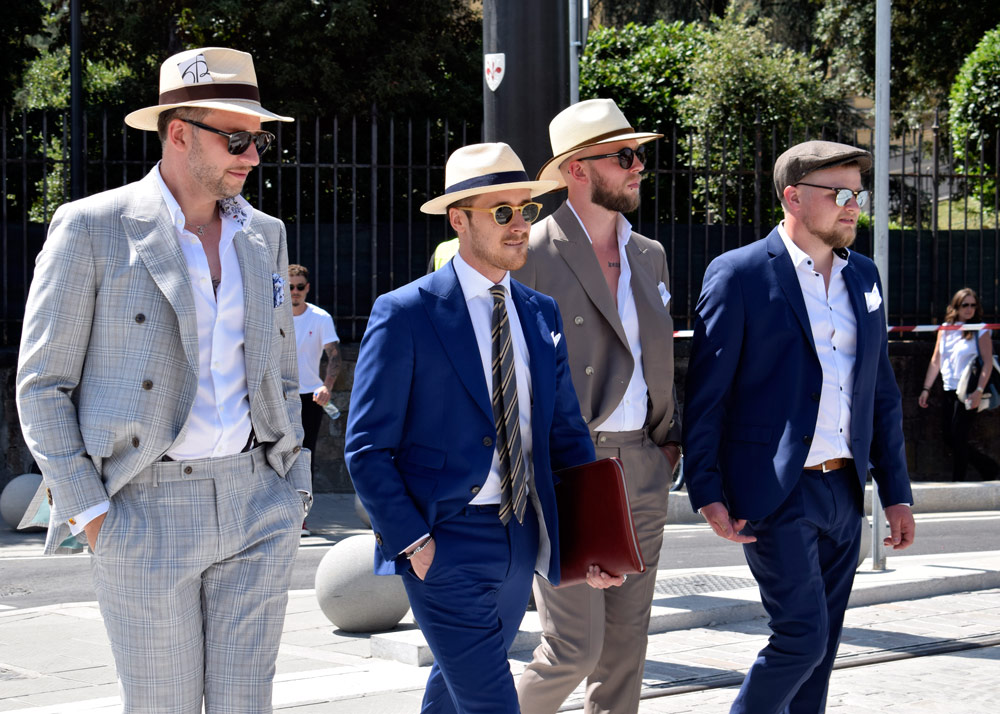
Sprezzatura. Image: https://tailorandbarber.com/wp-content/uploads/2021/05/Is-Sprezzatura-Dead-1.jpeg

The following exerpt from Castiglione’s Book of the Courtier emphasizes three points about human elegance. The first point is that He Who Has Grace Finds Grace. The second, is that Grace Cannot Be Taught. And the third is that One Must Train Early.

He who has grace finds grace

“If I remember rightly, Sir Count, I think you have repeated several times this evening that the Courtier must accompany his actions, gestures, habits, in short his every movement, with grace; and this you seem to regard as an universal seasoning, without which all other properties and good qualities are of little worth. And indeed I think that in this everyone would allow himself to be persuaded easily, since from the very force of the word, it may be said that he who has grace finds grace. But since you said that this oftentimes the gift of nature and of heaven and, even when not thus perfect, can with care and pains be made much greater—those men who are born so fortunate and so rich in this treasure as are some we see, seem to me in this to have little need of other master; because that benign favour of heaven almost in despite of themselves leads them higher than they will, and makes them not only pleasing but admirable to all the world. Therefore I do not discuss this, it not being in our power to acquire it of ourselves. But they who have received from nature only so much, that they are capable of becoming graceful by pains, industry grace, as well in bodily exercises as also in everything else that they may do or say. Therefore, since by much praise of this quality you have aroused in all of us, I think, an ardent thirst to pursue it, you are further bound, by the charge that my lady Emilia laid upon you, to satisfy that thirst by teaching us to attain it.

Comment: Castiglione refers to the primary use of elegance as a social lubricant. Knowing how to be discreet, how to show and earn respect, and how to move well inspire trust and reinforce what expertise brings to the table. Elegant people attract other people creating a community of efficient problem solvers and executors. It’s not about authenticity but about what works. Authenticity goes like this: I don’t care what you think, I want to live according to the TRUTH THAT I HOLD. At the extreme range of “truth that I hold” is eccentric behavior, outside the norms. That might work in fields like art and scientific research. But experience tells us that people weigh the benefits of working with others against the cost of managing their quirks, which may be quite high in eccentric people. Eccentric people cannot be average. I think this is a good reason to watch movies like the Godfather or The Queen to get an image about how to mix being larger-than-life eccentric and being elegant and credible.

Grace cannot be taught

I am not bound,” said the Count, “to teach you how to become graceful, or anything else; but only to show you what manner of man a perfect Courtier ought to be…For just as a good soldier knows how to tell the smith what fashion, shape and quality his armour ought to have, but cannot show how it is to be made or forged or tempered; so I perhaps may be able to tell you what manner of man a perfect courtier ought to be, but cannot teach you what you must do to become one.

Comment: “Elegant habits” are learned very early in life from one’s parents, in one’s environment, influenced by one’s genes. There are Bohemian personalities and natural tyrants that will find it hard to thrive under the most advanced rules of elegance. But, this does not mean they cannot KNOW what elegance in any given society should look like. Even if you’re not as elegant as the Queen you know that discretion is good and you can practice that as a virtue, and even that one virtue might pass for elegance in certain social situations. This paragraph implies that elegance is inferior to virtue as relative is inferior to absolute. Without certain virtues one cannot maintain elegance. Not even wealth necessarily goes with elegance, e.g., the nouveau riche in this country are, well, you can SEE they are nouveau riche.

One must train early

Yet to comply with your request as far as is within my power—although it is almost a proverb that grace is not to be learned—I say that whoever would acquire grace in bodily exercises (assuming first that he be by nature not incapable), ought to begin early and learn the rudiments from the best masters. And how important this seemed to King Philip of Macedon, may be seen from the fact that he chose Aristotle, the famous philosopher and perhaps the greatest that has ever been in the world, to teach his son Alexander the first elements of letters. And of the men who we know at the present day, consider how well and how gracefully my lord Galeazzo Sanserverino, Grand Equerry of France, perfoms all bodily exercises; and this because in addition to the natural apititude of person that he possesses, he has taken the utmost pains to study with good master, and always to have about him men who excel and to select from each the best of what they know: for just as in wrestling, vaulting and in the use of many sorts of weapons, he has taken for his guide our friend messer Pietro Monte, who (as you know) is the true and only master of every form of trained strength and agility—so in riding, jousting, and all else, he has ever had before his eyes the most proficient men that were known in those matters.”

Comment: Castiglione says that training in elegance must be long. If a behavior is not second nature it cannot EVER be called elegant. The word I’m looking for is pretentious. Not having the opportunity of training can be overcome by attention to maintaining the right environment: simple, good taste, proportional. Messy space, messy mind. Castiglione gives importance to “physical” aspects of elegance, that a healthy body, and skill in some sport promote graceful manners. By extension, mind, body, and physical space bring grace.

What do we get from all these? It is impossible for most of us to acquire the effortless, visible grace that characterizes the Marquis de Chassagne or Queen Elizabeth. But, we had exposure of our own.  Our years in a professional setting should have given us training in the virtues of order and humor, gratitude, discretion, respect, good speech. They should have given us experience in social interaction, negotiation, building trust, compromise. They should have given us opportunities to foster good health, and to know how to lose it graciously as we age. We have to examine ourselves as to how we are taking advantage of these opportunities to build fruitful relationships.