Wholesome entertainment

Summer’s on its way, and the topic of fun stuff to do pops up again.

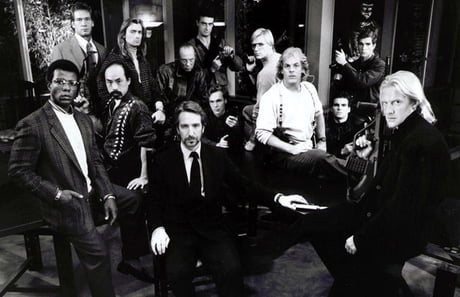
Merry Christmas! The Hans Gruber Family Wholesome Entertainment (Die Hard 1, 1988). Hans Gruber (in tie, center) was played by Alan Rickman (1946-2016). Image: https://img-9gag-fun.9cache.com/photo/az9Mxgb_460s.jpg

The Church has a bunch of wise advice about rest, taking it easy, and enjoying ourselves. As an Indian proverb says, “A harvest of peace grows from seeds of contentment.”

Even though we see downtime as super valuable, sometimes people think it’s just wasting time. Leisure lets us step back from life’s worries. During these moments of leisure, we recharge our batteries—culturally, socially, and spiritually—and find balance in our personal and public responsibilities.

Leisure lifts our spirits. Going to Sunday worship and praying, reading a book, doing outdoor activities, watching good TV shows or movies, attending concerts or art exhibits, or just having a coffee break are all similar.

Whenever we choose entertainment, we make a moral and aesthetic judgment. A judgment implies criteria. We read in the Catechism of the Catholic Church, 2495-99: “Decent entertainment has the obligation to serve the truth and support the inviolable dignity of the person and of the common good; this dignity is given by God and may not be violated or taken away by another person or government. Decent entertainment not only pleases its consumers, but also respects their intelligence and sensitivities.”

TV and the internet, which I’ll just call “media” for short, are a big part of our daily lives. Media can bring people together by sharing stories. Through media, we’ve seen acts of incredible moral courage and peaceful fights against injustice.

Good media promotes values like self-discipline, compassion, respect, responsibility, bravery, determination, honesty, loyalty, and faith. Example: “The Mandalorian,” a family oriented show where a lone bounty hunter protects the adorable Baby Yoda.

Sadly, some programs show the darker, more disrespectful side of humanity. Violence, rudeness, selfishness, broken families, lies, cruelty, and the over-sexualization of our culture. It makes us think that the worst in us is normal, even good.

Author and pastor Jason Byassee observes that “we are so awash in pornography these days that most of us don’t recognize it any more.” Pornography, with its ugliness, mainly targets our bodily desires. It corrupts the soul, degrades people, and treats them like objects, far from the psalmist’s view of humans as “a little lower than gods” (Ps 8:5).

While pornography might excite, it leaves us restless. On the other hand, good entertainment provides lasting satisfaction. As our culture becomes more sexualized, our youth, who deserve their innocence, and all of us are at risk of being influenced by it. Deep down, though, we’re turned off by degradation and naturally drawn to what uplifts life.

According to the monk Thomas Merton (1915-1968), “bad art [indecent entertainment], is like “polluted air” and “constitutes a really grave spiritual problem;” it “affects us only slightly at first, but in the long run, the effect is grave.” A culture of reverence and a retrieval of our infinite dignity as persons, made in God’s image and likeness, has assumed new urgency. We gasp for beauty! We need loveliness “to prevent us from sinking into despair,” wrote Paul VI (1897-1978) at the close of Vatican II.

How can we improve the quality of media? Here are five ideas:

1. Take a closer look at your media choices. Develop a discerning taste.
2. Switch channels if a show offends you or your family’s dignity. Reach out to media producers, sharing your concerns. Many will appreciate your feedback and suggestions.
3. Back family-friendly channels, especially Catholic media.
4. Enjoy family-oriented films. Look for websites that promote “Family Entertainment.”
5. Get creative and make your own entertainment by using your talents and those of your family members.

A final thought. What if it’s “just art”? Okay, but let’s remember this simple truth: At any given time, only one of two things drives a man’s mind – sex or success. The choice isn’t always easy, but it’s ours to make.

So, if you see a naked woman, and it’s not like you can change the subject, try this: Think, “Wow, she looks like she could type 2000 words a day. Tomorrow, I’m gonna write a 2000 word manuscript,” and start planning it in your head: PRERP, Point, Reason, Example, Rebuttal, Point. BOOM! Success has just taken the driver’s seat.

(Q.C. 230416)

Be Cheery

Being cheery is a good thing, so we should totally try to make it a habit.

St. Thomas Aquinas (1225-1274) talks about affability as part of justice, like treating others the way they deserve without feeling like it’s a chore. We’re supposed to help others on their way to Heaven, not just by giving to the needy or sharing advice, but also by being nice, chill, and easy to be around.

Having a cheerful vibe helps those we hang out with. If we’re a grumpy, unsocial, or gloomy person, we can make others feel uncomfortable and more likely to feel sad. But, if we smile, we can lift their mood, make them trust us more, and give them hope that they can do good things too.

If we’re always giving off a bummed-out vibe and bringing down everyone around us, we might be feeling sorry for ourselves. We might also be jealous of the good stuff others have that we don’t, which can make us not even try to be happy. Or maybe we’re just letting our moody nature take over.

Being truly cheerful doesn’t mean we can’t be serious when we need to be. It’s not cool or helpful to laugh off the consequences of our actions, or be super distracting during moments like mass or other serious events. If we can’t feel for others when they’re hurting, avoid people in pain, or refuse to let their troubles affect us, that’s a problem with our cheerfulness too.

Real cheerfulness doesn’t rely on substances. Drinking actually make us act dumb, silly, and downright embarrassing.

We don’t have to be all smiles, laughs, or chatty to show we’re cheerful. We can be serious and sympathetic, but still share hopeful and supportive thoughts that help others find strength and patience. It’s all right to let our friends face the tough stuff and not downplay their feelings.

If we’re only cheerful sometimes and sad or moody other times, it means our emotions are in control. It’s bad, too, if we act all happy around certain people but not others.

It’s tough, but we’ve got to learn to rise above our emotions. Being guided by our will, not our feelings, isn’t faking. Let’s aim to be consistently nice, friendly, understanding, and supportive to everyone—that’s what being truly cheerful is all about.

There are three key virtues that make peeps truly happy: hope, courage, and brotherly love.

Hope helps us keep our eyes on Heaven as our life goal, which we can reach thanks to Jesus Christ’s merits, promises, and faithfulness. Having something amazing to look forward to keeps us happy. Hope is a supernatural thing, but it takes effort and practice to make it work.

We can’t be cheerful if we give in to despair.

Living for worldly pleasures makes people chase after every possible joy here and now. But that leads to sadness ’cause nothing in this world can completely satisfy our hearts. This mindset also creates jealousy, greed, impurity, and other things that bring us down.

Courage helps us face life’s unavoidable sorrows and, death, while serving God with bravery and patience. We can find inspiration from Christ’s suffering and look forward to Heaven with a hopeful heart. Even the biggest struggles are worth it for that ultimate reward. So, let’s try to beat fear, self-pity, and doubting God’s goodness.

We shouldn’t take ourselves too seriously. It’s important to learn not to freak out over making mistakes ’cause no one’s perfect.

We shouldn’t let our handicaps eat away at us.

Take Nick Vujicic (1982 – ), for example. He’s like: no arms, no legs, no worries! He’s a successful author and motivational speaker, beautiful wife, four kids. He said: “I know for certain that God does not make mistakes, but he does make miracles. I am one.”

Image: https://www.leaderbiography.com/wp-content/uploads/2021/09/NickVujicic.jpg

Instead of wasting time and energy on regret or self-blame, it’s smarter to just get back in the game. People don’t have much sympathy for those who feel sorry for themselves since they’ve got their own challenges, responsibilities, and joys. They expect us to deal with it, and that’s a reasonable expectation.

Bravery is contagious, and by spreading them, we’re doing everyone (including ourselves) a huge favor.

Happiness is the reward of love. This happiness is different from other joys ’cause it’s lasting, and it’s one of the few joys that stays with us even when we’re dying.

When Jesus was saying goodbye, He said He wanted His happiness to be in His followers: “I have told you this so that my joy may be in you and your joy may be complete.” If we imitate even a tiny bit of God’s great love, we’ll find springs of happiness bubbling up in our hearts, just like Jesus said: “Whoever drinks the water I give them will never thirst. Indeed, the water I give them will become in them a spring of water welling up to eternal life.”

If our heart thirsts for joy, let’s do good to others. St. Augustine (354-430) says, “Our hearts were made for Thee, O Lord, and they are restless until they rest in Thee.”

(Q.C. 230416)

A mentor’s legacy

Image: https://bcgavel.com/wp-content/uploads/2015/11/manup2015-e1448318165309.jpg

I remember it was around 1981. I was in 3rd year high school. My uncle fetched me from school. Back then he was a bright junior executive working for one of the Philippines’ biggest corporations. He would eventually become the President of the country’s biggest petroleum company.

He summarized what he said were the three most important lessons he learned from corporate. These are:

1. You work for your boss, not your company.
2. Take care of your people.
3. No matter what you say, if you do not make money, you’re wrong.

In the more than 40 years since my uncle articulated these rules, I have reflected on their power and their limits. I assert the truth of every one of those rules.

In this essay, I will focus on the insights I have distilled regarding Rule #3. I have seen that this rule has a specific implication for men.

The 3 big insights of Rule #3 are:

1. “Money” is external to the person; it is a single metric that encapsulates the performance of the organization in terms of its mission and vision.
2. “Wrong” does not refer to moral right vs. wrong, but to “credibility”.
3. The whole rule is about the relation between power and credibility: if you’re not credible you cannot get things done.

First, on “money”. Every organization will have one metric that encapsulates its mission and vision. A religious institution may have “number of conversions”; an academic will have “number of publications” or “grants in dollars received”. You don’t choose the metric, you do it: a person’s internal values, such as his morals or self esteem are of interest to the organization only if they contribute to the latter’s mission and vision.

An honest and hardworking person IS more likely to produce money because money comes from working hard and well. If he does not make money, then the company concludes that there are other factors that are not as strong in this person as they should be. If the person fails consistently, there is a problem, and it may even be a moral one.

It is possible that a person can have immoral values and still produce money. If the organization has reason to anticipate, say, a sexual harassment case or a legal case stemming from immoral behavior, they have to consider whether they can really expect good performance from that person in the long term.

Second, on credibility. People in an organization measure how much they trust others before they decide when and how to work with them. This measure is done on present performance: the rule says “do not make money”, not “did not”. Past successes only matter if present success proves consistency and demonstrates growth. Rule #3 is about growth.

Now, it is possible for colleagues to trust and respect each other at work, yet never interact socially. If the organization perceives that this state of affairs limits the group’s potential for growth, then they must address this issue. If they can manage it, fine. Some colleagues at work have strong personal animosities, none of which interferes with their work or the performance of everyone else in the organization. We just don’t put them in the same teams.

And third, if a man is not credible he has no business being a boss, or even an employee. Credibility recruits others to make things happen. Credibility is tied to power.

And power is tied especially to being a man. Remove a man’s power, you remove his masculinity.

It is universally true that organizational failure has a much worse PERSONAL effect on men than on women. Men, are more willing to take on even the most dangerous jobs because of their need to succeed. Women, on the other hand, have a stronger drive towards STABILITY and will not risk themselves as much, especially when they have kids.

Although these peculiarities of men and women are not true for all, these are traits that cultures from all times and ages have observed. The Rules seem specially crafted for men, suggesting there may be equivalent rules for women that leverage their unique strengths. Men and women collaborating on challenging tasks, such as forming families, benefit from following their complementary rules.

No one has yet told me what the rules for women are.

(Q.C. 230415)

The work ethic of Anton Chekhov

My favorite fiction writers? Stephen King, John Grisham, Robert Ludlum, Michael Crichton, Guy de Maupassant, Fyodor Dostoevsky. But one writer is not on this list who should be, a master of the mundane whom I have not read until now.

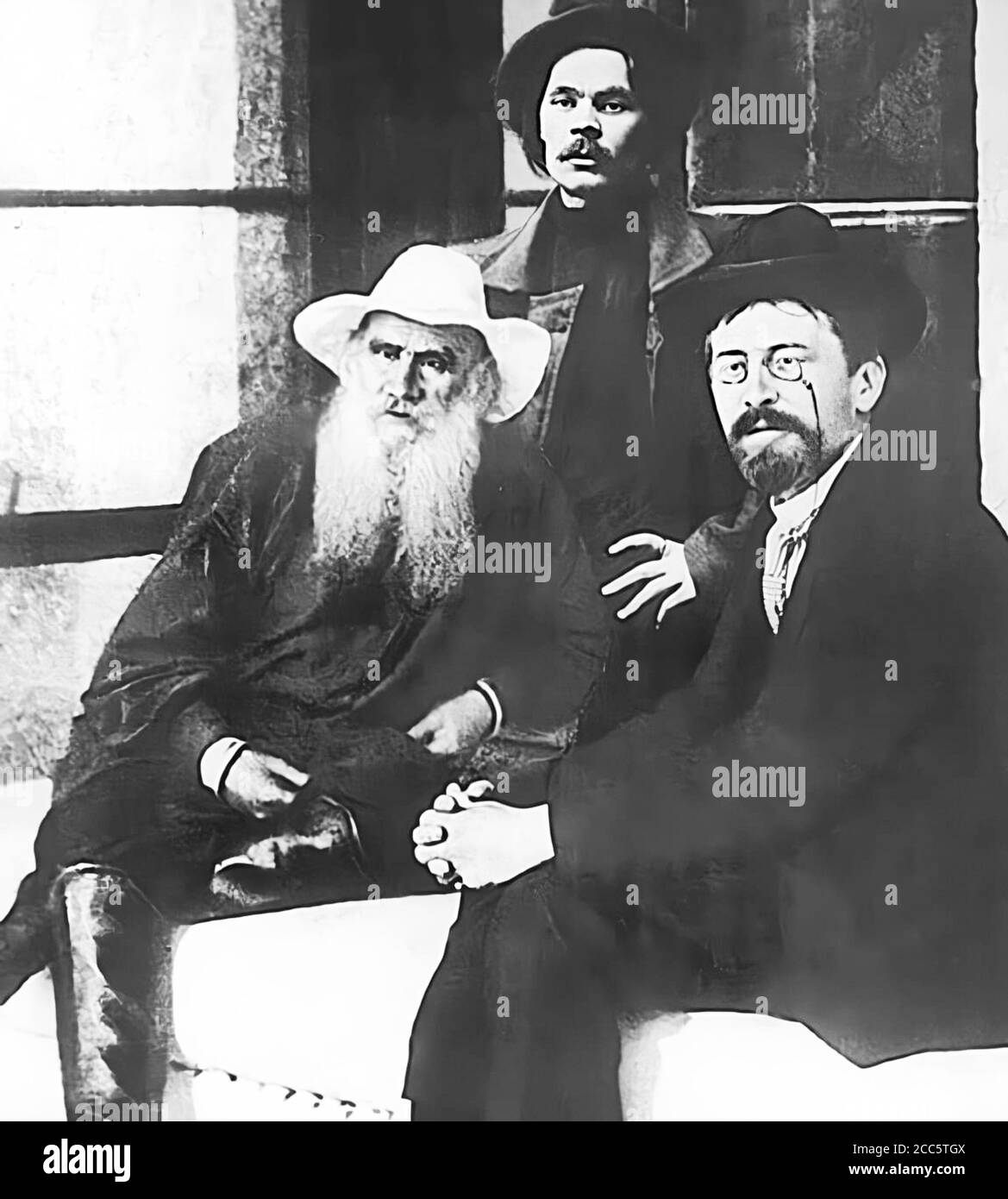
Anton Chekhov (1860-1904) is one of greatest writers of all time. He was a contemporary of Maxim Gorky (1868-1936), Fyodor Dostoevsky (1821-1881), Leo Tolstoy (1828-1910), Ivan Turgenev (1818-1883), and others. Unlike the great Russian novelists, he mainly did short stories. Also unique to him is that he wrote about the banal, the ordinary. He did not psychologize like Dostoevsky, or moralize like Tolstoy, but only wrote about what he saw. And unlike many of his contemporaries, he did not put the peasants on a pedestal. To him rich and poor have the same problems, all strive for moments of joy in lives just as filled with moments of misery.

Chekhov wrote:

If in the first act you have hung a pistol on the wall, then in the following one it should be fired. Otherwise don’t put it there.

Anton Chekhov

This advice is known as Chekhov’s Gun. It says that every element in a story must play a part in the story. This led to a minimalist style that has become characteristic of today’s stories. Chekhov is considered the father of modern fiction.

But it is the man’s work ethic, not his writing, that first got me interested to know more about him.

While there are no definitive records of the exact number of hours Chekhov wrote each day, it is well known that he kept a disciplined and consistent writing schedule. His productivity suggests that he devoted a significant amount of time to his craft.

What have I learned about his discipline?

Chekhov would spend hours every day writing, revising, and perfecting his stories and plays. I think his schedule would not be very different from that of another minimalist writer, Japanese author Haruki Murakami (1949 – ), for whom we have more precise information: Murakami spends the first 4 to 5 hours of his day writing.

Chekhov was a practicing physician. He managed to write and to heal by dedicating specific time blocks to each profession. We know he spent 3 hours a day, 6 days a week seeing patients in his clinic and on house calls. His output attests to his time-management skills.

He was deeply committed to his writing, continually honing his skills and developing his unique realist style. He placed a strong emphasis on creating vivid characters, engaging dialogue, and exploring the complexities of human nature. He had the best beta readers and correspondents, his friends Tolstoy, Gorky and other members of the Russian literary elite.

He faced numerous rejections early in his career, but he persisted in submitting his work and learning from feedback. He himself did not realize and in fact felt a little embarrassed to learn that he had, in his lifetime, become one of the most significant literary figures of his time. He died of tuberculosis at 44 before knowing that he had become one of the most greatest literary figures of all time.

Chekhov, the doctor, had very sharp powers of observation. He incorporated his experiences and observations of people and society into his work; if his short stories were read in chronological order one would in fact be reading his autobiography. He had a keen eye for detail, which allowed him to create realistic and relatable characters and stories. He aggressively pointed Chekhov’s Gun on his work and polished it to great precision and clarity.

I greatly admire Chekhov’s discipline, dedication, and a commitment to his craft. I hope I can adopt his ability to balance multiple roles and to persist in the face of rejection.

(Q.C. 230407)

If you are eccentric, do not be average

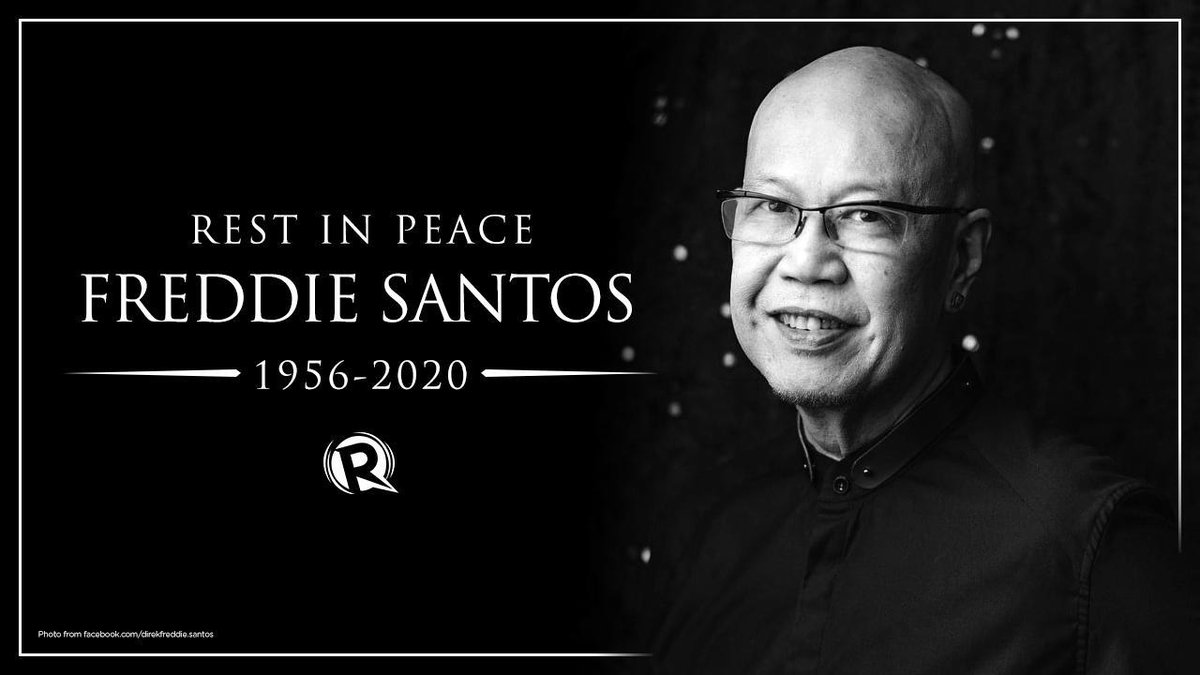
My uncle Freddie Santos (1956-2020) was eccentric. He was a multi-awarded theater actor and director, very talented, and pleasant to be around with. He wore his eccentricity with all the obviousness of his all-black clothes, but everyone could see there was serious substance underneath. His jokes were off the top witty, sometimes hurtful without intent — but what is humor without a little cruelty, eh? A tireless professional, he was working on a play when he died.

We loved him. I pray for him everyday.

Freddie Santos. Image: https://pbs.twimg.com/media/EpbbJZfW4AEtPFv.jpg

In contrast is this person I know; let’s call him “Garfield”, like the cat.

His eccentricity? “Garfield” has the airs of one who has the low down on everything and everyone. But any amusement one might experience on meeting him for the first time quickly wears off. Why? He is a freeloader. He has no work, and shows no initiative to find one. He has no volunteer engagement, and even chores he leaves to others when he can. He has an inflated sense of entitlement. He runs up thousands in medical bills per month, paid for by family of course because he has no income or pension. Why no pension? Although he has an engineering degree he never held down a job for long. He was fired from his first job at corporate in Singapore after only 2 years, worked again, fired, then hired by old acquaintances. Then fired. Then hired. In this last job he often called sick, when present took frequent smoking breaks, always delivered late, complained about everything and everyone. He made silence of office a source of gossip. Fired. He probably should have been a talk show host. More likely, he’s s mentally ill.

Other than dressing up like a sack, “Garfield” does not have the fashion of an eccentric. In contrast, my uncle, who may have been inspired by Elton John at one point, later adopted an all-black clothing style. He explained to me:

The speaker must stand out. Most backgrounds are light colored. By wearing black I’m always prepared.

Freddie Santos

He did have the unconventional arrangement of living alone. He was loud, which was good because he enunciated well, had a picturesque vocabulary and a sharp wit. “Garfield”, though he speaks sonorously and is well read, doesn’t listen. Once I explained that “Vaccines are safe”, plus the evidence, and within 30 seconds he asked “Are vaccines safe?” Typical behavior of him. Most of our mutual friends do not take him seriously anymore.

Eccentricity has a cost. Acting differently from societal norms or expectations sets off an alarm bell in our brains that we inherited from our hunter-gatherer ancestors. They had to think with and behave with the group to survive; those who had the gene for eccentricity were eaten by the saber tooth tigers before they could pass on their genes. Though not inherently negative especially today, these behaviors can lead to misunderstandings, social isolation, or negative judgments from others just because of this evolutionary quirk.

But, whether these miseries actually happen depends on how hard we need to work to be useful.

Some eccentricity may be an asset in theater, but it is a liability for most other work especially corporate. How much performance does it take to balance the cost of eccentricity in corporate? We can estimate. It has been said that in an organization a very small number of people, the stars, outperform the median by a factor of 3 or 4. That is, in a sales force of 100 where the median cold calls is 50 per day, the one or two stars in the group will do 200. This is called a power law distribution and is seen in all kinds of organizations. I estimate that to safely compensate for the cost of eccentricity, the flamboyant salesperson must be a star: he must make around 200 cold calls everyday, or do 3X to 4X better than the median on some measure of performance. Anything significantly less risks putting him in the outcast zone.

Steve Jobs (1955-2011) was a legendary eccentric: his strange mix of Buddhism and ruthlessness is well known. He was also a star businessman of the kind we see only once a century. Excepting sabotage, he could get away with anything, and he did.

One should not be eccentric AND average.

(Q.C., 230406)

Is there such a thing as unnecessary suffering?

I joined a new group on Discord yesterday. It was run by a friend. From the voices and descriptions of interests I think many were college students (my friend is a PhD student).

The question under discussion was Is there such a thing as unnecessary suffering? In past Sundays the group had already discussed necessary suffering. E.g., they agreed one had to go through the suffering of study to get good grades, or the suffering of a surgery to get well.

The discussion this time started with a rather extreme example: A young man about 18 years old is not allowed by his mother to buy a PS2. To exact revenge, he kills her. He goes to jail and is in danger of the death penalty. Where is the unnecessary suffering here?

It seemed clear that killing the mother was unnecessary suffering because it benefited the son in no way. Unnecessary = no benefit. By locking the son in jail, society is said to inflict a suffering necessary to protect itself and repair somewhat the damage caused by the crime.

However, the group was divided on whether the electric chair benefited anyone. People held different views about the sacredness of life (in the non-religious sense), different ideas about whether heinous crimes meant the criminals forfeited this sacredness, and whether the gas chamber was necessary for society to achieve certain benefits.

I will try to summarize the witty repartees that flew around during this lively 1.5-hour conversation. I structured my summary within the framework of a simple schema: cause —> effect.

In this schema, suffering is the cause of some effect. Necessary means the cause is “required” to bring about the effect. There are at least five ways by which might be unnecessary to achieve a given effect.

First: the cause does not lead to the effect. Worrying about one’s lack of money cannot lead to acquiring a PS2, but getting money and going to the store will. Worrying is an unnecessary suffering. On the other hand, killing the mother is necessary because it is required to achieve the pleasure of revenge. However…

Second: the cause is not the only way to achieve the same effect. The son could achieve the pleasure of revenge through a silent treatment, which inflicts much less suffering. Killing the mother will also lead to that effect, but a less painful alternative makes this killing relatively unnecessary.

Third: the effect has changed. For example, if the desired effect were to get the PS2, then killing the mother becomes unnecessary, but stealing money to buy the PS2 could be.

Fourth: the effect leads to another effect that wipes out the original benefits. For example, killing the mother leads to the pleasure of revenge, but going to jail leads to the pain of jail. Pain is 180 degrees from pleasure. This fourth way is an extension of the other ways above.

And fifth: the suffering is invented. The mother’s suffering is not invented, but the son worrying he could never get the PS2 is. Everyone identified with my example of a guy who was dumped by his girlfriend. The guy felt he could not move on, when in fact he could. He invented his own suffering.

What practical lessons can we learn from this exercise?

I suggested that people read Kim Wehle’s How to Think Like a Lawyer, which starts off with the observation that all situations involve multiple issues. Real life is more complex than this extreme case of matricide. The son stealing money from his mom to buy a PS2 is stealing from a family member, which morally and legally is not the same as stealing from a stranger. Wehle gives the reader a few tools to navigate complex cases like this one.

Another useful take-home message is how the cause —> effect model can be a useful tool against the threats to mental health to which young people are exposed. These dangers are suggested by the five ways by which causes are unnecessary.

  1. Do only what brings you closer to your goals. Worrying accomplishes nothing, but action does. If you can do something now, do it now. Avoid useless activities, but treat yourself to a movie or ice cream for something awesome that you just did. Get out of your comfort zone, because the zone of discomfort is where we find our best options. Note that NOT acting is acting: if there is some good you can do to someone, do it, for you might never pass this way again.
  2. Consider alternatives. You think you have to skip classes because you are stressed. But, what you really need is to relax, and there are more ways to relax that than to skip classes, for example, breathe in (1…2…), breath out (3…4…5…6), for about a minute. Your “enemies” are NOT causing your stress; you just want them to be the cause of your stress. Find the true cause, in this case, you can’t let go of their imagined insult. Forgive.
  3. Change the terms. What do you do when faced with an unsolvable problem? Change the terms. You want to write a an essay worthy of a 90+, but no matter what you do, you’re mentally blocked. Change the terms! Don’t aim for 90. Set your font color to white and type on a white background, anything in your head, non-stop, for 10 minutes. Change to black, then edit for the next 45 minutes. Don’t aim to get a super essay.
  4. Beware the unintended effect and the side effect. Slow down and think about consequences or side effects. Especially for big decisions, learn to say “Maybe” not “Yes”, not “No”, and then think about it.
  5. Don’t worry. Worry, anxiety — invented. False Expectations Appearing Real = FEAR. You think it is inhuman to bike to work under the summer sun? But this is absolute joy to some. Attitude change is all it takes to remove a lot suffering.

I congratulate these young people. They had a true conversation.

(Q.C. 230404)

I’m lazy and weak: Chekhov’s examination

The great Russian playwright Anton Chekhov (1860-1904) referring to himself once said:

If an intelligent, educated, and healthy man begins to complain of his lot and go down-hill, there is nothing for him to do but to go on down until he reaches the bottom–there is no hope for him. Where could my salvation come from? How can I save myself? I cannot drink, because it makes my head ache. I never could write bad poetry. I cannot pray for strength and see anything lofty in the languor of my soul. Laziness is laziness and weakness weakness. I can find no other names for them. I am lost, I am lost; there is no doubt of that.

Anton Chekhov

One of the most prolific writers in the world calling himself lazy and weak. Maybe that’s why he was so successful.

Chekhov is referring to a familiar situation. People are a**holes, work is hard, the world is NOT fair. So what do we do? We rant about it. Ranting, however, if it does not lead to solving problems, invents reasons to give up. It can sound very convincing. We think of ourselves as righteous and strong, and the world doesn’t deserve us. But we ignore the obvious, that others see us as lazy and weak.

But Chekhov is also referring to a deeper situation. The devil wants us to sin. More than that, he wants us to get addicted. He does not expect this to happen overnight. Instead, the devil repeats his attacks. Sloth, pride, greed, lust, envy, gluttony, and wrath. Every one of these capital sins brings pleasure or kills pain, such as the pain that comes with thinking about effort and hard work. This addiction of the senses is what we refer to as the lust of the flesh.

Addicts like to say two things. First, they can stop any time. And second, they can do nothing about it. Both lies. Addicts deny the seriousness of the problem and try to justify it. Perhaps to calm their conscience. But soon they find it takes more and more sin to have any pleasure at all. In time, they become bored.

The phrase “I am bored” is very common among young people.

What comes after boredom? Despair. And what comes after despair? Numerous authors and psychologists have the answer: suicide, given enough time.

The solution? The virtues. But one has to begin with examining one’s conscience.

A second set of sins are those caused by the lust of the eyes. These are also addictive through the pleasure that comes from having: knowledge, fame, beauty, power, money. Applause. I admire Michael Corleone and his real-life equivalent Michael Franceze for their decisiveness and professionalism, and this is reasonable. Expertise and professionalism, wealth and power, beauty are good. In the examination of conscience, we distill what’s good, condemn what’s bad. We seek morally good options to have these goods.

Then there’s a third group of sins, the pride of life. They bring about addiction for the self as the center of the universe. Power corrupts, absolute power corrupts absolutely. You don’t have to be Xi Xinping to know this. Some people say there are today in China millions of “little emperors”, children of wealthier Chinese families who gain excessive amounts of attention from their parents and grandparents. I don’t quite buy that: what do children know? More serious is that self-centered colleague, who drives a Hyundai that runs on liquid arrogance, he believes he is better than everyone else. He makes no mistakes, listens to no opposition. He doesn’t see the cancer eating him right under his nose.

Chekhov saw that the solution to this cancer is LOVE. He said:

“I understood that when you love you must either, in your reasonings about that love, start from what is highest, from what is more important than just the issue of happiness versus unhappiness, than just the issue of sin versus virtue, or you must not reason at all.”

Anton Chekhov

What brings us back is Love, with a capital L. Love for God leading to sorrow for sins, kills the cancer.

God loves us so much that He will not hide the facts about the disease that’s eating our souls. But He does not force His medicine on us. An addict to the lust of the flesh, the lust of the eyes, and the pride of life might be in a continual state of denial, but God is God and will not be deterred. Though He won’t force us, he will use people, events, trends, and circumstances to send us warning signs. As we inch closer to our graves, the warning signs may in fact include a painful, physical cancer.

God will readily grant us the grace of humility to see our faults and sins if we ask for it.

Let’s not wait to stand at the edge of our graves to convert back to God. Let’s ask forgiveness now. And let’s count on the strength of God to do what it takes right now to get back on our feet and to stay up.

(Q.C. 230326)

Failure is my superpower

I heard this quote from Evy Poumpouras, author of Becoming Bulletproof, in an interview.

Evy Poumpouras is a former Secret Service agent, author, and television personality. In her book, she shares insights, strategies, and techniques for building mental and emotional resilience, staying safe, and improving overall well-being.

Image: https://www.columbiaclub.org/event/becoming-bulletproof-a-conversation-with-evy-poumpouras/

I’ve been fascinated with intrigue since I was a kid. Robert Ludlum was one of my favorite authors in high school, especially the Jason Bourne series. Although I owe some part of my discretion and reserve to the characters I idolized, I knew that their skills were hard to master, and that those who did not succeed far outnumbered those who did.

Ms. Poumpouras testifies to why the few succeeded. “Failure is my superpower”: she failed many times, mostly in training, and as a result she succeeded more. Luck, too, was on her side, and in her line of work it meant she got to tell her story.

I’m no spy or secret agent, but like most ordinary people I’ve had my ordinary horror stories.

What have I learned?

Develop situational awareness: I remember my first encounter with a pickpocket. I was in a crowded train, slinging a bag on my shoulder and carrying another object in one hand. I remember feeling something brushing against my pants pocket, but my thoughts were mostly elsewhere. As I was stepping out, I realized my Palm Pilot had been stolen. I remember looking back at the crowd just as the doors were closing, and making eye contact with the person I knew did it. She just stared at me, no reaction on her face.

Cultivate mental resilience: Once when I was a teenager, I organized a party in our subdivision. The food was ready, the lights were on, and the first of about 200 people were to arrive within about 2 hours. At that moment we received news that the group we contracted for the “sounds” backed out. Everyone in my team became furious; we knew it was a sabotage. But I told them: “One thing at a time.” We calmed down. One of the team said he would try to contact another friend. Within half an hour, we got confirmation. The group put their equipment together hastily, arrived, and we pulled it off. “One thing at a time” has been my mantra ever since.

Enhance communication skills: Once, as an undergraduate, me and my group had to make a presentation during ecology class. Our teacher was known to be a “terror” and everyone was afraid of her. While my teammate was delivering her part of the presentation she made a mistake that ticked our teacher off, who then went into an increasingly aggressive line of questioning. My teammate started to stutter. “One thing at a time”. I held her firmly on the elbow and told her quietly, “It’s OK, I’ll handle this.” The aggressive questioning continued, but I tried to stay calm. It worked: our teacher responded by gradually toning down. To cut the long story short, that teacher became a good friend.

Understand human behavior: This is one of the scariest things that every happened to me: I forged a signature. It was for the benefit of a classmate who played hooky, and I wrote a “parent’s excuse letter”. While talking about the “project” with him, I did not realize that the person I defeated in an election was within earshot. Later that afternoon, one of his friends came to me and said, “We know what you did.” I was deeply agitated at first: I could be expelled. I had only one option: turn myself in to the prefect of discipline before they did. I gathered my nerves, I went to the office, and long story short, nothing came of the threat.

Master self-defense: So far, I haven’t been involved in a life-threatening encounter and pray I never will. But I took up krav maga just the same. I only aimed to learn two or three krav moves, but well. Then I learned something else, a mentality: strike and run. This is similar to a non-contact technique from karate that I learned when I took it up in elementary school: the kiai!. I saw in real life what it could do. We were in the middle of a corridor packed with students. I was telling a friend that there’s this technique in karate where one could project power — and suddenly I cried kiai! at full force. Perhaps it was the violence, the suddenness of it, the fact that I paid no thought to the university population all around us. My friend was paralyzed for about a second. Had he been an aggressor I could have knocked him out with one palm strike on the chin.

Embrace fear: I routinely face fears, it’s never easy. Fortunately, I learned it early, in a public elocution contest in elementary school. My teacher enrolled me. All contestants were given the same poem. To train, I see my uncle, a professional theater actor and director, the late great Freddie Santos. He takes a look at the poem, then says matter-of-factly “I don’t like it.” So he edits it. I wanted to protest, but no way I was going to do that to Freddie Santos. The day of the competition arrives. My turn comes up. Between the stage lights and the sweat I could see the judges in first row. I delivered my “mangled” piece. I remember seeing very very clearly the look of shock going around the front row, and even the mumbling from the large audience. Of course, I lost. But guess what: I was proud. I knew I had just delivered a much better piece. It has been easier for me from that moment to “break the rules” when it was the best thing to do so. “Report to work each day ready to be fired” is another mantra.

Cultivate a strong sense of purpose: What’s scarier than public speaking? Taking a PhD. I had numerous doubts, sometimes I cried at the string of failed experiments. Two steps forward, one step backward, that kind of defined my day. I even got in fights with people in the lab. At one point I had no idea where I was even going to get samples or where to publish. To top it all, I had to defend my dissertation in a foreign language, French. I wanted not just to quit, I wanted God to strike me with an asteroid many times. But I had already decided QUITTING WAS NOT AN OPTION. Since I had only one option, all my energies went into finding solutions. I got my PhD.

Practice self-care: This part of bulletproof came only around the later part of college. I owe it to friends who played various sports and who knew a lot more than peanut butter and spaghetti. I’m not athletic, but I can lift a respectable load in the powerlifts; I’m one of a handful of people at my gym who know how to execute the Olympic lifts, and with a respectable weight at that. Stress at work poisons my blood, but 2 hours of gym work 3 times a week keeps my spirits up and my body running. Sleep is still a problem most of the time because I love to stay up to read or write. My only rule with food is not to overeat: I’ve reached my goal of 180 lbs (80 kg) lbs and I’m keeping it there. I stick to three cups of strong coffee a day.

Am I more successful because of these? Maybe, because I am able to fail more. I’m sure that if I tried to snatch 60 kg tomorrow would fail. But I had already broken 55 kg with just a slight change in technique. It’s these things, the controlled changes and seeing their effects, that I find fun.

I’m clear about one thing, though: bulletproof may keep me from dying too early, but I am under no illusion it will increase my lifespan.

(Q.C. 230325)

Love life, meditate on death

Acceptance of and preparedness for death is one of the most beautiful mindsets I learned from my study of Japanese culture. The Japanese love the cherry blossoms or sakura. The samurai in particular reminded themselves of how they wanted to live by contemplating these flowers — a short, colorful existence, falling to the ground at the peak of their beauty.

Samurai and cherry blossoms. Image: https://www.whats-your-sign.com/wp-content/uploads/2021/06/SamuraiCherryBlossom.jpg

One of the central tenets of the warrior code, Bushido, was the acceptance of death as an inevitable part of life. The samurai embraced their mortality and accepted that death could come at any time. This mindset cultivated fearlessness in battle and allowed the warrior to focus on his duty without being paralyzed by the fear of death.

Bushido permeated the whole of Japanese culture, bequeathing to it this mindset as well as a sense of duty and honor in one’s fight. It seems that fighting and death were two sides of the same coin. For us who are not samurai, that fight is work.

The Japanese word that we translate to “work” or “job” is insightful. Shigoto (仕事), consists of two characters. The first, shi (仕 ), “to serve”, implies performing an act or duty. The second, goto (事), “thing”, “matter”, “affair”, “business”, represents a situation, event, or subject. Shigoto captures the concept of performing tasks, duties, or services related to one’s occupation or work. In other words, work is service or duty. Art, especially, served. Hence, the pride the Japanese have in their work, and the shame they feel when they don’t do them well. In the old days, the supreme way to expunge shame was through ritual suicide, seppuku.

Ritual suicide is no longer practiced. Still, it helps underline this whole idea of death/work dynamic, which leads to this other idea: I want to die working. I want death to catch me working at my art.

Various authors have expressed similar thoughts.

Og Mandino, the author of “The Greatest Salesman in the World,” and other famous authors have emphasized the importance, not so much of death, but of living each day as if it were your last. These authors encourage individuals to cherish each moment, pursue their passions, and treat others with kindness and respect.

Mandino writes, “Live this day as if it will be your last. Remember that you will only find ‘tomorrow’ on the calendars of fools.” He urges readers to seize the day and make the most of it, as the future is uncertain and not guaranteed.

Ralph Waldo Emerson, the American essayist and poet wrote, “Write it on your heart that every day is the best day in the year.” Emerson taught us to treat each day as a fresh start.

Henry David Thoreau, in “Walden,” wrote, “I went to the woods because I wished to live deliberately, to front only the essential facts of life, and see if I could not learn what it had to teach, and not, when I came to die, discover that I had not lived.” Thoreau encourages readers to live intentionally and fully experience life, rather than merely existing.

Seneca, the Roman Stoic philosopher wrote, “Begin at once to live, and count each separate day as a separate life.” By treating each day as a complete life, we can focus on living in the present moment and making the most of the time we have.

Steve Jobs, in his famous commencement address at Stanford University, said, “Remembering that I’ll be dead soon is the most important tool I’ve ever encountered to help me make the big choices in life.” Jobs said not wasting time on pursuits that don’t bring fulfillment or happiness.

I could die any time; this is a fact. I love life, this is a fact, too. If I reflect on life, then I must meditate on death. This is how I do it.

Before I sleep at night I think “I might not wake up tomorrow”. When I do wake up, I think “I might not make it through the day”. I thank God for giving me another day, my talents, my opportunities, and help in time of need. He will call me to Himself, and I will give an account of my life up to the moment of death. It would be a terrible moment to meet Him unprepared.

I reflect on the fragility of life, how unpredictable it is, how one day we feel great, next week we’re diagnosed with pancreatic cancer, and next year we’re gone. Just knowing that fragility is a sign of life makes me grateful to be alive now and to go out and proclaim it. It saddens me a little, however, to see others who have also experienced deaths in their families (e.g., from COVID) instead become obsessed with avoiding sickness. I know relatively young people, not many, thank God, who until now rarely leave the house for fear of COVID.

The thought of death helps me clarify my priorities and informs the choices I make. To balance the danger that thinking about death can make one passive, I tell myself that I would rather regret the things I do than the things I do not do. This means that I must take risks to get what I value, risk that makes a fight a fight. I won’t be sitting around doing nothing while waiting for death. Well, I’m not seeking it either. But it will come, don’t cha worry.

And when it comes, what do I want engraved on my tombstone? If I don’t die in my sleep tonight, it means I’ll get one more day to add credibility to those future engravings. And so between those two moments when I think most especially about death — before sleeping and upon waking — lies a world of surprises.

Life is surprising, because impermanent. For this reason, it has become easier for me, especially over the years, to let go of attachments to material possessions, relationships, and personal achievements. This helps me have compassion and empathy towards others, especially those who have suffered a great loss. Detachment also gives me more freedom to take risks.

Which reminds me: I need to erase all my browser search histories.

Some would say that the thought of death could lead to fatalism, a condition where one remains passive, thinking that nothing can be done and everything is all the same anyway. Cowards are not afraid of death; they’re afraid of life. They neither win nor lose, because they do nothing. At least a loser fought but was bested.

I would rather dream big. I believe everyone should dream big. Even if execution will always be hard, and sometimes I find it very very hard to the point that I would cut corners on my dreams.

I believe everyone is in this world for an unrepeatable reason. We’re all part of an orchestra where every piece, even the tiniest triangle, is important. Only YOU can play your instrument. So play it. And play it with all your heart even if it’s just a triangle, and you strike it but once.

Certainly, we’re not all geniuses. But does it matter? A big cup filled to the brim is just as filled as a tiny cup filled to the brim.

Does this mean I should make 200 cold calls today? It’s not about quantity. Every day has its own demands. If God wants me to spend the last day of my life doing nothing other than to accompany my brother for a hospital check up, or to enjoy a game of basketball with old friends, then that’s what I wish to be doing at the moment of my death.

I might appreciate it though if my spotter immediately added 80 kilos to my bar after I get a fatal heart attack in the middle of a dead lift.

(Q.C. 230322)