Bear difficulties with Patience, Poise, and Purpose (gaman)

The concept of “gaman” (我慢) is characteristic of the Japanese ethos. It translates roughly to “enduring the seemingly unbearable with patience and dignity.” Gaman is a mindset of self-discipline, perseverance, restraint, and the ability to withstand difficulties without complaining or giving up. It is seen as a source of strength and resilience in the face of adversity.

Gaman is like stoicism in the West. Stoicism is a philosophy of self-control, rationality, and emotional resilience that lead to a virtuous life, regardless of external circumstances. One of the best known Stoic philosophers was the Roman Emperor Marcus Aurelius (A.D. 121-180), who is known for his personal writings, the “Meditations,” a key reference for Stoics.

Marcus Aurelius as he might have looked in real life, based on his statue. Photo by Billy Farrell/BFA/REX/Shutterstock (6824819et) Kathy Bates ELLE Women in Hollywood, Los Angeles, USA – 24 Oct 2016. Image: https://www.royaltynowstudios.com/blog/blog-post-title-one-pxydc-3e4k2-lwr6a.

Below are some practices of gaman and stoicism that I do:

Embrace difficulties: Life is filled with challenges and setbacks, and I try to see them as opportunities to grow and develop my inner strength. I’m training myself to face hardships with poise, patience, and purpose. I distinguish between what is in my control and what is not. My thoughts, actions, and reactions are within my control; external events and other people’s actions are not, so I let go of them. I challenge myself to step out of my comfort zone to get used pain. And it’s fun.

Practice self-discipline: I try to cultivate self-control in all aspects of my life. I stick to a few routines, I resist most temptations, and I set boundaries for spending. I do what I can to live a life of virtue (good habits). Virtue makes it easier and more pleasurable to face life’s challenges. I support my efforts with gym work, meditation, and journaling, which help me make rational decisions, and help me see how my mindset shapes my actions and emotions. I eat well, and try to get 7.5 to 8 h of sleep.

Cultivate gratitude: I focus on the positives in my life and appreciate what I have, even in bad times. Everything is temporary and changing. Life itself is transitory; I’ve learned to accept loss and change as a natural part of existence. I think of death every time I hit the sack. Sometimes I imagine facing adverse situations or losing what I value. This exercise helps shift my focus from what I lack to what I have, fostering contentment and emotional well-being. This helps me develop gratitude, decrease attachment to material possessions, and build emotional resilience.

Develop patience: I try to wait calmly and without complaint, even when things don’t go as planned. Very hard. Patience is a skill that comes with much practice and mindfulness. I try not to live in the past or in the future, but in the moment. I try to help others when I can. This helps me contribute to a good outside myself. This also helps maintain harmonious relationships. try my best to keep promises.

Seek support: I reach out to friends, family, or support groups to share my experiences and to gain strength from others. I study the lives of role models, applying their experiences and teachings to my own life.

Practice humility: I try to embrace my limitations, and I am open to learning from my mistakes and incompetencies. Investing time and energy into something can make me short-sighted, and so I take a deep breath and pull back to see the big picture. I don’t know a ton of things, so I try to learn and grow, through reading, attending lectures, or engaging in thoughtful conversations.

Gaman and stoicism are far from being philosophies of “resignation”. I do not find that word to be a generous one. Rather, I think of these philosophies as fostering a mindset that focuses mental, physical and emotional resources into what is important. The detachment they foster at the same time prevents too much focus and avoids ills like anxiety, depression, and burnout.

Gaman and stoicism for me are not cold ways of being. They can be enjoyed with cold beer and chips, like good company.

(Q.C. 230322)

Put your skin in the game

Nassim Nicholas Taleb (1960 – ) is a Lebanese-American essayist, mathematical statistician, former option trader and risk analyst, whose work concerns problems of randomness, probability, and uncertainty. The Sunday Times called his 2007 book The Black Swan one of the 12 most influential books since World War II.

Taleb that explores the concept of “Skin in the Game” in his book of the same name. He argues that individuals who have something to lose, or “skin in the game,” are more likely to act ethically, make better decisions, and be held accountable for their actions. He criticizes those who make decisions without any personal consequences, such as politicians, academics, and corporate executives.

Taleb suggests several ways in which individuals can have skin in the game. One way is through entrepreneurship, where individuals invest their own money and reputation in a business venture. This ensures that they have a personal stake in the success of the venture, and they are motivated to make the right decisions. In one interview, Taleb talked about putting up your own business, any size, even as a side hustle, as a platform for personal growth and success in life.

Another way to have skin in the game is through decentralization, where decision-making is moved closer to the individuals affected by the decisions. He argues that individuals who have a direct stake in the outcomes and are accountable for their actions are more likely to succeed in the long run. Decentralization and local decision-making, as opposed to centralized authority and bureaucracy, enable this situation.

Taleb also writes about reputation. Individuals who have a good reputation have something to lose if they act unethically or make poor decisions. Reputation can motivate individuals to act in the best interest of others.

The book covers a wide range of topics, including economics, politics, religion, and ethics. In these examples, Taleb argues that complex systems are often unpredictable and that unexpected events, or “black swans,” can have a significant impact on society.

What about those individuals — ordinary folks, not the ones he criticized above — who did not take on personal stakes, through financial, reputational, or other means? Without calling them such, I think Taleb refers to bums, lazy cowards with soft spines, none of whom never started out that way but started with big dreams. In one talk about the definition of success, Taleb says to take a mirror and look at your 18-year-old self. If you don’t feel ashamed, you’re successful.

“Skin in the Game” is a thought-provoking book that encourages readers to value the role of personal responsibility and accountability. This is especially true today, where trends like social media, and increasingly AI, hide, dilute, or eliminate personal accountability in various aspects of life.

(Q.C. 230321)

Live Like a Gamesman

Michael Maccoby (1933-2022) was an American psychoanalyst and anthropologist known for his research, writing and projects on leadership, organizations, and work. He authored or co-authored fourteen books and consulted to companies, governments, and other organizations. One of these books is “The Gamesman“, first published in 1976. It was one of my favorite readings in college many years ago. One can borrow it at https://archive.org/.

The Gamesman” explores different personality types and their roles in organizations, particularly in the context of management and leadership. Maccoby identifies four main types: the Craftsman, the Jungle Fighter, the Company Man, and the Gamesman.

The Craftsman is puts a strong focus on technical expertise and quality of work. He is dedicated to his craft and takes pride in his skills. He is usually introverted, detail-oriented, and has a strong work ethic.

Strengths: The Craftsman is valuable for his deep expertise and the high quality of his work. He can be counted on to deliver reliable and consistent results.

Weaknesses: The Craftsman can be inflexible, resistant to change, and have difficulty adapting to new situations. He may also struggle with communication and teamwork, as he tends to focus more on the task at hand than on interpersonal relationships.

The Jungle Fighter is a highly competitive and aggressive individual, constantly striving for success and power. He is a natural risk-taker and thrives in high-pressure environments.

Strengths: The Jungle Fighter is highly motivated and can drive his team to achieve ambitious goals. He is great at identifying opportunities and at seizing them, and he often excels in crisis situations.

Weaknesses: The Jungle Fighter can be overly aggressive, creating conflict and tension in the workplace. His relentless pursuit of success can lead to burnout, both for himself and his team members.

The Company Man: The Company Man is loyal, dedicated, and committed to the organization. His is generally risk-averse, preferring stability and security. He values hierarchy and structure and works hard to fit in and maintain the status quo.

Strengths: The Company Man is dependable and reliable, providing stability to organizations. He excels at maintaining established protocols, ensuring that operations run smoothly.

Weaknesses: The Company Man can be resistant to change and may struggle with innovation. He can become complacent and may lack the drive to pursue new opportunities or improve upon existing systems.

The Gamesman: The Gamesman is a strategic thinker and problem solver who enjoys the challenge of finding creative solutions to complex issues. He is flexible, adaptable, and often have a charismatic personality. Maccoby focused on him because of the Gamesman’s increasing importance with the rise of high tech industries since the 1960’s.

Strengths: The Gamesman excel at navigating complex situations and finding innovative solutions. He is skilled at motivating and inspiring others, making them effective leaders in rapidly changing environments.

Weaknesses: The Gamesman can sometimes prioritize winning over the well-being of his team members, and his focus on strategy can lead to a neglect of interpersonal relationships. He may also become overly focused on short-term success at the expense of long-term stability.

I identified myself with the Gamesman when I was reading this book. Although I do not consider myself to be representative of the type, since I have strong aspects of the others as well, I used the Gamesman as my basis and inspiration for practices that have served me well to this day. My goal was to become a strategic leader.

What are some of these practices?

Develop strategic thinking: I have consistently sought to enhance my ability to think several steps ahead and consider the potential outcomes of various decisions. I studied Rational Management (Kepner and Tregoe) whose methods I practice to this day. And Sun Tzu. With the latter, my other favorite book on strategy is “Good Strategy/Bad Strategy” by Richard P. Rumelt from whom I learned that it was as important to decide what you do NOT want to do, as what you want to do. I’ve learned from Steve Magness how important it is to toggle between “looking at the forest and looking at the trees” and to never stay focused on only one of them for a long time. I’ve learned from Franklin Covey how important it is to distinguish between lead measures and lag measures, and ways to improve execution. I’ve learned techniques like scenario planning, making roadmaps, and methods for analyzing case studies.

Embrace change and adaptability: I’ve had to learn to be comfortable with uncertainty and change. It is not easy. Although I consider myself open to new ideas, innovation, and opportunities to learn from different situations, I retain the anxieties of the Company Man and the impatience of the Jungle Fighter and Craftsman. I became a scientist, a job where innovation is key. But it is also a job with a high rate of failure. The ups and downs of my profession are just part of the adventure.

Cultivate problem-solving skills: I’ve learned various ways to solve problems, beginning with Kepner and Tregoe, and passing through the scientific method. I’ve learned techniques for managing problem solving in groups, such as brainstorming and using graphical methods like PERT. I’ve learned also that the hardest part about problem solving is execution. And staying power.

Develop charisma and influence: I have been an active member of the Toastmasters for many years, and I joined an improv class for about a year to work on my communication and persuasion skills. I’m also a professional teacher who includes technical writing in his portfolio of courses. However, I also struggle with one of the Gamesman’s defects, which is to prioritize short-term success over long-term stability. I have always been myopic, and I’m quite blind without the help of collaborators.

Focus on collaboration: My current job as a scientist involves a lot of collaborative work, within my team and with other labs. I teach an ethics class where one of the challenges we take up is how to collaborate across teams with different values. It’s still a challenge, but along the way I’ve learned to be supportive of others, give and receive feedback, and develop emotional intelligence. True to what Maccoby said, however, I have found it hard at times to be warm; I also find it hard sometimes to avoid being judgmental. The upside is that warmth is not necessary most of the time, but the downside is that I sometimes ignore warning signs of burnout in people and so fail to give them support.

Cultivate ethical leadership: Developing my ethical compass has been one of my top priorities. I’ve also acquired what my friends call a “juridical mind”, or “thinking like a lawyer”. I know my values, I considering the impact of my decisions on stakeholders, and I seek guidance from mentors. But I also recognize that other people will have different values, and so I have learned to be comfortable about not getting what I want, and especially, how to be comfortable when I am contradicted — that is, when I must accept a reality supported by fact and consensus that may well go directly against my wishes.

Continuously learn and grow: I incorporate continuous learning, growth and development in my schedule; this blog is one of its outcomes. I’ve sought advanced degrees, opportunities to expand my knowledge. I’ve learned specific techniques like the dialectic to challenge my assumptions, and to learn from experience. A central tenet of mine is “I would rather regret the things I’ve done than the things I did not do.”

Whenever I think of the 18-year-old version of myself who read Maccoby, I feel that the Gamesman part of me becomes a little more loud. And I like it, almost as much as I do the Craftsman. I look in the mirror and tell that 18 year old self: Let’s Have Some Fun Today. Let’s Do Something Scary.

Now to get up and do something scary.

(Q.C. 230320)

Every accomplishment is worth 1 point

Any successful professional is a leader, who must stand up and show others that what he does, thinks, and says has value. Everyone has value, but leaders seem to have a value-added, courage. Courage enables the leader to make himself heard. And to be the first to defend himself.

These ideas are found in art, in science, in the spiritual life. Most people will shrink from the possibility of opposition, and some will give up at its first signs. Some will persist and find themselves growing, giving them even more courage and success as leaders.

Yet some who have reached great heights still lose the dream.

Why does a person lose ambition and drive? It varies from person to person.

  1. Burnout: One works too hard for too long without taking enough breaks or self-care. Work is no longer a pleasure, causing only exhaustion, lack of motivation, and feelings of apathy.
  2. Lack of purpose: Perhaps through a big failure or disappointment, people lose their sense of purpose or direction in life. Without a clear goal or sense of meaning, everything is the same, including staying in place.
  3. Fear of failure: Risk before reward, but people may avoid taking risks because they are afraid of falling short or not living up to their own or others’ expectations.
  4. Mental health issues: Depression, anxiety, or chronic stress can sap a person’s energy and motivation. Medication can help.
  5. Life changes: Major life changes such as loss of a job, divorce, or the death of a loved one can impact a person’s ambition and drive by any one of the other issues on this list. Feelings of uncertainty and loss can make it difficult to find the energy to pursue goals and passions.
  6. Aging: People may experience a decline in energy levels and physical abilities as they age.

Some life changes are true cataclysms that change the idea one had about how life should turn out. Aging affects everyone, too, but how dramatically depends in part to genetics and in part to the environment and lifestyle choices. Burnout seems to strike the more “successful” among us, whereas fear of failure might have a personality component.

There are ways to get back one’s lost dreams.

Somewhere along the way of my profession I discovered two passionate activities: drawing and writing. I produced one plate per day for more than two years, that’s how passionate I was. And it was useful during the pandemic. But it did little to directly contribute to my regular professional activities. In contrast, writing is part of my professional activities. I simply discovered a process that made it more fun. My goal now is to post every day for at least two years, plus all the other professional writing.

Writing is now my main hobby. Drawing isn’t. Weightlifting and bossa nova guitar are still there.

Hobbies help to keep dreams alive. Writing for me leads to direct outputs; weightlifting gives me an occasion to oxygenate my brain and to flood my bloodstream with endorphins, while bossa nova guitar trains my concentration, with great benefit to my professional activities.

Other ways for rediscovering purpose include:

  1. Find inspiration: Look for inspiration from people you admire or from stories of others who have achieved success in their endeavors. I find a lot of my inspiration from writers of non-fiction. Seeing output in the form of posts, a guitar performance, and a personal record at the gym create a sense of achievement that I’m able to transfer to other aspects of my life.
  2. Take a break: This is the function of weightlifting for me. I also bring around a notebook and a fountain pen, to write anywhere. Friends for dinner, and more recently, to watch a jazz concert are also greatly satisfying, not just for me.
  3. Focus on personal growth: I pay a monthly gym membership fee, but I do not consider it an expense. I consider it an investment, well spent because I work out thrice a week. I am learning a foreign language, Portuguese, because of bossa nova. And writing everyday is making it easier for me to write at all. Again, success in these areas inspire me to invest in growth in my own science. I’m thinking even of putting up a small business activity, but I’m not rushing it.
  4. Surround yourself with positive people: We cannot understate the importance of having good friends and good colleagues. Their energy and enthusiasm can be contagious, and they can help you stay focused on your goals.

Some say that hobbies can be distracting. Yes, if one does not distinguish a hobby from a business. One should not approach them in the same way. Thus, my science is a business as is some of my writing. Some of my writing is a hobby, as is bossa nova and guitar. The difference lies in how we measure accomplishment.

How do I put a value to what I accomplish?

I can think of two ways to look at that question: as male or as a female. This is the difference. For a male, giving his girlfriend 365 roses on her birthday is the same as giving her 1 rose everyday for a year. For the woman, these are not the same: her boyfriend gets 365 points a year for giving her 1 rose daily, but only 1 point a year for giving the 365 roses only on her birthday.

I think the male calculation is better for things one considers as business. I publish at least 1 paper a year for merit promotions, or meet my classes at specific times and only on schedule. But for the things one loves I think the female calculation is better. I love writing, I write everyday. I love weightlifting, I lift thrice a week. I love bossa nova, I play everyday.

We would do the things we loved all the time if possible.

But, does this not force burnout on a leader, who must defend his ground against the unavoidable opposition? Do you expect a leader to enjoy it?

But there’s no contradiction. The leader who loves his work loves his message and what he can learn; he thinks little about convincing others. He defends his ideas not as a chore, but as an exercise in self-expression and the opening of his soul. The daily fighter, provided the struggle doesn’t burn him out, accumulates success whether or not he is able to convince others.

A man who loved sales would make twice as many cold as his peers. As a business man, he would also have his eyes on the bottom line; he must make a sale to survive. Same passion, two outlooks. Some of the things we do we will carry out only for business, and we have to carry them out as if we loved them.

When I look at a good leader, I find it hard to say where love ends and business begins.

(Q.C. 230313)

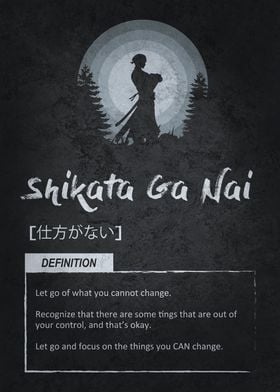
Shikata ga nai: Let go of what you can’t change

Image: https://static.displate.com/280×392/displate/2023-01-01/e24eb72ca3155ce10b5df2e03222421f_63b6e5e06d53c3edd3fae1b9af8bad70.jpg

Should we change people? Even if we can try I think we can’t really measure how much influence we in fact had.

People might say they were more influenced by some than by others. But do we really know that? Research has shown that people placed in a room with business-related objects such as brief cases and fountain pens tend not to split a cash gift evenly with another subject; in contrast, people placed in a neutral room tend to split evenly. We are all the time influenced in some way by what see, hear or feel around us without us realizing it. The less we are aware of these influences, the more we ignore their true effects.

Thus, we can arrange objects in a room to subliminally influence how others will think and behave. Robert Cialdini calls this Pre-suasion. If we can hide our intent to influence, we increase the chances that others will behave in the direction we desire.

I might think that no one has ever really persuaded me without me willing it. But knowing about pre-suasion I can explain and I can rationalize, but I’m pretty sure much of that is constructed memory, and therefore inaccurate in many important ways. On the other hand, neither can I measure how much influence I actually had on another.

Thus, I can try to influence, but short of coercion, I do not have control. What I do have control over is my message and how I deliver it. Pre-suasion, persuasion, rhetoric: professional skills a leader cannot ignore. For example, the leader can arrange the workspace in a way that reminds people to be productive (no distractions), or creative (lots of toys), depending on the situation.

Events, of course, have a life of their own. We have no control over physical laws. But we can control how physical forces are channeled. This is engineering. Our ability to engineer the flow of force through electric circuits or machines can expand or limit freedom of movement, and therefore, freedom of behavior. To speed up a decision process, for example, one could arrange for a negotiation to take place on a yacht at a time when you know the weather will turn bad.

As to the effect events have on us, we potentially have a lot of control. The mind is the final interpreter of events and the ultimate controller of behavior through the will. Certainly, mind and will are influenced by emotions, imagination and memory. But it is the mind that decides what to do with these “signals”. This is mental strength, to believe in spite of one’s fears. Not many people have this strength of mind. Not many people have the strength of will, either, to choose to behave bravely in spite of fear.

Perhaps an example of strength is a powerful inspiration that will cause others to behave bravely.

One of my professors in college made me memorize this phrase: Boredom is a choice. The power of mind and will to interpret events and to act on them is amazing: it is deception, and not deception at the same time. If our interpretation of events is wrong, we are likely to behave accordingly. But this also suggests that we can choose to interpret events in a positive way, and we are likely to behave accordingly. But events have a good side and a bad side to them. Therefore, we don’t lie when we choose to act on either one, acting more prudently however if we are aware of the existence of the other.

In spite of a lack of control and our continued refusal to admit our incompetence in the matter, we still make a difference. Just usually not in the way we expect. What really matters in the end is that one is better today than yesterday, that is, one had exercised strength of mind and will. Strength implies that mind and will are muscles. Trained, they are capable of great bravery.

We should not give up trying to influence people, events, and circumstances.

(Q.C. 230312)

Research Ethics: Due process and the SEES method of case evaluation

In this section we describe two processes for the evaluation of ethical cases: the more general due process, and the SEES method which is a systematic method for evaluating cases presented in class.

Due process

A procedure for the resolution of moral, ethical, or legal controversies that is fair to all parties is called due process. It is not a single procedure but rather a principle to inform how ethical cases and controversies can be decided fairly. Violations of due process could lead to dismissal of cases. Another example, evidence unfairly obtained, even if probative, are not allowed in most ethical and legal controversies.

Due process defines when a controversy ends. For example, an ethical or legal case ends with the imposition of a punishment. Thus a teacher who catches a student cheating and then gives a failing grade for that exam has closed the case.

The SEES method

This course uses the case method, a form of simulation to practice the art of ethical evaluation.

The class is comprised of groups of three, each assigned at least two cases in the beginning of the semester; these cases appear in the reference textbooks.

A typical method in evaluating ethical cases is the SEES method.

  1. Situation. Describe the facts of the case, the actors, what they did, time, place. Define what are facts and distinguish them from assumptions we may need to make. In this part we are careful to break the case into parts knowing that most ethical cases involve many issues and actions, which can be arranged in importance.
  2. Explanation. We describe why people who do certain actions may be considered to have acted ethically or not. We can explain why people in the case acted the way they did.
  3. Evaluate. We look at the actions, intentions, circumstances and then compare them with laws, guidelines, and moral principles to make a judgement of whether the actions are ethical or not, and how gravely. We will also recommend courses of action, not limited to meting out punishment.
  4. Strategic impact. We discuss what the implications will be for the organization by a decision. We may ask, what other practices might be considered unethical if we decide that the actions in this case are unethical. What are practices an organization can put into place moving forward.

The Professional Ethicist’s Way of Thinking

Suppose we say that person A plagiarized a part of his essay, and that we have proof it was directly lifted without attribution from a source we can name. If I ask person B: “Did A act unethically?”

Person B may answer “Yes, of course.” He may be right. But that is not what I call the Professional Way of Thinking.

If Person B had the Professional Way of Thinking, she would say something like this: “Perhaps, but if we want to move forward fairly and effectively, let’s look at the actions and the issues involved.”

In other words, the Professional Way of Thinking considers that multiple interpretations are possible. This is a skill we recognize when we come up with alternate hypothesis. Again the Professional Way of Thinking illustrates an extension of the scientific method into the ethical sphere.

That there is such a way of thinking does not imply it is the only way or the correct way of thinking. Considering alternate explanations and breaking up a case into issues is a slow way of acting. In an emergency, such as whether to shoot a person in self defense, one may not have time to make ethical decisions. In such a case, shoot first and ask questions later.

But killing in self defense is still homicide; one must prove one acted in self defense. How? Fire a second shot at the ceiling; make sure the investigators find the bullet in the ceiling, that’s your proof. It is very hard to impossible to prove which of two was the warning shot.

In the next sections we will be commenting on Cases taken up in class. First up is a case of potentially inappropriate disclosure of research information.

Research Ethics: Why people act unethically

Why do people act unethically?

People act unethically usually because of pressure, such as the need to publish. Policies that tie promotion and retention on a rhythm of publication can pressure scientists into committing fraud to ensure that they publish on time.

Scientific fraud undermines the integrity of scientific research and can have significant negative impacts on society. While it is difficult to estimate the prevalence of scientific fraud, some studies have provided insight into the scope of the problem. Here are some statistics on scientific fraud:

1. Retraction rates: Retraction is the process of withdrawing or invalidating published research. Retraction rates have been used as a proxy measure for scientific fraud. As of February 2023, more than 300 papers on Covid-19 research have been retracted, according to Retraction Watch (retractionwatch.com).

2. High-profile cases: There have been a number of high-profile cases of scientific fraud in recent years. One of the most well-known cases is that of Diederik Stapel, a social psychologist in the Netherlands who was found to have fabricated data in numerous publications. Another example is that of Anil Potti, an oncologist in the United States who falsified data in cancer research.

There is no single answer to what makes people commit scientific fraud. However, researchers have identified some common factors:

1. Pressure to publish: In the highly competitive field of academic research, researchers are often pressured to publish papers and secure funding. Researchers who are under pressure may be more likely to engage in scientific fraud to achieve their goals.

2. Career advancement: A successful career in academic research often depends on publishing high-quality research and obtaining grant funding. Researchers who engage in fraud may be trying to increase their chances of obtaining promotions, tenure, or other rewards.

3. Funding sources: In some cases, funding sources may place pressure on researchers to produce certain results, leading to scientific fraud. Researchers may also be more likely to commit fraud when they are receiving funding from multiple sources or when funding is scarce.

4. Inadequate training: Researchers who are not adequately trained in research ethics, statistical analysis, or other key skills may be more likely to engage in scientific fraud due to a lack of knowledge or understanding.

5. Personal motivations: In some cases, researchers may engage in scientific fraud for personal gain, such as financial gain or fame. Additionally, some researchers may feel pressure to maintain a certain reputation or image, leading them to engage in unethical practices.

Not all researchers who engage in scientific fraud do so with malicious intent. In some cases, mistakes or errors in data collection, analysis, or reporting can lead to false or misleading results. However, intentional scientific fraud undermines the integrity of scientific research and can have serious negative impacts on society, highlighting the importance of preventing and detecting fraud in scientific research.

Aside from pressures, reason itself can err. Numerous cognitive biases can affect ethical decision making. Some of the most common biases are:

1. Confirmation Bias: This is the tendency to search for, interpret, or remember information in a way that confirms one’s preexisting beliefs. This bias can lead decision makers to seek out or interpret information that supports their moral position, while ignoring information that contradicts it.

2. Availability Bias: This is the tendency to rely on information that is easily accessible or readily available in memory when making decisions. This bias can lead people to overemphasize information that is currently salient, such as vivid or emotionally charged examples, while neglecting information that is less immediately available.

3. Overconfidence Bias: This is the tendency to overestimate one’s own abilities or the accuracy of one’s judgments. This bias can lead people to be overly confident in their ability to make the right decision, even in situations where they lack the necessary expertise or experience.

4. Hindsight Bias: This is the tendency to believe, after an event has occurred, that one would have predicted or expected the outcome. This bias can lead people to overestimate their ability to predict the consequences of their actions, leading to risky or unethical decisions.

5. Framing Bias: This is the tendency to be influenced by the way information is presented or “framed”. This bias can lead people to make different decisions depending on how a problem is framed, even if the underlying ethical issues are the same.

6. Cognitive biases can lead people to prioritize their own interests or beliefs over the interests of others, to be overly confident, or to be swayed by irrelevant or misleading information. Being aware of these biases and taking steps to mitigate their effects can help people make more ethical decisions..

People also act unethically because they see others doing unethical actions. People need to study ethics so that they can “hold evil at the gates”. By their personal vigilance, people can prevent or correct such actions when they see them.

The costs of acting unethically

Acting unethically can result in bad science, but its most nefarious effect is the loss of trust. Furthermore, respect, money, talent and even life could be lost or wasted. These losses could propagate through the organization.

Furthermore, legal and administrative proceedings as well as ethical cases cost time and money, not just for the accused who must pay a penalty. Bodies tasked with evaluating cases must also decide whether there is enough merit in a case to justify the resources that will be put in its resolution. Nonetheless, because of due process, anyone who files a case must be heard.

In the next section we will look at two processes highlighted in this course: due process and the SEES method of evaluating cases.

Research Ethics: Moral vs Legal vs Ethical

Legal, ethical and moral are similar but not equivalent

Most of the time, when we say ethical we also mean moral and legal. But, these terms are not the same. Here are some of their distinguishing features.

Moral

Moral refers to what is right or wrong according to a set of moral principles. Morality is often based on religious, cultural, or personal beliefs, and may differ between individuals or groups. Moral considerations may be based on personal beliefs that might not be shared by others.

Morality only applies to voluntary acts. A spontaneous reaction of anger has no moral value. But violence committed in anger may, as a given person implicitly chooses violence and its effects, with knowledge from previous experience.

Choice implies that good acts are reasonable and bad ones aren’t, because choice is a product of reason. A reasonable action is congruent with the nature of things (e.g., an object is treated or used according to its nature), with the duty of the actor (e.g., fulfilling one’s duty is good, omitting it is bad), with harmony (e.g., rebellion and sedition are morally bad), and with positive consequences (e.g., free is good, jailed is bad). Good actions may be said to make one “happy”.

The judge of the moral value of an action is conscience, a person’s internal sense of right and wrong. Conscience is the person’s reasoning power evaluating an action aligns with the person’s values and beliefs. Conscience condemns a “bad” action for causing damage, e.g., in human relations, because people are hurt, or one becomes addicted. That damage may be slight or heavy implies that moral value has degrees. Reason makes this judgment considering the interplay of three determinants: the nature of the act, the intention of the actor, and the circumstances.

  1. Nature. The act itself is damaging, e.g., stealing causes the loss of property.
  2. Intention. Intent aggravates or attenuates the ethical value of the act, and can change the nature of the act. For example, the intent to feed a starving family makes a theft less grave. The intent to protect one’s life makes lethal self defense a species of homicide that is not criminal in contrast to another species of homicide that is, murder.
  3. Circumstances. The circumstances under which the action is committed aggravate or attenuate the ethical value of the act, making the agent more or less culpable. For example, theft committed with violence is worse than theft committed with no violence.

Conscience is often shaped by a person’s upbringing, cultural background, religious or spiritual beliefs, and life experiences. It can be influenced by external factors such as societal norms, laws, and moral codes, as well as by internal factors such as emotions. These imply that conscience can become more or less effective in keeping persons from harm. A case where conscience fails is seen through addiction.

What is addiction from a physical perspective?

Addiction is a disorder that affects the brain in various ways. One way addiction can lead to impaired thinking is through changes in the neurological processes that underlie decision-making and impulse control. We underline three processes: the reward pathway, executive control in the prefrontal cortex of the brain, and the stress response.

1. Reward Pathway: The brain’s reward pathway, which is primarily controlled by the neurotransmitter dopamine, is central to addiction. When a person engages in an addictive behavior, such as using drugs or alcohol, the brain releases dopamine, which creates feelings of pleasure and reinforces the behavior. Repeated exposure to the addictive behavior can in time lead to changes in the reward pathway, making the brain less sensitive to dopamine and requiring more of the addictive substance or behavior to produce the same pleasurable effect. This can lead to impulsive decision-making and a lack of control over one’s behavior.

2. Executive control in the prefrontal cortex: The PFC is involved in decision-making, planning, and impulse control — executive control. Addiction can lead to changes in the prefrontal cortex, making it more difficult for individuals to make good decisions, plan ahead, and control their impulses. As a result, individuals with addiction may be more likely to engage in risky or impulsive behaviors, even if they know the consequences may be harmful.

3. Stress Response: Addiction can also affect the brain’s stress response system, which is involved in regulating the body’s response to anxiety. Addiction can make individuals more sensitive to stress and anxiety. This can lead to negative thinking, which can further impair decision-making and lead to a spiral of addiction and negative thoughts.

These processes affect decision making on moral matters. In time, a person with a conscience thus compromised will find it easier to commit unethical acts.

A man condemned by his conscience suffers attacks of conscience, manifested as shame or guilt. The experience of shame or guilt is thought to involve a complex interplay of brain regions and neural pathways, including the ACC, PFC, amygdala, and ventral striatum. These regions process emotional and cognitive information, regulate behavior, and guide moral decision-making. Advances in neuroscience research are shedding new light on the neurological basis of this complex emotion, which appear as anxiety, worry, depression, and their associated physical effects, all of which move the agent to “make amends”.

In a moral controversy, we have recourse to an external arbiter. In Judeo-Christian cultures this is God. In other cultures it may be the King or the State.

Morality has no boundaries because a person carries her conscience wherever she goes.

Legal

Law is classically defined as a set of rules and principles promulgated by one in authority to regulate behavior and maintain social order. Legal refers to what is established by law, or what is permitted or prohibited by the legal system. What is legal is not necessarily ethical or moral, as laws may be created for a variety of reasons, including economic, political, or social considerations.

A legal system known as common law is based on judicial decisions and precedents, rather than on written laws or statutes. In this system, judges have the power to interpret and apply the law based on previous court decisions, rather than being strictly bound by legislative or statutory codes. Common law is an important legal system in countries like the United Kingdom, the United States, Canada, and Australia.

The Philippines does not have a common law legal system. The Philippine legal system is a civil law system based on the Spanish legal tradition. The civil law system is characterized by a comprehensive legal code, which sets out a wide range of legal rules and principles in a systematic and comprehensive manner. The primary source of law is the Constitution, which outlines the fundamental principles and framework of the legal system. Other sources of law include statutes, administrative regulations, and court decisions.

While the Philippine legal system is not based on the common law, it has some features of common law systems. For example, courts in the Philippines have the power to interpret and apply the law, and their decisions can be used as precedents in future cases. However, unlike in common law systems, Philippine courts are generally not bound by previous court decisions and are free to depart from them in order to achieve a just and equitable result in a particular case.

Laws are bounded by space, time, and persons — jurisdiction. Special laws known as contracts regulate the behavior of the contracting properties who may have recourse to courts for the enforcement of these contracts.

Ethical

In this course we distinguish “ethical” from “moral” by defining as ethical what is behavior expected of individuals in organizations. We allow that these behaviors may be guided by moral or legal principles or values. Still, what is ethical is not necessarily legal or moral, as ethical considerations may be based on personal or professional standards that are not enforceable by law.

The scientific community defines what is ethical and unethical behavior based on principles such as honesty, objectivity and respect for dignity as stated above. These principles are also the moral principles of truth and respect for human dignity and freedom. Privacy is a moral principle based on dignity, and a legal principle enforced by law.

Ethical controversies are adjudicated by representatives of the scientific community, such as the head of a lab, university officials, and bodies designated by funding agencies.

Ethical standards may differ across disciplines. E.g., many mathematics journals list authors in alphabetical order, a practice that most biologists do not adhere to.

Ethical practices may also be viewed as behaviors that have been effective in solving problems in the past or preventing them in the future. These practices are open to change, since problem solving is affected by technological progress, which also creates new ethical challenges.

In the next section, we will look at why people commit unethical acts, and what are the costs of such acts.

Research Ethics: Introduction

Welcome to MBB 194, Research Ethics. In this case-based course we will learn how to evaluate the ethical nature of activities in the light of commonly held values in the science field.

Scientific research is a complex activity guided by a number of ethical values that help ensure the integrity and reliability of research results. The most important values in scientific research include:

  1. Honesty and Integrity: Researchers must be truthful about their findings, methods, and potential conflicts of interest, and must not manipulate or fabricate data. They must also be transparent in their reporting and sharing of results.
  2. Objectivity and Impartiality: Researchers should not be influenced by personal biases, beliefs, or interests. They should strive to approach their research with an open mind and be willing to revise their hypotheses or conclusions in light of new evidence.
  3. Respect for Human Dignity and Autonomy: Researchers must respect the dignity and autonomy of human subjects, including their right to privacy, informed consent, and protection from harm. Researchers must take steps to ensure that participants are fully informed about the risks and benefits of participating in research and that their rights and welfare are protected.
  4. Confidentiality and Privacy: Researchers must take steps to ensure that personal information is kept confidential and that participants’ privacy is respected.
  5. Responsible Conduct of Research: Researchers must comply with laws and regulations governing research, and adhere to ethical standards and guidelines practiced in their field. They must conduct research in a safe and ethical manner, and that any potential risks to human subjects or the environment are minimized.
  6. Academic freedom. Researchers value the to choose the problems they want to investigate and the approaches of study. Academic freedom, like any right, is not absolute: some methods accepted in the past are not considered ethical today, such as human experimentation without prior informed consent. The tenure system is a way to recognize one’s ability to choose research problems that do not impinge, and instead promote, the research of others.

Adhering to these values wins the trust of the public and trust among members of the research community, which help bring the benefits of science to society.

In the next section we describe the scope of ethics beginning with the three concepts that are often used interchangeably but in fact have distinct meanings: legal, ethical, and moral.