What would Jay do?

Jay Leno of The Tonight Show is a popular TV host.

Image: https://cdn.britannica.com/05/129705-050-22A73CDF/Jay-Leno-The-Tonight-Show-2009.jpg

I sometimes have this habit, binging on Youtube just before going to bed. Although I share Jordan Peterson‘s opinion that it’s a kind of reading, and though I get much enjoyment from the jokes of Jay Leno and others, it makes me lose sleep, not good for the next day. There really is only one way to get rid of this. I don’t have to invent anything, just execute.

I may have put a few “boundaries” to this compulsion, like “I’ll only watch Jay Leno this time”, but the boundaries are just allowing me to have a lot LESS restrictions within those boundaries. It’s a rationalization.

You see, as long as there are “acceptable” boundaries, everything within them is free game. There are rules within, but they do not mark what’s good from what’s bad, only what’s expedient and cost effective. And how many more minutes are left before midnight.

Sometimes, I feel a little depressed about this, maybe edging towards boredom — even a fun Tonight Show loses all its charm after some point.

Mix this with the demands of everyday, especially work. I’m sitting here writing this waiting for a class to begin. I’m sleepy. That’s what I’m saying, the boundary, that boundary which is really doing nothing to improve freedom but just increases the extent of my dependence on drugs — caffeine — and here in front of this class not knowing exactly whether what I’m going to tell them is really worth my while or theirs.

But caffeine, at least, works. There’s little creativity now where I’m standing. But at least I can function. And once I start speaking the caffeine will not be necessary. It’s the down afterwards that’ll be harder to bear.

Fine. With or without Youtube, or caffeine, to me it’s just a type of what I do everyday to push the wall. Madonna at 64 years old still holds concerts. She’s pushing her art to the limits. Same thing. Deliberately creating chaos pushes the wall.

I don’t have to create chaos. But we have to go through it anyway: complications from travel, loneliness, contradictions in life, failures in experiments, feelings of sorrow and depression, feelings that nothing works, and sometimes the only way to improve the tune is to change the guitar itself. But you don’t have the budget. Deal with it.

Like small talk.

So, last night at Shakey’s I was reading about the proper attitude when dealing with small talk. That thing people do as a ritual hoping for the most part that it would end. Yet the latter might just the vegetables that one must go through before getting to the meaty stuff.

This is how it works. I’m impatient because I’m the center of my universe. Everyone is a blip in this awesome life I have. Most of the people I meet are extras in a movie. When I deal with someone wo is more than an extra, I’m looking to be entertained.

But that’s the wrong attitude. I wrote about sonder in my last blog. Consider instead to think that there’s a universe in every person, just as deep and as interesting as your own. To them you are just an extra. Yet, everyone is a vast universe. Who has the time to go through ALL of them? Of course, no one. But that’s not the point.

The point is to connect. How?

Ask What Would Jay Do?

Jay Leno. This guy is an expert in making his guest feel that for the next 10 min he or she is the most interesting person in his life. He listens, he asks questions. He makes them comfortable. Unlike the way many people get into “conversations”, like they’re just waiting what’s going to happen. Usually they are just waiting whether they will be entertained. Not so Jay Leno.

Everyone is worth it! There are some people like Leno who just seem to have a talent for making connections. But there’s really no genius technique to it. Just be GENUINELY INTERESTED. Show with every word and gesture and smile that he or she IS the center of his or her universe. Then neither you nor they will be a blip in each other’s life.

Will they ever be friends? We don’t know. Probably not. But they cannot be friends when our attitude is that we want to be entertained. Entertainment may be part of the interaction but it is not its essence, nor is it really as important as showing interest. Or faking it. Which is better than no interest.

Other behaviors like body language, the way we listen, the questions we ask. But the real thing is the attitude, that I’m curious, like supremely curious.

I probably lost some of these skill when I became BUSY. Fortunately, there’s Jay Leno.

(Calamba, 231007)

Conversing with strangers

Is it possible to increase one’s sense of worth through dealings with someone who has low self worth?

I immediately thought that, yes, it’s possible, if coming from a position of low self worth one meets someone who has even lower self worth. But it’s just a feeling.

Then I changed my mind. Feelings are not enough basis for self worth.

Any interaction with any person is a gift. I read about an unusual noun, sonder. This is a term that was coined by the online Dictionary of Obscure Sorrows. It describes the realization or awareness that each passerby or person you encounter in life has a life as vivid and complex as your own. In other words, it’s the recognition that every individual you see or interact with has their own thoughts, feelings, experiences, and a unique story, just like you do. It’s a word used to capture a sense of empathy and understanding for the depth and complexity of other people’s lives.

You to them, are just an extra in the background. But that’s not at all a bad thing.

What happens when two universes decide to open up to each other?

That janitor you see everyday, maybe greet and then forget about, then no more, he has an inner world just as interesting as your own. There are worlds in his universe you know nothing about but will fascinate you.

I once lived in a foreign country for some years. I spent the first three months from June to August in the city of Royan on the Atlantic coast of France to take up French classes in the CAREL Language School. These were the summer months, and students from all nationalities were enrolled.

Me and my classmates, we were all intensely interested in each other. Perhaps because we had shared goals and we were all foreigners. With the Kazakh and Japanese, we used French of course. For the Swedes, Irish, Americans, Syrians and Kuwaitis we were speaking a mix of English and French, mostly English. We would go out every night to visit markets and restaurants, the beach. On July 14, 1998, Bastille Day, we watched a free concert on the beach featuring the Trio Esperança, a famous Brazilian singing group, capped by a fireworks show. (I’m listening to the album Trio Esperança Segundo while writing this.)

Image: https://www.singers.com/group/images/trio-esperanca-2017.jpg

Three months of discovery and conversation, everyone had much to say and much more to listen to. I’ve never had this kind of experience since.

I guess because life outside language school just caught up with everyone. I have work and responsibilities, and am surrounded by people who also have work and responsibilities. Most talk nowadays stay at the level of small. I also find that more and more people, strangers or not, find it creepy when others try to strike a conversation. In Royan it was so easy to walk up to strangers. In some offices today it’s even dangerous especially for men to talk to women alone.

It’s not impossible; it just requires a bit more skill now. And an attitude.

Sometimes, when I need to rest from work and responsibilities, I like to watch this short film on Youtube called Reception to remind myself of simple attitudes — like just having a good time.

Joe Gillette and Devin Kelley in Reception (2017)

It’s not easy to meet another cosmos, but it’s worth the chaos.

(Calamba, 231006)

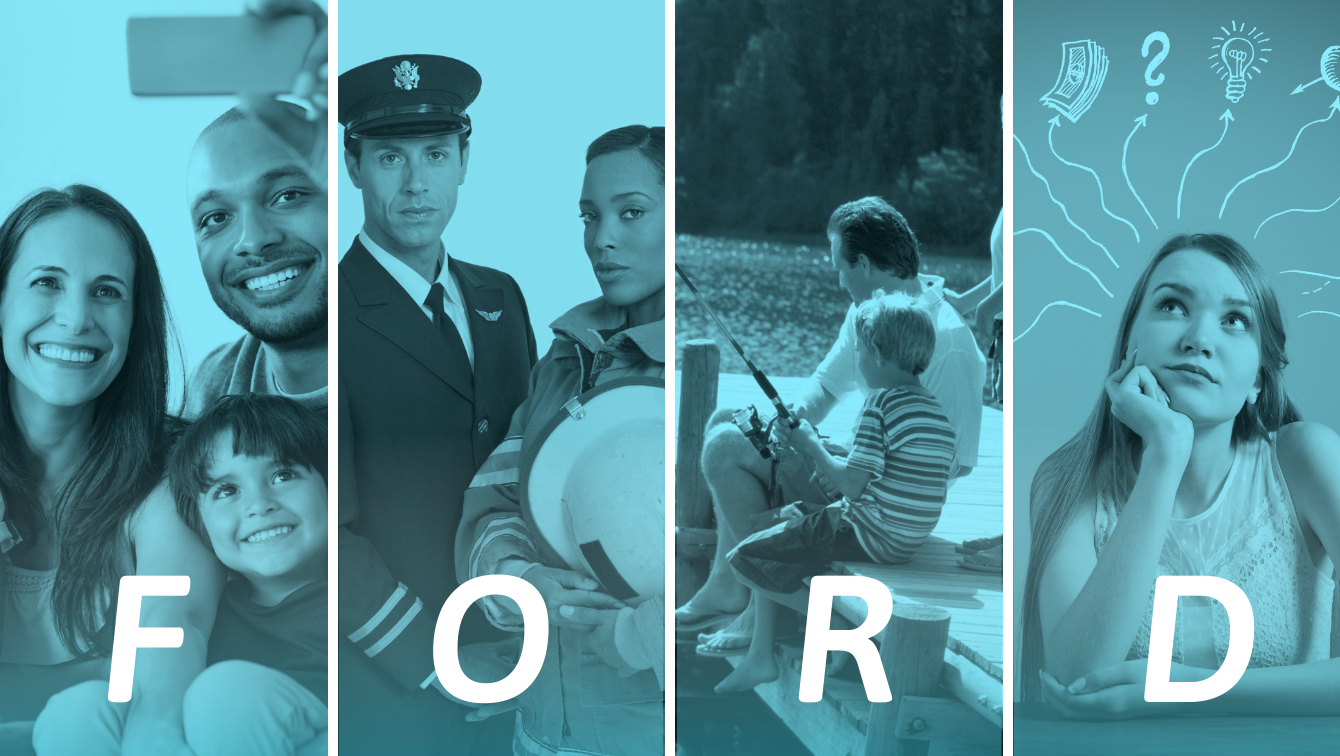
The F.O.R.D. technique of conversation

Conversation is a rare skill. Debate, which is what a true conversation is, is best enjoyed by partners who can contribute significantly. This does not mean they have to be able to talk a lot — in fact, listening is far more important — but they have to have knowledge and thinking skills, the ability to follow the flow from another’s perspective, control over emotions, and a sense of humor.

These “talents” are not easy to gauge. But sometimes, a conversation partner might be found in a new acquaintance. One way to bring such a one into conversation is the FORD technique.

Image: https://socialself.com/wp-content/uploads/2020/12/FORD-method.png

The F.O.R.D. model is a chit-chat technique that provides a starting point for engaging in meaningful conversations by focusing on four main topics: Family, Occupation, Recreation, and Dreams. Each category represents a different aspect of a person’s life, offering a range of topics to discuss. Here are examples of questions under each heading:

  1. Family:
  • Do you have any siblings?
  • How did you and your partner meet?
  • What are some of your favorite family traditions?
  • Tell me about your hometown and your family there.
  • Do you have any interesting family stories or anecdotes to share?
  1. Occupation:
  • What do you do for a living?
  • How did you get started in your profession?
  • What do you enjoy most about your job?
  • Are there any current projects or challenges you’re working on?
  • What are your career goals or aspirations?
  1. Recreation:
  • What do you like to do in your free time?
  • Are there any hobbies or activities you’re passionate about?
  • Have you traveled anywhere interesting recently?
  • Do you play any sports or participate in any recreational activities?
  • Have you read any good books or seen any interesting movies lately?
  1. Dreams:
  • What are some of your long-term goals or aspirations?
  • If you could travel anywhere in the world, where would you go?
  • What is something you’ve always wanted to learn or achieve?
  • Do you have any dreams or ambitions that you’re currently pursuing?
  • How do you envision your ideal future?

These questions are just starting points. It is important to actively listen to the other person’s responses and follow-up with additional questions to keep the chit chat flowing. The F.O.R.D. model provides a structure that helps explore different areas of a person’s life, opening up topics that can be debated in a friendly and enjoyable manner.

If a casual dialogue does not lead to that, fine. Perhaps later on, perhaps never. Still, a chit chat or dialogue, whatever one might want to call an exchange that is not strictly a conversation, can establish rapport, trust, materials for future exchanges, and overall, a good time.

(Q.C. 230715)

The Art of Conversation

One of the little practices that impressed me big time when I lived in France was to experience how the French conversed. At first it wasn’t a very pleasant experience because many of them had the annoying practice of sometimes finishing your sentences. Until I realized it was something common to other people as well, me included. I realized, though, that the practice was really a consequence of them really thinking with you.

Image: https://ohm-media.s3.us-west-2.amazonaws.com/article_images/2021/CP_web_banner.jpg

What other gems like this have I found?

I learned that conversation is cultivated, valued, and trained by French society and specifically by its educational system, which is heavy on logic (math) and language (literature and philosophy), two indispensables when one must converse well. Cafes aren’t just the cafe au lait and croissant. Ideas are bounced around, critiqued, improved. Out of these cafes came the philosophies of Descartes, Sartre, Camus. Out of them came at least one revolution.

True conversation is, briefly, a debate enjoyed among friends. It is not reportage, the act of conveying news and facts, which happens to be confused with conversation by many other people.

I realized that the art has unwritten rules (finishing another’s sentences was not one of them, just a consequence of these rules). These help to guarantee that friendly debate stayed friendly, even if intense and emotional. I try to distill these rules here.

Aim to enjoy dissecting ideas, for the betterment of all. Apart from logic and language, one has to have knowledge. The genius of the French educational system is that nearly everyone reads the same books, the same authors, covering a vast array of fields from history to literature to current events. A society that didn’t have a canon as the French do, is forced to talk about movies, and hopefully progress from there. One also has to know how to tell jokes and make witty remarks, which served to cool emotions down and reassure one’s “opponents” that you’re actually with them.

Conversation is personally and professionally fruitful. Here are some reasons why:

  1. Conversation builds relationships. Conversation allows us to connect with others beyond the level of facts and into the level of feelings and ideas. Sharing such intimate thoughts fosters trust and builds bonds — why else would I share?
  2. We learn as we share: Conversation provides an opportunity to put ideas through the crucible. We learn there are different perspectives. We see alternative ways to think. How we think is pointed out to us, and sometimes we are surprised. We learn diverse opinions cannot all be equally good. A key skill is listening, which isn’t just about absorbing information, but thinking, feeling, and perceiving in another’s shoes. Finish each others’ sentences is, in fact, practical camaraderie.
  3. Conversation trains and disciplines the emotions: Conversations can be very emotional, yet the French manage to still remain friends. We say they “don’t take it personally”, but I think they actually do — but from a position of strength. First of all, they have confidence in their skills, and they expect that others will be as well. It’s not a question of proving who is better. Conversations help us come to grips with our emotions.
  4. We learn to negotiate and to resolve conflicts: Office meetings are not conversations because they are not leisure activities. But similar rules apply. I’ve seen intense meetings where people fight, and then enjoy coffee together afterwards.
  5. Networking and professional growth: Conversation is essential for networking and career development. Skill in conversation is valued in French professional circles, for obvious reasons. And, again, it’s not about proving your superiority but your ability to contribute.
  6. Influence and leadership: Conversational skills are crucial for those in leadership roles. Good conversationalists have the ability to inspire, motivate, and influence others through their communication. They can articulate their vision, engage in persuasive conversations, and effectively convey their ideas and goals, thereby inspiring their team members and achieving desired outcomes.

While conversations can vary in nature and style, there are certain rules, qualities, and skills that contribute to being a good conversationalist. Here are some:

  1. Listen actively: Pay attention, maintain eye contact, and show genuine interest in what they have to say. Stand in someone else’s shoes as they speak, before returning to your own shoes, but this time a “better” person.
  2. Show respect and courtesy: Treat others with respect and courtesy. Conversationalists value diverse opinions. Avoid interrupting or dominating the conversation, and allow each person to express their thoughts and ideas freely. Avoid judgment and maintain a positive and open-minded attitude.
  3. Show empathy and understanding: Many people pay lip service to empathy, when they should admit that empathizing can result in internal conflict. Welcome this conflict. You don’t have to adopt and agree, merely understand, and if you experience internal conflict then it means your effort to stand in another’s shoes was serious.
  4. Communicate clearly: Express your ideas clearly, use appropriate language and tone, and avoid excessive jargon or complex terminology that might confuse the listener. Be mindful of non-verbal cues such as body language and facial expressions. Do not make all your premises explicit when you argue. Leaving things unsaid and yet be understood, that’s a mark of an intellectual. The opposite is pedantry.
  5. Ask thoughtful questions: Show you are curious and genuinely interested in the other person’s perspective. Use questions to explore topics further and encourage the other person to share more. Learn techniques in asking questions.
  6. Contribute: Strike a balance between talking and listening, allowing for a dynamic and engaging exchange. And do it from a position of strength. For example, my French friends expected an Asian like myself to be thoroughly Asian in my “presentation”, to not try to be French. I had to restudy my own Asian history books as a result!
  7. Adapt: Conversations can take unexpected turns, and good conversationalists are flexible, adaptable, and have a sense of humor. Be open to changing topics, and balance this against changing too much too quickly.
  8. Be curious and eager to learn, like a child: Cultivate a broad range of knowledge about various subjects. This doesn’t mean you have to be an expert in all but your field. Stay informed about current events, and have diverse interests. If you did not grow up in a society with a canon of readings, at least make the effort to watch and listen to what others are consuming if you want to converse with people outside your professional circle. I found that the best approach is simply to cultivate a long friendship with people from these circles, specifically the Toastmasters, as you will all reach some kind of canon substitute over time.

Unfortunately, bad conversations abound. They are marked by a lack of genuine interest, failure to listen (many people think only about what they are about to say), pedantry (they say every darn detail of every darn thing), talk about themselves, talk too long, ask irrelevant questions. A common defect is to flit and float from one topic to another, which I suspect is initiated by people who do not have the discipline to control their emotions, or do not have the knowledge or interest to contribute to a topic. Many who fail are insecure and compensate by trying to prove they are superior; when others disagree, they take offense. They take things personally, but from a position of weakness. A few do not have the emotional quotient to understand non-verbal cues, and therefore do not see that others are no longer enjoying their time with them. Finally, some people simply exude negative energy, always complaining, always ranting, always talking ill of other people — or simply talking about other people.

Conversation is a skill that takes practice. Seek debate resources, add humor and friendliness, and you’ll have conversation.

(Q.C. 230705)