Overthinking

The problem is rarely the problem; 99% of the problem is caused in your head by you and your thoughts. 1% of the problem is caused by reality, what actually happens, and the outcome. Most of the time the problem isn’t the problem. The way you think about the problem is.

This reminded me about a girl I knew; let’s call her Clara. She had a reputation for being exceptionally level-headed and calm in the face of trouble. She did not live in a trouble-free world, having been born to a very poor family and now working as a maid, but she understood that the problem is rarely the problem itself.

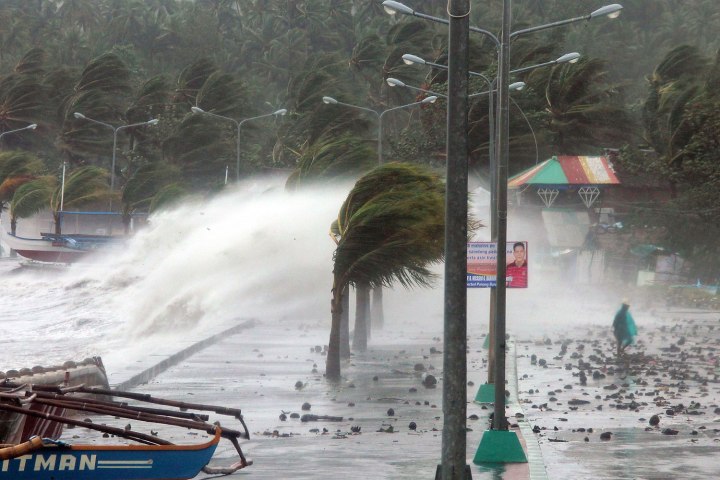
One day, we got news of an impending super typhoon. The sky grew darker, and the wind whispered bad tales. As we were anxiously preparing, Clara remained strangely composed.

“Clara, aren’t you scared? The storm is coming, and it looks fierce!,” asked one of our cousins.

Clara replied, “Tars, my dear, chill; the problem is rarely the problem. Let’s not let our thoughts drown us before the storm even arrives.”

Clara gathered the cousins. She reminded us that the challenge lies not in the storm itself, but how we react to it.
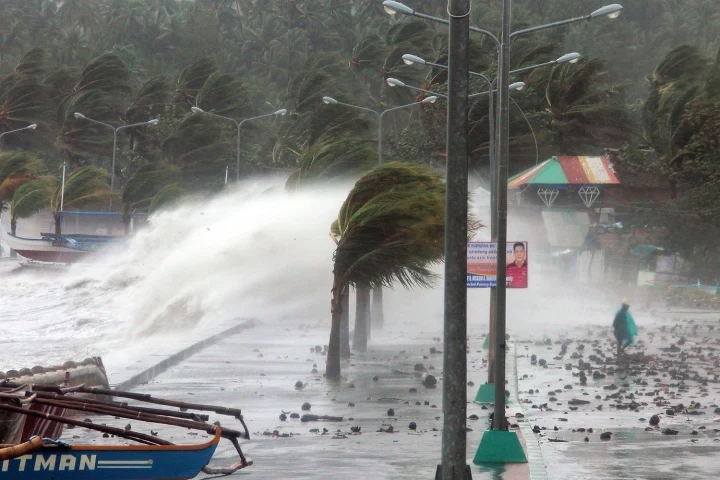
Image: https://world.time.com/wp-content/uploads/sites/17/2013/11/hkg9172232-copy.jpg?w=720&h=480&crop=1

As the first raindrops fell the cousins were busy — with their toys. We enjoyed the company. And to our non-surprise, the storm just meant more time to play indoors. To this day, me and my cousins associate typhoons with toys.

True power lies in transforming challenges into opportunities. And also something else that we failed to notice: Clara and the grown-ups were busy securing the windows and provisions and doing all sorts of things in case of power outage or flood, but no one was making a big fuss of it.

As the wind howled and rain beat down, it’s the adults, with all their responsibilities, who had reason to worry the most. But in the end the skies cleared for everyone.

In fairness, this event happened on high ground. Had this happened in some place like Marikina the best thing would have been to evacuate. Overthinking can also give way to the opposite, underthinking, when we resort to wishful thinking and do nothing out of fear or inertia.

In any critical event, give it time, and silence. Most problems aren’t solved with more thinking, but with less. If you can’t solve a problem stop trying to.

Instead, act. Taking action is the best way to think.

(Q.C., 240104)

On overthinking

I have to get export permits. The thought intimidates me.

What about this intimidates? Legally? No problem. The object is covered by application procedures that are at least clear.

Tedious? Maybe. Most procedures like this involve getting only one or two signatures, with one supporting document (already prepared), and a fee. One week and I’m done.

So, what intimidates is not the problem outside, but the anxiety inside. The problem in my thinking. I’m intimately familiar with at least one of the culprits: the Zeigarnik Effect.

Image: https://media.licdn.com/dms/image/D5612AQGewbUOpw11kQ/article-cover_image-shrink_600_2000/0/1678543047834?e=2147483647&v=beta&t=uipMDhPQ4slYLSe3vBpXZcyf82neKTXd-TRLqHBCboY

The Zeigarnik Effect is a psychological phenomenon named after its discoverer, Russian psychologist Bluma Zeigarnik (1901-1988). She noticed that waiters were better at remembering uncompleted orders than completed ones. She confirmed the phenomenon through studies she conducted in the 1920s.

Cognitive psychology suggests an explanation.

The brain’s cognitive tension system is aroused when a task is started but not finished. This tension creates a mental preoccupation with the uncompleted task, resulting in the task being more readily recalled. Once completed, the tension is relieved, and the brain is less likely to recall the details of the task, as it is no longer a matter of concern.

Although the neurobiology is unclear, it’s reasonable to associate the Effect with the activation of brain regions related to attention and memory. These hypotheses are based on the broader understanding of memory, attention, and motivation systems in the brain.

We begin with the prefrontal cortex, site of attention, working memory, and decision-making. The hippocampus, crucial for memory consolidation and retrieval, might be engaged differently for completed and uncompleted tasks due to the tension difference.

The amygdala might play a role. A key part of the brain’s limbic system, the amygdala plays a crucial role in processing emotions, including fear and anxiety. It also contributes to the emotional aspect of pain. When the thought of long bureaucratic procedures makes one anxious, the amygdala goes hyperactive, making the pain feel worse. Signals from the amygdala feed back into the prefrontal cortex giving it a kind of tunnel vision. As a result, one might make decisions with too little information and too much emotion.

If one doesn’t procrastinate by ignoring the problem, one might still paralyze oneself through overthinking. Focusing on only a few aspects of the problem could kill a course of action that could otherwise have proceeded had key information not been ignored. One can fixate on the worst case scenario. I prefer paralysis in this case over an ill considered course of action.

But one will still have to face the issue. Therefore, beat overthinking.

The first step is to know that 99% of a problem lies in one’s thinking, and 1% in reality. How we gather and verify facts, from whom we seek advice, our attitude towards risk and failure have a greater bearing on the outcome of our struggle with problems than the actual dangers.

At this point I suggest three strategems.

First, Time and Silence. There MAY be good reasons not to take action, and being emotional is one of them. If the situation allows it, let that emotion pass before you study your options. If you only have seconds to decide — which happens rarely — then go where your gut leads you and hope for the best.

Second, Fact Check Your Thinking. It may look tedious to check one’s facts, so let’s put the costs in perspective. Use the 1-10-100 Rule. It costs $1 to validate one’s facts, $10 to correct wrong facts, and $100 to reverse a bad decision. Be aware also of the fact that the Zeigarnik Effect is a psychological phenomenon, an illusion.

And third, Live in the Present because only the present is real. The outcomes of your scenarios, none of them are actually disastrous because they haven’t actually happened. All Worry and anxiety are about the future, guilt is about the past, and both past and future are UNREAL. Focus on the now and put one foot over the other.

Climbing a mountain involves occasionally checking for coordinates or the weather. And it’s also about stopping and enjoying the scenery. But do be relentless.

And you may well fail. Then think of failure as showing the way by NOT being the way. Use it. Double back. Then keep at it.

(Q.C., 230801)