I recently shared a ride (actually, I drove) with Prof. Paul Dumol. Dumol is best known for his masterpiece, Ang Paglilitis ni Mang Serapyo (1968), which he wrote as a high school sophomore at the Ateneo de Manila University, a play that is still widely performed today. Prof. Dumol is also an expert in medieval history and philosophy, and one of the Philippines’ best resources on the life and works of Jose Rizal.
He’s also my most trusted source of book and movie recommendations.
Back to the ride. We conversed about Julian Marias, to whose works he was recently introduced. I was intrigued by Marias’ “filling in a gap” in Aristotelian philosophy, a gap that was already hinted into by my favorite philosopher, Robert Pirsig.
Julian Marias (1914-2005) was a Spanish philosopher and pupil of Jose Ortega y Gasset (1883-1955). Between the late 1940s and the 1970s, being unable to teach in Spain (he was critical of the Franco regime), Marías taught at numerous institutions in the United States, including Harvard University, Yale University, Wellesley College, the University of Oklahoma, and UCLA.

The gap hinted above refers to the act of being.
In metaphysics, the “act of being” refers to the fact or state of existence, and it’s a concept that delves into the nature of existence itself. This is an idea that has been explored by numerous philosophers and theologians over the centuries.
Knowledge of a few key points about the “act of being” in metaphysical thought are helpful.
- Existence vs. Essence: Classical metaphysicians often make a distinction between the existence of a thing and its essence. While the essence of a thing describes what that thing is, the act of being or existence refers to the fact that it is. For instance, the essence of a triangle is that it’s a three-sided figure. Its existence, however, is a separate consideration: whether or not such a figure is actually found in reality.
- Pure Act: In the philosophy of Thomas Aquinas, God is described as “pure act” (actus purus), meaning He is fully actualized with no potentialities. Everything else in existence has a mixture of potentiality and actuality — e.g., I’m not yet a grown up at 17 — but only God is pure actuality or pure being.
- Existentialism: The 20th-century philosophical movement called existentialism put a significant emphasis on the individual’s existence, or act of being, and the inherent meaning (or lack thereof) that comes with it. Notable figures such as Jean-Paul Sartre and Martin Heidegger grappled with questions about the nature and significance of human existence.
- Heidegger and Dasein: Martin Heidegger, a German philosopher, presented a significant reinterpretation of the concept of being. He introduced the term “Dasein,” which can be translated as “being-there” or “existence,” to explore the unique way humans engage with the world. For Heidegger, understanding the nature of Dasein is central to understanding the question of Being itself.
- Ontology: This is the branch of metaphysics concerned specifically with the nature of being or existence. When philosophers undertake an ontological investigation, they’re trying to understand what it means for something to exist and the various modes or grades of existence.
The “act of being” is a foundational concern in metaphysics, and discussions surrounding it touch on many deep questions about reality, identity, God, and the nature of existence itself.
The gap, as I understand it, is this: all the above concepts are static. A spade is a spade is a spade. But that is not how we experience spades. I have a favorite spade, and I will argue that it’s not the same as any other spade even if they all looked exactly alike, were made by the same company, and were made of the same materials. Why is mine different? It’s because of my experience of it.
Julián Marías, particularly in his work “Metaphysical Anthropology: The Science of the Act of Being“, places a strong emphasis on the act of being as it relates to human existence and individuality. Aristotle and Aquinas I think are the starting point, and these three philosophers grappled with the concept of being in ways we shall now enumerate.
Julián Marías:
- Marías’ philosophy is deeply rooted in personalism, and he is greatly influenced by his mentor José Ortega y Gasset.
- For Marías, the act of being is closely tied to human reality and existence. He emphasizes individuality and sees the act of being as an unfolding reality, contingent on time and circumstance.
- In his metaphysical anthropology, Marías insists that humans cannot be understood without considering their temporal nature and individuality. The act of being, therefore, is intrinsically linked to one’s history, choices, and personal development.
Aristotle:
- Aristotle’s concept of being is foundational to his metaphysics. He introduces the distinction between potentiality (dynamis) and actuality (entelecheia).
- For Aristotle, everything that exists has a purpose and is moving from a state of potentiality to actuality. This progression defines its act of being.
- Aristotle also categorizes being into various categories, like substance, quantity, quality, etc. The primary substance, for Aristotle, is the individual entity.
- While Marías is concerned with the temporal and historical nature of being, Aristotle is more focused on the static categories and the transformation of entities from potentiality to actuality.
Aquinas:
- Thomas Aquinas synthesizes Aristotelian philosophy with Christian theology. Thus, his understanding of the act of being (actus essendi) is deeply tied to his theological beliefs.
- Aquinas believes that the act of being is what gives existence to a thing. Essence (what a thing is) is distinct from existence (that a thing is). In God alone, essence and existence are identical.
- Aquinas, like Aristotle, discusses potentiality and actuality but ties it more directly to a theological understanding of God as the Prime Mover and the pure act of being with no potentiality.
- While Marías emphasizes individuality in the act of being, Aquinas, though recognizing individual existences, places a more substantial emphasis on the universal essence that individuals partake in, especially within the context of his theological views. In other words, the act of being in all other realities are a participation in the act of being of God.
In other words, to Marías the act of being, especially of the person (he is primarily anthropological in focus) is closely tied to individuality, time, and personal history. His concept is dynamic in contrast to Aristotle’s static, and humanly personal in contrast to participation in God’s. The three conceptions are not incompatible.
So, how does this tie in with Robert Pirsig (1928-2017)?
First of all, Marías and Pirsig come from very different traditions and backgrounds. But though their concepts are not directly comparable in a strict sense, both attempt to delve into profound aspects of existence.
We said that Marías’ philosophy emphasizes the “act of being” as a dynamic reality in the object: existential, personal, and historical. A person’s “I” is always in the act of being, unfolding over time in a history and within the context of circumstances. In other words, the act of being is intrinsically tied to one’s biography and is inherently dynamic.
Pirsig introduces the metaphysics of Quality. For him, quality is an experience. But it is not merely something the subject attributes to objects or experiences; it’s the very fabric of reality. Pirsig emphasizes the relation between the object (known) and the subject (knower). It’s not just about aesthetic or functional appreciation but rather the underlying reality from which both subjects and objects arise.
Comparison of Marias and Pirsig:
- Dynamic Reality: Both thinkers emphasize a dynamic reality over static existence. Marías’ “act of being” unfolds over time, while Pirsig’s concept of quality is about the unfolding experience.
- Prior to Subject-Object Division: Both philosophers hint at something that comes before the division of subject and object. Marías sees the act of being as an intimate part of object and subject, while Pirsig views quality as the pre-conceptual experience before we divide the world into subjects and objects.
- Context and Experience: Both Marías and Pirsig emphasize the importance of context and experience. Marías sees one’s existence in particular as shaped by circumstances and biography, while Pirsig believes quality is an experience that can’t be strictly defined but can be understood contextually.
- Interrelation of Individual and World: Both seem to suggest a deep interrelation between the individual and the world. Marías’ act of being emphasizes the interconnectedness of individual existence with the world, while Pirsig’s Quality is about the relationship between the observer and the observed.
It’s essential to recognize a further difference in focus: Marías is rooted in existential and personalist philosophy with a strong focus on the individual’s unfolding existence, Pirsig is trying to bridge Eastern and Western thought, using Quality as a central concept to weave together ideas from both.
Marías and Pirsig focus on different aspects of existence and reality; both offer profound insights into the nature of being and our relationship with the world.
I find these two philosophies (and Arsitotle’s and Aquinas’ as well) useful in explaining why my spade is different. It also adds this practical aspect: that I can increase the act of being and the quality of my spade by adding my own experience and circumstance to it. If I treated my spade as a sacred tool of work, wrapping it in velvet and keeping it in an ancient box the way master chefs keep their knives, then everyone will see that my spade is special.
Treat your tools as if they were sacred.
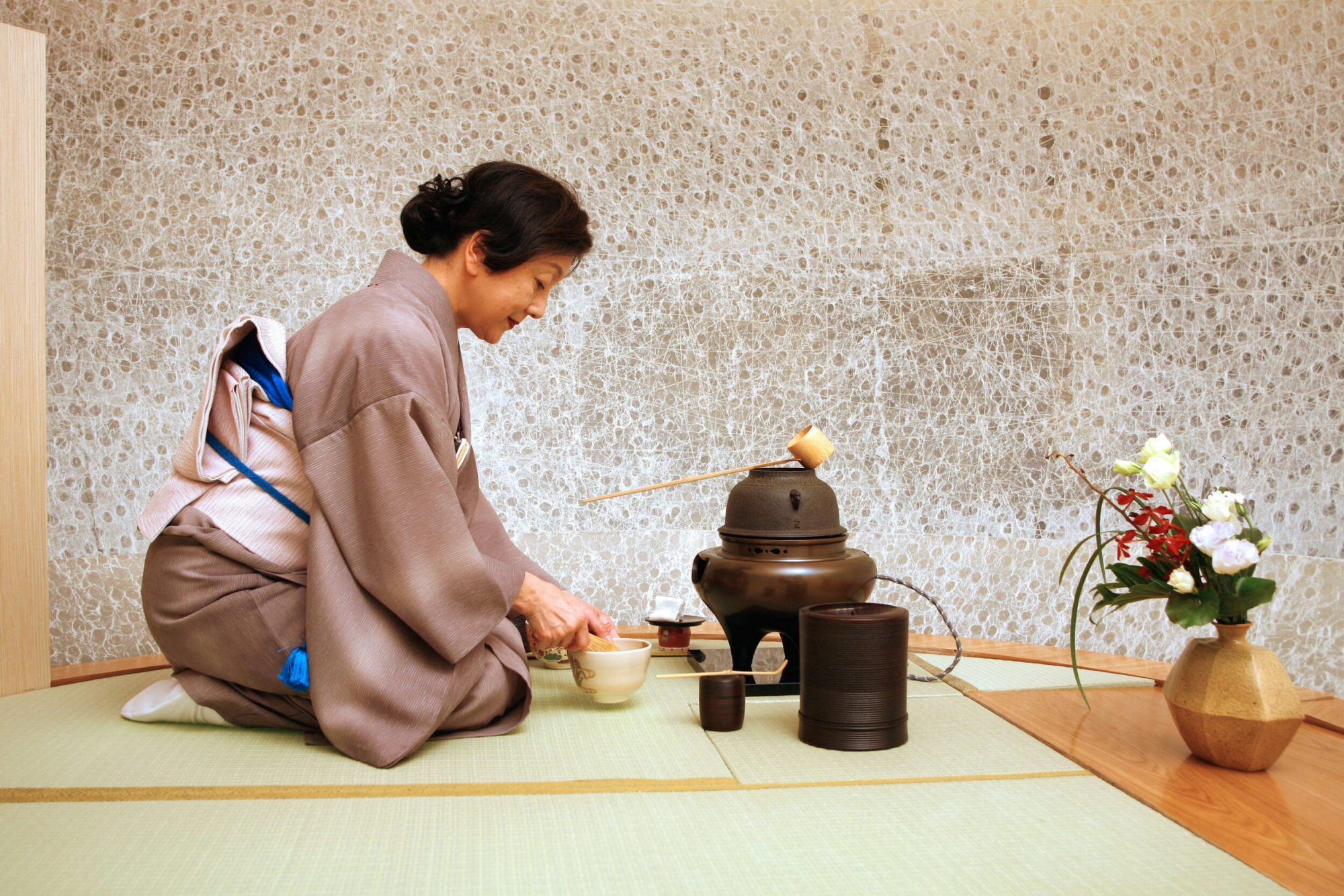
Aside from these philosophers, I also delivered a talk on contrasts in the idea of work as experienced by the Japanese and other people. Then, Prof. Dumol, myself, and other friends savored two Japanese films — Suzume (2022) and The Last Recipe (2013). All these experiences made for a coherent, intellectually and aesthetically satisfying out-of-town vacation over the last few days.
(Calamba and Q.C. 230807)


 jaylazzo