Robert Pirsig (1928-2017). An author and a philosopher I truly love. And a biker whose love for motorcycles and cycling I share. That I, briefly turned away from when I got rid of my MC. Fine. My plan is to get a bigger one. See the picture at the end.
Let me describe briefly what Pirsig wrote in the now classic Zen and the Art of Motorcycle Maintenance.
Pirsig’s motorcycle ride is a central element. The book, published in 1974, blends a motorcycle journey with philosophical musings, and Pirsig’s motorcycle ride serves as a metaphor for his exploration of the concept of “Quality” and the pursuit of a meaningful and harmonious life.
Pirsig’s motorcycle journey takes place in the late 1960s and spans from Minneapolis, Minnesota, to the West Coast of the United States. Here is a brief description of his motorcycle ride and its significance:
The Motorcycle: Pirsig rides a 1966 Honda Super Hawk 350 cc motorcycle with his son, Chris, accompanying him on the trip. The motorcycle itself becomes a symbol of technology and craftsmanship, embodying the concept of “Quality” that Pirsig is deeply interested in exploring.
Physical Journey: The physical journey involves traveling through various landscapes, from the urban environments of Minneapolis to the open roads of the American West. The ride takes them through different states, including South Dakota, Montana, and California, showcasing the diverse beauty of the country.
Philosophical Exploration: Throughout the journey, Pirsig reflects on the concept of “Quality” and its significance in life. He delves into the relationship between technology, rationality, and the pursuit of an authentic and meaningful existence.
Narrative Structure: The motorcycle journey is interwoven with Pirsig’s personal experiences, flashbacks, and philosophical discussions. He uses the journey as a vehicle to explore the intersection of science, art, and spirituality.
Quality and Maintenance: Pirsig emphasizes the importance of “maintenance” not only in the context of motorcycle maintenance but also in the broader sense of maintaining the quality of one’s life, relationships, and thought processes.
Father-Son Relationship: The motorcycle ride is also a bonding experience for Pirsig and his son, Chris. The trip allows them to connect, and their interactions provide another layer of depth to the narrative.
Zen Influence: The title of the book, Zen and the Art of Motorcycle Maintenance, reflects Pirsig’s interest in Zen Buddhism and its philosophy of mindfulness and living in the moment. He draws parallels between the precision and attention required for motorcycle maintenance and the pursuit of a Zen-like approach to life.
Pirsig’s motorcycle ride represents the search for meaning, the quest for understanding, and the exploration of the concept of “Quality.” It is a unique and thought-provoking work that combines personal narrative, philosophy, and a love of craftsmanship.
I’d like to one day to take such a ride. And maybe write about it.
And publish it. That’ll not be a smooth ride. Pirsig had to pitch his idea to 121 publishers and got 99 rejections. But my question is: did he want to write a book? Or was there a stronger reason why he persevered?
I think that just wanting to write a book and to become known as a best selling author is not engine enough. One could have such a motive, but it wouldn’t be the motive of one who might have real substance, for whom publishing was just an extension, almost a by-product of a love for knowledge and life.
It simply takes that kind of love to do something truly great. And only that ONE thing. Perhaps, desperately, like failure would mean death and destitution. The richest people in the world were once desperate. Like I was when I was doing the PhD. One thing only.
Later events proved less fulfilling. I was teaching AND doing research AND doing administrivia. I’ve reached the point where I’m involved in several projects. It may be better to concentrate on one kind of project.
But life and pace might mean it’s truly not possible to do just ONE THING. The way might instead be: Live Each Day. Some would add “like it was your last“. Whatever. The point is to put one foot before the other. Perhaps it’s not important whether you do this faster or slower, or more elegantly. Perhaps it’s not important whether you will ever reach the destination.
But I can allow myself long rests.
The one rest I really look forward to is a long ride perhaps with a few friends. I’m going to rent a big bike and do a simple trip to test the idea. My current batch of friends ride below 125 cc. so I think that’ll be the intermediate plan. Save up some money, and ride into the sunset.
I recently shared a ride (actually, I drove) with Prof. Paul Dumol. Dumol is best known for his masterpiece, Ang Paglilitis ni Mang Serapyo (1968), which he wrote as a high school sophomore at the Ateneo de Manila University, a play that is still widely performed today. Prof. Dumol is also an expert in medieval history and philosophy, and one of the Philippines’ best resources on the life and works of Jose Rizal.
He’s also my most trusted source of book and movie recommendations.
Back to the ride. We conversed about Julian Marias, to whose works he was recently introduced. I was intrigued by Marias’ “filling in a gap” in Aristotelian philosophy, a gap that was already hinted into by my favorite philosopher, Robert Pirsig.
Julian Marias (1914-2005) was a Spanish philosopher and pupil of Jose Ortega y Gasset (1883-1955). Between the late 1940s and the 1970s, being unable to teach in Spain (he was critical of the Franco regime), Marías taught at numerous institutions in the United States, including Harvard University, Yale University, Wellesley College, the University of Oklahoma, and UCLA.
In metaphysics, the “act of being” refers to the fact or state of existence, and it’s a concept that delves into the nature of existence itself. This is an idea that has been explored by numerous philosophers and theologians over the centuries.
Knowledge of a few key points about the “act of being” in metaphysical thought are helpful.
Existence vs. Essence: Classical metaphysicians often make a distinction between the existence of a thing and its essence. While the essence of a thing describes what that thing is, the act of being or existence refers to the fact that it is. For instance, the essence of a triangle is that it’s a three-sided figure. Its existence, however, is a separate consideration: whether or not such a figure is actually found in reality.
Pure Act: In the philosophy of Thomas Aquinas, God is described as “pure act” (actus purus), meaning He is fully actualized with no potentialities. Everything else in existence has a mixture of potentiality and actuality — e.g., I’m not yet a grown up at 17 — but only God is pure actuality or pure being.
Existentialism: The 20th-century philosophical movement called existentialism put a significant emphasis on the individual’s existence, or act of being, and the inherent meaning (or lack thereof) that comes with it. Notable figures such as Jean-Paul Sartre and Martin Heidegger grappled with questions about the nature and significance of human existence.
Heidegger and Dasein: Martin Heidegger, a German philosopher, presented a significant reinterpretation of the concept of being. He introduced the term “Dasein,” which can be translated as “being-there” or “existence,” to explore the unique way humans engage with the world. For Heidegger, understanding the nature of Dasein is central to understanding the question of Being itself.
Ontology: This is the branch of metaphysics concerned specifically with the nature of being or existence. When philosophers undertake an ontological investigation, they’re trying to understand what it means for something to exist and the various modes or grades of existence.
The “act of being” is a foundational concern in metaphysics, and discussions surrounding it touch on many deep questions about reality, identity, God, and the nature of existence itself.
The gap, as I understand it, is this: all the above concepts are static. A spade is a spade is a spade. But that is not how we experience spades. I have a favorite spade, and I will argue that it’s not the same as any other spade even if they all looked exactly alike, were made by the same company, and were made of the same materials. Why is mine different? It’s because of my experience of it.
Julián Marías, particularly in his work “Metaphysical Anthropology: The Science of the Act of Being“, places a strong emphasis on the act of being as it relates to human existence and individuality. Aristotle and Aquinas I think are the starting point, and these three philosophers grappled with the concept of being in ways we shall now enumerate.
Julián Marías:
Marías’ philosophy is deeply rooted in personalism, and he is greatly influenced by his mentor José Ortega y Gasset.
For Marías, the act of being is closely tied to human reality and existence. He emphasizes individuality and sees the act of being as an unfolding reality, contingent on time and circumstance.
In his metaphysical anthropology, Marías insists that humans cannot be understood without considering their temporal nature and individuality. The act of being, therefore, is intrinsically linked to one’s history, choices, and personal development.
Aristotle:
Aristotle’s concept of being is foundational to his metaphysics. He introduces the distinction between potentiality (dynamis) and actuality (entelecheia).
For Aristotle, everything that exists has a purpose and is moving from a state of potentiality to actuality. This progression defines its act of being.
Aristotle also categorizes being into various categories, like substance, quantity, quality, etc. The primary substance, for Aristotle, is the individual entity.
While Marías is concerned with the temporal and historical nature of being, Aristotle is more focused on the static categories and the transformation of entities from potentiality to actuality.
Aquinas:
Thomas Aquinas synthesizes Aristotelian philosophy with Christian theology. Thus, his understanding of the act of being (actus essendi) is deeply tied to his theological beliefs.
Aquinas believes that the act of being is what gives existence to a thing. Essence (what a thing is) is distinct from existence (that a thing is). In God alone, essence and existence are identical.
Aquinas, like Aristotle, discusses potentiality and actuality but ties it more directly to a theological understanding of God as the Prime Mover and the pure act of being with no potentiality.
While Marías emphasizes individuality in the act of being, Aquinas, though recognizing individual existences, places a more substantial emphasis on the universal essence that individuals partake in, especially within the context of his theological views. In other words, the act of being in all other realities are a participation in the act of being of God.
In other words, to Marías the act of being, especially of the person (he is primarily anthropological in focus) is closely tied to individuality, time, and personal history. His concept is dynamic in contrast to Aristotle’s static, and humanly personal in contrast to participation in God’s. The three conceptions are not incompatible.
So, how does this tie in with Robert Pirsig (1928-2017)?
First of all, Marías and Pirsig come from very different traditions and backgrounds. But though their concepts are not directly comparable in a strict sense, both attempt to delve into profound aspects of existence.
We said that Marías’ philosophy emphasizes the “act of being” as a dynamic reality in the object: existential, personal, and historical. A person’s “I” is always in the act of being, unfolding over time in a history and within the context of circumstances. In other words, the act of being is intrinsically tied to one’s biography and is inherently dynamic.
Pirsig introduces the metaphysics of Quality. For him, quality is an experience. But it is not merely something the subject attributes to objects or experiences; it’s the very fabric of reality. Pirsig emphasizes the relation between the object (known) and the subject (knower). It’s not just about aesthetic or functional appreciation but rather the underlying reality from which both subjects and objects arise.
Comparison of Marias and Pirsig:
Dynamic Reality: Both thinkers emphasize a dynamic reality over static existence. Marías’ “act of being” unfolds over time, while Pirsig’s concept of quality is about the unfolding experience.
Prior to Subject-Object Division: Both philosophers hint at something that comes before the division of subject and object. Marías sees the act of being as an intimate part of object and subject, while Pirsig views quality as the pre-conceptual experience before we divide the world into subjects and objects.
Context and Experience: Both Marías and Pirsig emphasize the importance of context and experience. Marías sees one’s existence in particular as shaped by circumstances and biography, while Pirsig believes quality is an experience that can’t be strictly defined but can be understood contextually.
Interrelation of Individual and World: Both seem to suggest a deep interrelation between the individual and the world. Marías’ act of being emphasizes the interconnectedness of individual existence with the world, while Pirsig’s Quality is about the relationship between the observer and the observed.
It’s essential to recognize a further difference in focus: Marías is rooted in existential and personalist philosophy with a strong focus on the individual’s unfolding existence, Pirsig is trying to bridge Eastern and Western thought, using Quality as a central concept to weave together ideas from both.
Marías and Pirsig focus on different aspects of existence and reality; both offer profound insights into the nature of being and our relationship with the world.
I find these two philosophies (and Arsitotle’s and Aquinas’ as well) useful in explaining why my spade is different. It also adds this practical aspect: that I can increase the act of being and the quality of my spade by adding my own experience and circumstance to it. If I treated my spade as a sacred tool of work, wrapping it in velvet and keeping it in an ancient box the way master chefs keep their knives, then everyone will see that my spade is special.
Treat your tools as if they were sacred.
Aside from these philosophers, I also delivered a talk on contrasts in the idea of work as experienced by the Japanese and other people. Then, Prof. Dumol, myself, and other friends savored two Japanese films — Suzume (2022) and The Last Recipe (2013). All these experiences made for a coherent, intellectually and aesthetically satisfying out-of-town vacation over the last few days.
The word the Japanese use for work is shigoto, ; literally a service done to others. But shigoto is more than a service; his work, his craft defined the person himself. The craft demanded dedication and focus. The values of shigoto are represented in the profession of the warrior; the word samurai itself means “servant”. The samurai spirit informs all craft, from ikebana, to sweeping the streets, to running the state.
Shigoto is profoundly spiritual, a matter of conscience. Hence, Japanese are proud if their work contributes to someone else’s, and ashamed if it doesn’t.
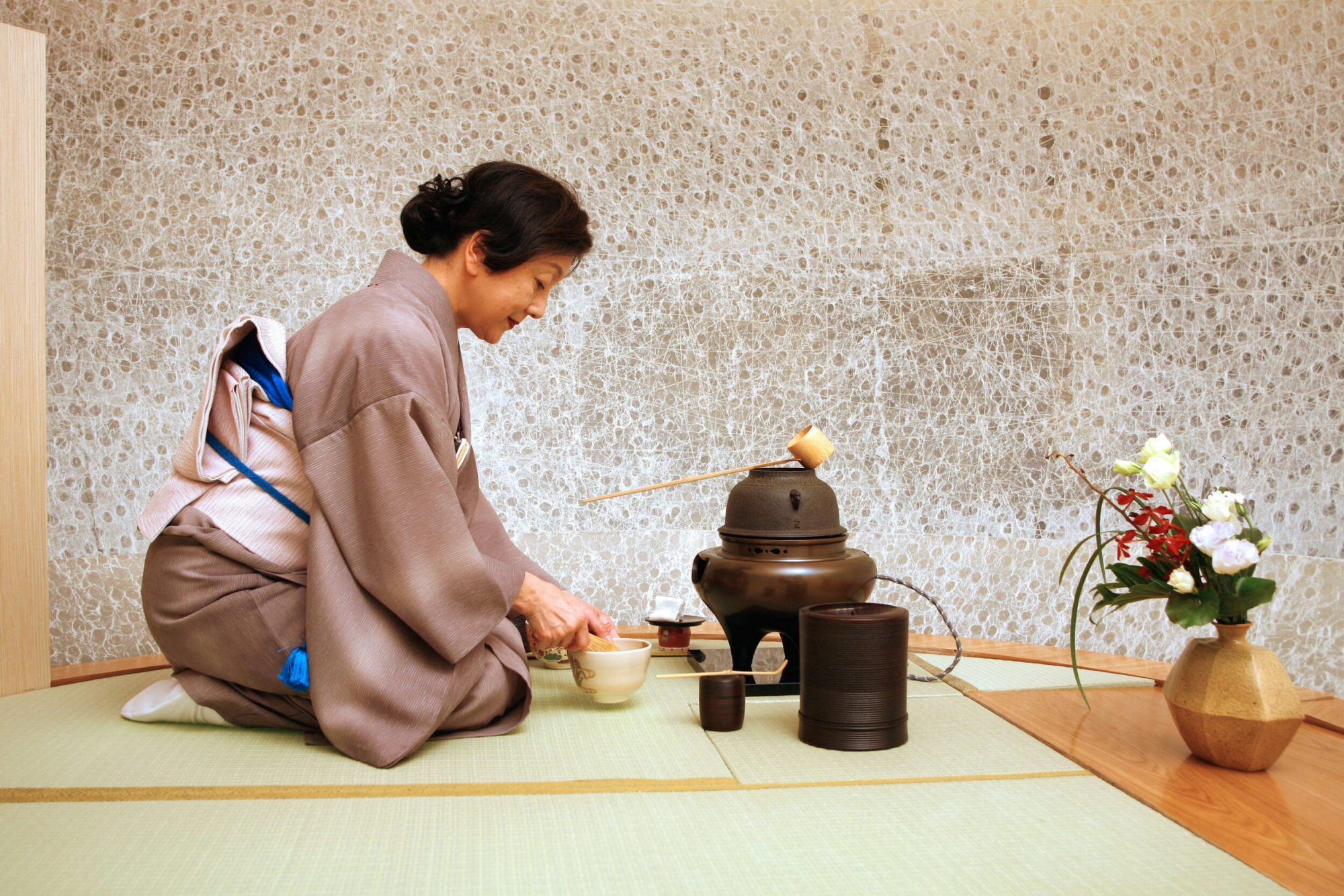
Shigoto is rooted in quality. In the sense given to it by this fascinating culture, quality comes from meditative practice, exemplified by the tea ceremony. Calm and elegant, this simple art takes years to master. You learn to choose utensils and tea, to move with precision and decisiveness, and to contemplate.
Sociologists say that Japanese culture has been changing, with the lifting of lifetime employment and the prevalence of hikikomori — young Japanese who refuse to work — but the basic value is still shigoto. And we still see it in Japanese products. And especially in certain Japanese films, which I think we don’t watch enough of.
The Japanese show us the close connection between service, personhood, and morality. Work as we Filipinos understand it, doesn’t define Japanese culture. What defines it is quality service.
But what is quality? And how does one achieve it in daily life?
Quality is a central and foundational concept in a book that has become a bestseller: Robert Pirsig‘s Zen and the Art of Motorcycle Maintenance. Pirsig seeks to define Quality throughout the book, but says it defies definition in the traditional sense.
Pirsig begins by distinguishing between two types of Quality: Classical and Romantic. Classical Quality pertains to the underlying form or function of a thing; it’s the logical, analytical understanding of how something works. Romantic Quality, on the other hand, relates to the immediate, surface perception of a thing; it’s the intuitive, emotional response to something.
However, as the story progresses, Quality transcends these initial categories to become a metaphysical concept, something beyond the classical and romantic perspectives. Pirsig says that Quality is the “knife edge” of experience, existing before the division into subject and object or observer and observed. He describes it as an event that happens in the present, in response to the environment around us. It’s not something that can be measured or quantified, but rather it’s something to be experienced.
What I found interesting was Pirsig’s insight that Quality, in its most profound sense, is not derived from anything. It’s not a product of the mind or the senses. Instead, Quality is the source of everything. It’s the pre-intellectual awareness, the immediate contact with reality before it’s processed by our conscious and rational mind.
I immediately thought about Aristotle’s (384-322 B.C) act of being.
The Aristotelian concept of act of being is rooted in his metaphysical distinction between potentiality (what he called potentia or dynamis) and actuality (act or energeia).
Let’s break these concepts down to simpler terms:
Potentiality: This refers to what something could potentially be or become. It’s the capacity or possibility within a thing that’s not yet actualized. For example, an acorn has the potentiality to become an oak tree, or a child has the potentiality to become an adult.
Actuality: This refers to the realized state of a thing – when its potentiality has been actualized. When an acorn grows into an oak tree, it has actualized its potentiality. Similarly, when a child grows into an adult, it’s actualizing its potential.
Aristotle’s “Act of Being,” then, refers to the process or state of actualizing potentiality – of becoming what something can become. He saw everything in the universe as being in a state of movement from potentiality to actuality.
To illustrate, consider a block of marble. This block has the potentiality (potentia) to be sculpted into a statue. The artist, through their skill and effort, can actualize this potentiality, turning the block of marble into a statue. This transformation from potentiality to actuality is the Act of Being.
In humans, the Act of Being can be understood in terms of personal growth and development. A person has the potential to learn a new skill, like playing the piano. When they practice and eventually master this skill, they are actualizing this potentiality. The process of learning and mastering the piano – of turning the potentiality into actuality – is their Act of Being.
But the Act of Being is more than just perfecting a skill to actualize a potential. Mastery only brings us farther but never to reach the end. It would seem that this end was not mere potency, but something able to draw us to it. This drawing is “participation”, a concept developed by St. Thomas Aquinas.
St. Thomas Aquinas (1225-1274), a prominent theologian and a student of Aristotelian philosophy, developed a metaphysical framework around the concept of participation in the act of being, to refer to the relationship between God and His creation.
Aquinas viewed God as the ultimate source of existence or being itself. God doesn’t just exist, God is existence. In this sense, God is “Pure Act,” a term Aquinas uses to describe God’s absolute actuality, meaning He is completely and fully actualized, without any potentiality.
Aquinas’ idea of “participation” refers to how creatures, or all created things, share in God’s existence or being. Unlike God who is “Pure Act” and whose essence is to exist, created beings have a received existence, which means their existence is contingent, or dependent, and not necessary.
So, when Aquinas talks about “participation in the act of being,” he means that all creatures, in some way, partake or share in the being of God. The act of being of any creature is a limited, participated form of God’s infinite act of being. In other words, creatures don’t have existence in and of themselves; they derive their existence from God and continue to exist by continually participating in God’s existence.
To make this easier to understand, let’s use an analogy. Imagine the sun as God and its rays as creatures. The sun generates light and heat on its own – it’s the source. The sunrays don’t generate light or heat themselves, but they carry or participate in the sun’s light and heat. Similarly, God is the source of existence, and all created beings participate in this existence.
This view integrates the Aristotelian concept of “act of being” with the Christian theological concept of creation. It provides a philosophical explanation of how creation emerges from and continues to depend on God.
I think it is also what gives the craftsman hope that his practice will lead to further and further improvement. At every stage he participates more in the divine perfection (without ever reaching it). In a way that was hard for Pirsig, or anyone, to describe, you can just feel that some objects are of very high quality. Something in the worker brought this object closer to perfection, and it has nothing to do with the external appearance of the object. Or else, Pirsig would have been able to measure quality.
But because it is felt, not all men feel it. We’re like cups made at different sizes. The bigger ones can capture more, the smaller less, even if they are both full. In other words, an untrained mind cannot put more into itself. Training increases the size, and that’s how a trained man can detect quality where a novice can’t. A trained man knows in an instant that a painting is bad, even one that a less trained man might spend millions to buy.
Nonetheless, Pirsig tries to tell us how to perceive quality right now, enough perhaps to deeply enjoy a beautiful IG photo.
To achieve Quality in one’s life, one must learn to perceive it, to be open to it, and to respond to it. Pirsig suggests that this requires a balance of logic and intuition. On one hand, we must be aware of the underlying structures and mechanisms that make things work (classical). On the other hand, we must be in touch with our immediate, sensory, and emotional experiences (romantic). It’s the dynamic interplay between these two perspectives that allows us to engage with Quality.
The practice of mindfulness is also a way to cultivate the perception of Quality. It would seem that outside events and internal emotions can cloud our vision of quality, hence museums are quiet places. Mindfulness emphasizes direct, unmediated experience, which aligns with Pirsig’s understanding of Quality. The practice of meditation can help one to quiet the rational mind and open up to the direct experience of Quality.
An dedicated, attentive engagement with one’s experiences increases Quality in our life. Activities such as careful craftsmanship, focused and mindful learning, attentive relationships, or meditative practices, and my favorite — exercising without headphones. The key is to be present and responsive to the Quality that emerges in each moment.
Do you have a craft? Love it for its own sake; study, practice, experiment, innovate: these are the path to Quality. Are you a writer? Write 2000 words everyday. To achieve quality you will have to fail. A lot.
Zen and the Art of Motorcycle Maintenance (first edition 1974) is a fictionalized autobiography of the author, Robert Pirsig (1928-2017); it is based on a motorcycle trip he took with his son from Minneapolis to San Francisco in 1968. The narrative is interspersed with philosophical discussions on the author’s ideas about “Quality” and the nature of reality.
The book was born out of personal challenges, including Pirsig’s struggles with mental illness and the dissolution of his first marriage. He sought to make sense of these experiences by delving into the concept of Quality, which he believed could provide a unifying principle for understanding the world and one’s place in it.
Pirsig describes Quality as an undefinable, transcendent characteristic that is inherent in all things, whether it be a piece of art, a well-crafted machine, or a human experience. Quality is not an objective property but rather a subjective experience that arises from the interaction between an observer and the object or event being observed.
What hooked me to the book was an experience I had in 1989. I was with a group of fellow students visiting the Louvre in Paris. We had stopped before a gigantic mural in oil, I recall not what. We were commenting to each other how beautiful it was. Our leader, the playwright Paul Dumol (Ang Paglilitis ni Mang Serapio and other plays), however, dismissed the painting as “decadent”. He didn’t explain why; he just brought us to another painting that was not. It took me another visit to the Louvre 10 years later to understand, or rather experience, Dr. Dumol’s point. When I first picked up Zen in 2003, I remembered this episode again.
For Pirsig argues that people have an innate ability to recognize Quality, even if they cannot explicitly define or describe it. Some people have a greater ability than others; they have more of what we call taste. And, taste is trained.
Although Pirsig did not outline how to acquire taste — I don’t think anyone has clearly come out with a standard protocol — he made it clear to me that the path required understanding. For Pirsig, understanding came in two modes: “classical” and “romantic”.
The classical approach focuses on the underlying structure and function of things. One might call this the science or the engineering of the object or event. The romantic approach, in contrast, emphasizes aesthetics, emotions, and personal experience. One might call this the art side.
For Pirsig, Quality transcends this dichotomy, as it is present in both the technical details and the overall experience of something. Pirsig did not explain so much as illustrate, by showing it takes years of maintaining a motorcycle and traveling on it to reach this point. In the visual arts, our experience is that the Master certifies that the Student has also become a master only after a long apprenticeship, during which the student studied to be a chemist and an artist.
Is one a Master because one has flow? I do not think it is that simple. Experts experience flow where writing is easy and pleasurable, and also experience boredom and despair searching for data and revising text. I know that in anything worth doing, failure is much more common than success; editing takes 10X longer than writing a draft and is 10X more humiliating. People see only the end product. But a few among them can feel what it took to get the product. Pirsig knew why: because they also went through that mess. It takes a master to recognize another.
What Pirsig has given me and his millions of readers is a bridge that connects seemingly disparate aspects of life, technical and rational thought and emotional experience. That bridge is Quality, or better yet, the pursuit of quality through work that is both technically excellent and aesthetically pleasing, and consistently so. Quality unifies, allowing us to achieve a sense of harmony and integration in our lives and in our interactions with the world and people around us.


 jaylazzo