Online interactions and Self Esteem

I came across this interesting article (https://www.choosingtherapy.com/social-media-self-esteem/) as I was trying to find examples of how online interactions reflect self esteem. It seems from this article that, although social media as a cause is difficult to establish, evidence is strong that spending lots of time on it increases the risk for low self esteem.

The part of the article that grabbed my attentions was this:

Research suggests that problematic social media use can notably disrupt the development of healthy self-esteem for some individuals. The “cyber self,” or who you are in a digital context, is an idealized self-concept, allowing for a potential “new you” online.

Youth and many adults spend much time assembling, creating, and experimenting with their “cyber selves” by interacting with others online. These crafted selves rely on a steady flow of carefully curated selfies and feedback.

J. Fortunato, “Social Media and Self-esteem: 8 Possible Impacts”

The author describes a process not very unlike the experience of discovering our comfortable selves when we were teenagers. We experimented, we got feedback. Teenagers have curated their appearance for as long as there were teenagers.

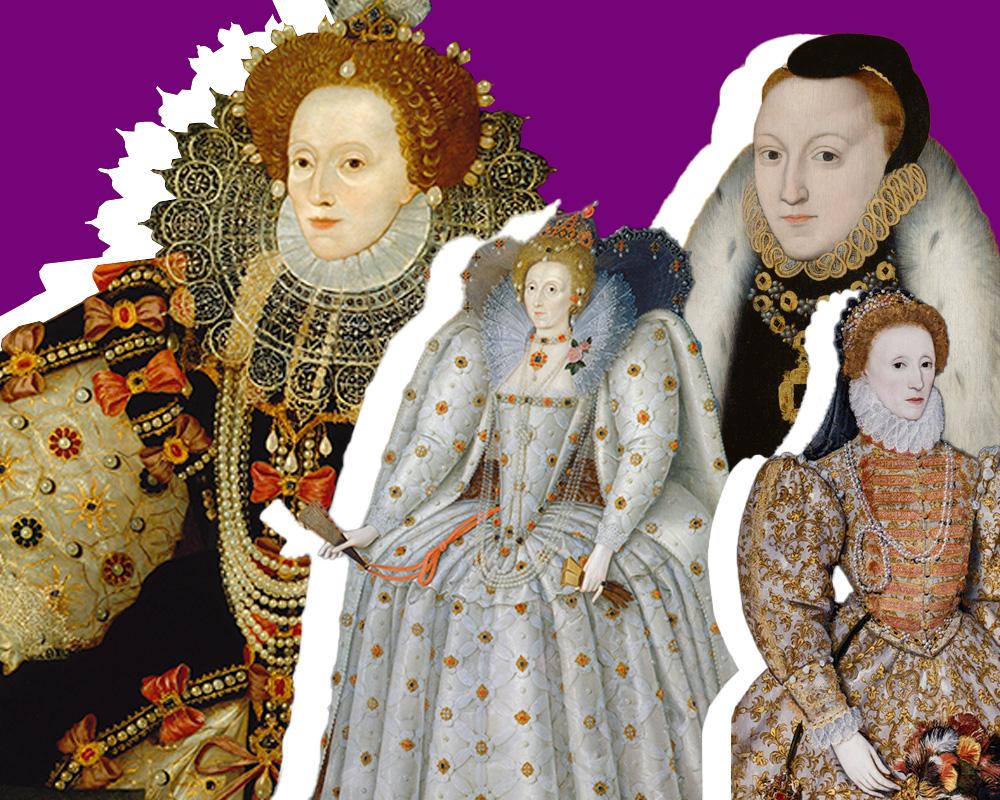
And adults, too. A striking example is Queen Elizabeth I (1533-1603) of England who carefully went over every portrait every made of her, approving only what showed her as young and healthy. The white make-up she used to hide her wrinkles contained lead. Under that thick white paint her skin was crawling with lesions, her teeth were rotting, and her mind was decomposing.

Image: https://images.liverpoolmuseums.org.uk/styles/dynamic_medium/public/2022-05/Queen-Elizabeth-I.jpg

Queen Elizabeth I did things to herself that were dangerous and deadly, in order for her to be remembered in the public eye as young and beautiful. This certainly was the effect on her enemies. Modern Elizabeths on social media do not use lead paint — Photoshop suffices.

Sometimes the person you see in front of you is the person in the photos. Sometimes, it’s not. The more curated pictures that person has, the greater the shock on realizing how different the person really is. Now, is this a problem?

Maybe, maybe not. Like Queen Elizabeth, people have good reasons for projecting an image that’s different from the real thing. She was a clever Queen, and so is every company that has ever advertised itself.

So what about social media will show a person to have low self esteem? Not the pictures, but the words. It takes a skilled writer to hide low self esteem in written works. Some writers are so good that even their low self image is seen by others as an asset, something that makes the writer more human, relatable and charismatic. And then, the caveat: the words that are now permanent reflect a mood that was not. Therefore, it’s not easy to find something in social media, or in any written work, that will clearly point to low self esteem.

As if it mattered. I don’t really care about a person’s self esteem as reflected in social media, or their self esteem in general. Whether their use of social media is making them devalue themselves is something they have to work out themselves. My concern in the matter is whether their interactions with me now are unproductive because they are too toxic.

I’ll end this reflection with words from another British politician Benjamin Disraeli (1804-1881), words that highlight the significance of a consistent, dignified, and professional public image. It discourages public disputes, values discretion, and promotes transparency and honesty. In private, they are the marks of a person one can do good business with.

“Never complain, never explain.”

Attributed to Benjamin Disraeli, British Prime Minister

An article about that motto can be found here: https://en.wikipedia.org/wiki/Never_complain,_never_explain

And as to my own policy about social media? I don’t take selfies.

(Q.C., 240112)

On self-esteem

Is it possible for you to feel OK by interacting with someone you feels is NOT OK? Is it possible to increase one’s sense of worth through dealings with someone who has low self worth?

Yet another thought-provoking and relatable question from our Transactional Analysis course. This is one of the easier ones to answer.

Yes: someone you think who has low esteem can build you up. And I do not answer this merely from the point of view of feeling.

Low self esteem is not a disease. Although there are people we know who are continuously in this mode, I think it’s something that affects everyone sometimes. It is, yes, a feeling, but also the result of beliefs that can be highly dependent on context. Low self esteem is found in the highly talented as well the most mediocre, in rich and in poor. It can be found in people who are professionally highly successful, and whose stories inspire.

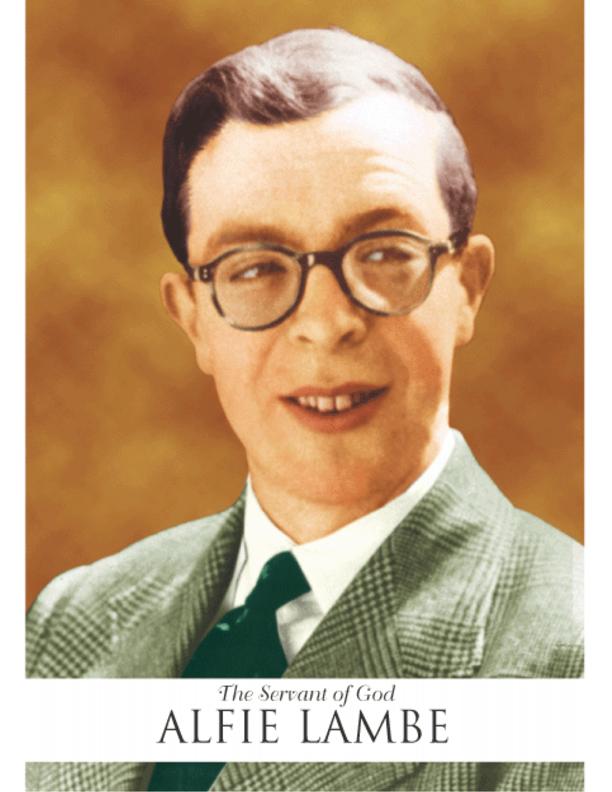
This phenomenon is very clear in the saints. And few are more illustrative than the life of Alphonsus ‘Alfie’ Lambe (1932-1959). Although he is not a canonized saint of the Catholic Church, having reached the first stage which is to be called “Servant of God”, he is considered by many to be the patron of people with low self esteem. A patron saint is often someone associated with a need. In his case we find frustration and poor health, perhaps few friends, but mixed with a great love for God and for men.

Image: https://philadelphiasenatus.org/wp-content/uploads/alfie-lambe001.jpg

This is how the site https://www.thecatholicprofessional.com/patron-saints-series/ describes him:

Servant of God Alfie Lambe was also a member of the Legion of Mary and was an Envoy to South America. He was very disappointed when his ill health prevented him from joining the Irish Congregation of Christian Brothers. However, he found a new calling through the Legion of Mary, serving homeless men at the Morning Star Hostel in Dublin. Despite his health challenges, he became an Envoy of the Legion of Mary and visited schools, leper colonies and prisons in Columbia, Ecuador, Chile, Bolivia, Peru, Uruguay, Brazil and Argentina. He was good with languages and learned Portuguese, Spanish, Quechua (a native language), and even Russian in hopes of traveling there. The ‘el corderito,’ or ‘little lamb’ as he was known, didn’t make it to Russia, dying at the young age of 26 in 1959 after establishing numerous branches of the Legion in multiple countries. Although he didn’t join the order, he is buried in the Christian Brothers Vault, Recoleta Cemetery, Buenos Aires, Argentina. His cause for beatification began in 1978. If you are in a situation where you don’t know what to say or how to say it, ask ‘el corderito’ for help!

Quite average in human talents but extraordinary in achievement, Alfie Lambe reflects the words of St. John the Baptist

“He must increase, and I must decrease.”

John 3: 30

Many saints were failures by our standards: St. John Cupertino, denied entry to three monasteries because of extreme neuroticism, St. Francis Xavier, failed miserably in his dream to catechize East Asia. Some saints were quite loud: like St. Jerome, the second most voluminous writer in Church history after St. Augustine. This is how https://www.wordonfire.org/articles/the-cantankerous-st-jerome/ describes him:

Jerome was known for being a cantankerous fellow. He struggled at times with the virtue of patience, could be overbearing with those who disagreed with him, and had a reputation for being cranky. One commentator on Saint Jerome’s life noted that perhaps Jerome chose to be a hermit, not so much as a heroic act of sacrifice, but because had he not lived alone, he most assuredly would not have been a saint!

St. Camillus de Lellis was a former gambling addict. Others were more “normal”, like St. Philip Neri, patron saint of people who like to laugh and enjoy, and St. Joseph who was Jesus’ dad and taught him carpentry.

Does divorce destroy self esteem? Some saints went through a divorce: St. Fabiola of Rome and St. Gummarus. How about physical abuse? St. Germaine Cousin, born poor and with a terrible physical deformity, was abused by her stepmother all her life.

Yet all of them are heroic in their love for the sick, the poor, and in their love for God. In fact, it seems to be that since they considered themselves as nothing, God was able to fill them with everything. They had no self-esteem of their own, other than what God had placed in their souls.

These are heroic examples. How about the less heroic? In fact, we’re rarely inspired by everything in a person’s life. Even the people we look up to may be horrible in some aspect of their life. My favorite movie character, Michael Corleone, feared Mafia godfather, was a terrible father and husband. Louis Pasteur, real life scientist, was inspiring to microbiologists since the 19th century, but was quite incompetent as an administrator.

I imagine that when you’re a bad administrator your “self-esteem” as an administrator goes down when you’re with excellent managers.

So, self-esteem can be relative. It can be low in a few areas, it can affect many areas. But it may leave out a few where one is an inspiration.

And it can also be that a person never finds his genius. Yet even that is not without worth: the fact that he lived, survived, had kids, had a job no matter how terrible. If he did it, why can’t I?

Any interaction with any person is a gift. Everyone is a universe in himself or herself waiting to be discovered. Perhaps your Grab driver is an awesome father or a math genius. You’ll never know until you make contact with that universe and what it holds.

Most of us are intensely curious as kids. Then work and responsibilities get us so wrapped up in our own concerns that most talk stays at the level of small talk. We may encounter people who find it creepy when others try to get to know them. The pandemic might have made some people more careful, or simply less used to face-to-face interaction.

And some continue to wear their masks. There is little evidence that surgical masks protect one from contracting it; the only reason I see for people to continue wearing them is when they themselves are sick. It’s much the same with self-esteem. If we don’t take the initiative to reveal what we have inside, it makes it a lot harder for others to appreciate our gifts. And so, whether it affects a few or large areas of our life, low self esteem is something we choose.

(Q.C., 240111)

On low self esteem as a vice

A goal of therapy in Transactional Analysis is to achieve an “I’m OK, You’re OK” state. This state describes a relationship where one considers oneself and the other as having worth. By extension, other groups also have worth: I’m OK, You’re OK, They are OK.

This is one of four life positions. In shorthand,

  • I+/U+: I’m OK, You’re OK
  • I+/U-: I’m OK, You’re NOT OK
  • I-/U+: I’m NOT OK, You’re OK
  • I-/U-: I’m NOT OK, You’re NOT OK

Each life position is formed through one’s childhood experiences, particulary through one’s dealings with one’s parents. As one exits childhood, one recalls these interactions and then decides on a life position that becomes like a theme. A child will not often articulate its life position, but most interactions the child will have all the way to adulthood will follow that theme.

A life position is a cognitive habit. Like any habit, it can be changed with some effort, conditioned by other elements of the personality, existing habits and vices, and one’s physiological state.

People who see each other as worthy (I+/U+) deal with each other as equals. Their interactions are free of manipulation and duplicity. They are not afraid of intimacy, or its risks in the form of hurts and disappointments. They express their ideas and debate them freely, even criticizing them in ways that are not taken personally. They express their true feelings without having to hide them with a substitute, more acceptable feeling. They also accept that the relationship might not last, and that permanence isn’t a requirement for entering a relationship in the first place.

People who see each other as worthy do not think it’s necessary that they enter into intimacy. As they are not attached to people, their freedom in this manner is intact. They may engage in rituals and pastimes, such as talking about the weather, feelings, and dreams, without the intimacy proper to friends. These surface exchanges help them gauge whether they would like to be friends and then choose relationships free of manipulation or duplicity.

The I+U+ state, however, is not the life position most people decide upon as they exit childhood. The most common state is “I’m Not OK, You’re OK“, that of the child who knows itself to be dependent (Not OK) on the support of a competent (OK) parent. Many continue to hold on to this life position thinking they are less worthy than others even as adults, leading to relations of dependency and lack of assertiveness, and positions of weakness masked by duplicitous displays of smugness and a contant search for validation. No matter how it may appear on the outside, a pervasive sense of not being worthy cannot be disguised for long.

However, as a child grows especially in a supportive environment, it learns skills and acquires knowledge. The child is able to solve problems using information in the here and now. In other words, without the baggage of memories of its NOT OK’ness. Certainly, the child will be recalling painful memories of its interaction with its parents, but it gradually is able to assign relevance to these memories in the light of present circumstances. The child becomes confident, with little need for strokes as there is no defect in its self esteem that it needs to soothe. Even feelings reminiscent of its Not OK childhood will be expressed or suppressed but under the control of the mature mind.

In other words, a child with proper support can redecide its life position, from “I’m Not OK, You’re OK” to “I’m OK, You’re OK“.

An important goal of therapy is to move people to this state. Aside from the I-/U+ are the I+/U- and the I-/U- positions. All Not OK positions imply at least one person in a relationship is not considered by the other to be worthy. Relationships where people don’t see each other as worthy are marked by duplicitous games and fake feelings. People who engage in games don’t deal with each other as equals, but instead take on roles such Rescuer, Persecutor, or Victim. The essence of a game is that one party in the interaction shifts its role suddenly, e.g., from Rescuer to Persecutor. Intimacy is feared and avoided, and developing true friendships is very difficult.

I said that a child “with proper support”. This implies that ridding oneself of Not OK habits of thought, beliefs, and behaviors could take some time. As with a vice, the feelings associated with feeling less worthy may be the more comfortable option.

Image: https://media.licdn.com/dms/image/C4D12AQHB2VHn_4ImVQ/article-cover_image-shrink_600_2000/0/1520176646848?e=2147483647&v=beta&t=phVTVOlAImv_1PnshALN7qzSeI5W_NsNrHLDjmH4mGA

Some people, for instance, fear happiness. Their “I’m NOT OK” position may be so comfortable and convincing that a show of esteem from another will be most uncomfortable. It is common for people with low esteem to have problems receiving compliments, for example. They may engage in validation-seeking behaviors to soothe the pain of not feeling worthy, and can spend years within abusive relationships that at least keep them in their comfort zone of NOT OK.

I found a clip on Youtube where this guy described a date he had with two girl buddies. The girls were both gorgeous and dressed about the same. One of them, however, became the object of numerous inappropriate advances by other men in the bar, while the other was not approached by anyone in that manner. Our guy reflected on why one of his friends was approached but not the other. He concluded that the first girl was subconsciously communicating her need for validation through her demeanor, tone of voice. The other girl had no need for validation and exuded an air of “I’m not to be messed with,” and so no one dared. People who are hungry for validation are perceived as “easy”, often in the bad sense of the word, while those who have no need for validation attract others who don’t need it either.

Is it a person’s fault that he or she attracts disrespect? Perhaps a person in his or her 20’s might be excused, but not one who’s older. Unless a person is mentally challenged, under the influence of drugs, or otherwise forced, behavior is almost always the result of a conscious choice even if we understand that behaving in the right way for someone not used to it can be extremely difficult.

And what choice is involved? Whether or not to give in to memories and feelings.

(Q.C. 230830)

Is low self-esteem dangerous?

Is our society largely driven by people’s futile attempts to gain a sense of worth from other people?

“Insecurity breeds treachery: if you’re kind to people who hate themselves, they’ll love you, but they’ll betray you, too.” – Eleanor Roosevelt

Eleanor Roosevelt (1884-1962)

The idea that many of the problems in the world are driven by people with low self-esteem is a concept that has been discussed and proposed by various psychologists and authors over the years.

The concept suggests that individuals with low self-esteem may engage in various problematic behaviors or attitudes as a way to compensate for their feelings of inadequacy. These behaviors can range from seeking power and control over others to engaging in aggressive or harmful actions to boost their self-esteem. However, it’s important to note that this is a simplified perspective, and the relationship between self-esteem and behavior is complex and multifaceted.

Psychologists like Nathaniel Branden (1930-2014) and Albert Ellis (1913-2007) have written extensively about the role of self-esteem in human behavior and well-being, and they have discussed how low self-esteem can contribute to various personal and societal problems. Additionally, self-help authors and motivational speakers often address this idea as part of their work on personal development and self-improvement.

There is ongoing debate within the field of psychology about the precise nature and influence of self-esteem on behavior and societal issues. It may be easier to see how this plays out in individuals.

Adolf Hitler (1885-1949) is a case in point.

Hitler’s meteoric and ultimately tragic rise to power and leadership of Nazi Germany in the first half of the 20th century is a complex historical event influenced by a myriad of factors. Did he have low self esteem?

There is no definitive evidence to conclusively prove it. Some historians and scholars who have analyzed his behavior and background suggest that he may have exhibited signs of insecurity. Here are some points that have been raised in discussions about Hitler’s self-esteem:

  1. Early life and rejection: Hitler faced several significant rejections and failures in his early life. He twice failed to gain admission to the Academy of Fine Arts Vienna, which was a source of frustration and disappointment for him. These early setbacks could have contributed to feelings of inadequacy.
  2. Ruthlessness and need for control: Some argue that Hitler’s extreme ruthlessness, desire for control, and obsession with power could be indicative of compensatory behavior rooted in insecurity. The need to exert dominance and control over others can sometimes stem from underlying feelings of vulnerability.
  3. Narcissistic traits: Some psychologists have suggested that Hitler exhibited traits associated with narcissistic personality disorder. Narcissism often involves a fragile self-esteem masked by grandiosity and a need for admiration.
  4. Fear of betrayal: Hitler’s regime was characterized by extreme paranoia, with frequent purges and executions of those he perceived as disloyal. This fear of betrayal and the need to eliminate potential rivals may be seen as signs of insecurity.
  5. Body language and expressions: Analyzing historical footage and photographs, some experts have attempted to discern signs of low self-esteem in Hitler’s body language, facial expressions, and posture. However, such analyses are subjective and speculative.
  6. Psychohistorical interpretations: Psychohistorians, a controversial field within history and psychology, have attempted to analyze Hitler’s behavior through a psychological lens. These interpretations often rely on conjecture.

Making psychological diagnoses posthumously is challenging and speculative. Hitler’s life and actions are better understood through the extensive historical record of his speeches, writings, and the actions of the Nazi regime. The question of his psychology remains a subject of debate and speculation rather than a matter of established fact.

But did his hatred of the Jews reveal his own insecurity? Feelings of hatred or hostility towards large groups of people can be rooted in various factors and motivations. However, while low self-esteem can sometimes contribute to negative attitudes or prejudices, it’s not the sole determinant.

Thus, whether Hitler had low self-esteem or not, his path to leadership was not solely determined by his personal psychology. Here are some key factors that contributed to Hitler’s rise:

  1. Political Climate: Germany was in a state of political turmoil in the aftermath of World War I. The Treaty of Versailles imposed heavy economic and territorial burdens on the country, leading to widespread discontent and a longing for a strong leader who could restore national pride.
  2. Economic Crisis: The Great Depression of the 1930s hit Germany hard, resulting in mass unemployment and economic suffering. People were desperate for solutions, and this desperation fueled support for extremist parties like the Nazis. Critical to his success was the support of the Army and of powerful industrialists.
  3. Political Skill: Hitler was a skilled orator and propagandist. His ability to rally crowds and communicate effectively helped him gain a following. He knew how to tap into the fears and desires of the German people, promising to restore their nation’s greatness.
  4. Use of Propaganda: The Nazi Party employed extensive propaganda campaigns that included the use of newspapers, radio, and mass rallies. This propaganda effectively spread their ideologies and swayed public opinion.
  5. Weak Opposition: The political opposition in Germany was fragmented and often failed to unite against the Nazi Party. This disarray allowed Hitler to come to power through legal means.
  6. Manipulation of Legal System: Once in power, Hitler and the Nazi Party exploited the legal and political systems to consolidate their control. The Reichstag Fire in 1933, for example, was used as a pretext to pass the Reichstag Fire Decree, which allowed the Nazis to arrest political opponents and curtail civil liberties.
  7. Repression and Fear: Hitler’s regime used intimidation, violence, and persecution to suppress dissent and opposition. Many Germans were afraid to speak out against the regime for fear of retribution.
  8. Nationalism and Racial Ideology: Hitler’s extreme nationalist and racist ideology resonated with some segments of the population. He promoted the idea of a racially pure Aryan state and blamed various groups, such as Jews and Communists, for Germany’s problems.

Thus, while Hitler’s personal psychology may have played a role in his leadership style, the broader context of historical, economic, and political factors was instrumental in his rise to power. His ability to exploit these circumstances and the weaknesses of the Weimar Republic allowed him to become the dictator of Nazi Germany.

Nonetheless, low self-esteem, though often seen as a negative trait, however, might drive success in some individuals. Here’s how insecurity can potentially fuel success:

  1. Desire for Improvement: Insecure individuals may have a strong desire to prove themselves and overcome their self-perceived limitations. This drive to improve and excel can push them to work harder and strive for success in their chosen fields. On the other hand, if their low self esteem extends to others — “I’m surrounded by idiots” said Scar in the Lion King –, it can cause them to abuse other people or resort to dishonest means to get ahead. Sociopaths are like this.
  2. Fear of Failure: Fear of failure can be a powerful motivator. Insecure individuals may fear the consequences of not succeeding, and this fear can push them to put in extra effort, be more cautious, and pay attention to detail in their endeavors. It can also cause them to break down if they failed.
  3. Competitiveness: Insecurity can fuel a competitive spirit. Some insecure individuals might constantly compare themselves to others and feel the need to outperform their peers. This competitive drive can lead to higher levels of achievement. It can also lead to unethical behavior, such as the numerous data fabrication allegations that are now plaguing some well-published scientists in the US.
  4. Constant Self-Reflection: Insecure individuals may engage in continuous self-reflection and self-evaluation. While this can be mentally taxing, it can also lead to a deeper understanding of one’s strengths and weaknesses, ultimately helping in personal and professional development. It can also lead to a rupture with reality if one focuses only on a few traits one has, and usually the negative ones.
  5. Resilience: Insecure individuals may develop a high degree of resilience because they are accustomed to facing self-doubt and criticism. This resilience can be a valuable asset in handling setbacks and persevering through challenges.
  6. Seeking Validation: Some insecure individuals may seek external validation to compensate for their internal doubts. While this isn’t necessarily healthy, it can lead them to achieve recognition and success in their pursuits as they strive for external affirmation. But if one only felt good when others paid attention or said nice things and then felt bad otherwise, then what would it feel like when one was not longer doing the things people pay attention to?
  7. Overcoming Adversity: Insecure individuals may have a history of facing adversity or obstacles. This can build character and provide them with the determination to succeed against the odds. It may be, however, that some whom we admire for their calm and relentless lock themselves in their rooms at the end of the day feeling numb.

It may be the case that much progress has been driven by fear and insecurity, also by courage and perseverance. In any case, by ordinary people doing extraordinary things.

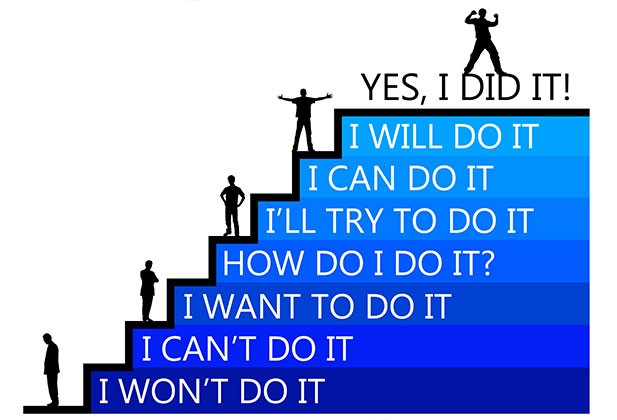
Image: https://blogs.glowscotland.org.uk/glowblogs/public/kaylansjourneythroughuni/uploads/sites/3016/2015/11/self-esteem-1.jpg

I think that everyone has at least one corner of the soul where he or she is not the confident Master, but the scared Child. Perhaps the successful people we know have learned either to silence that Child or have penetrated into its fears to convert them into creative possibilities.

“Great is the human who has not lost his childlike heart”.

Mencius (372-289 B.C.)

It’s too much to ask that everyone feel good about themselves at all times. Even those who have achieved something in life and felt they could just sit back may find themselves living a renewed life by going back to their inner Child.

(Cebu, 230904)