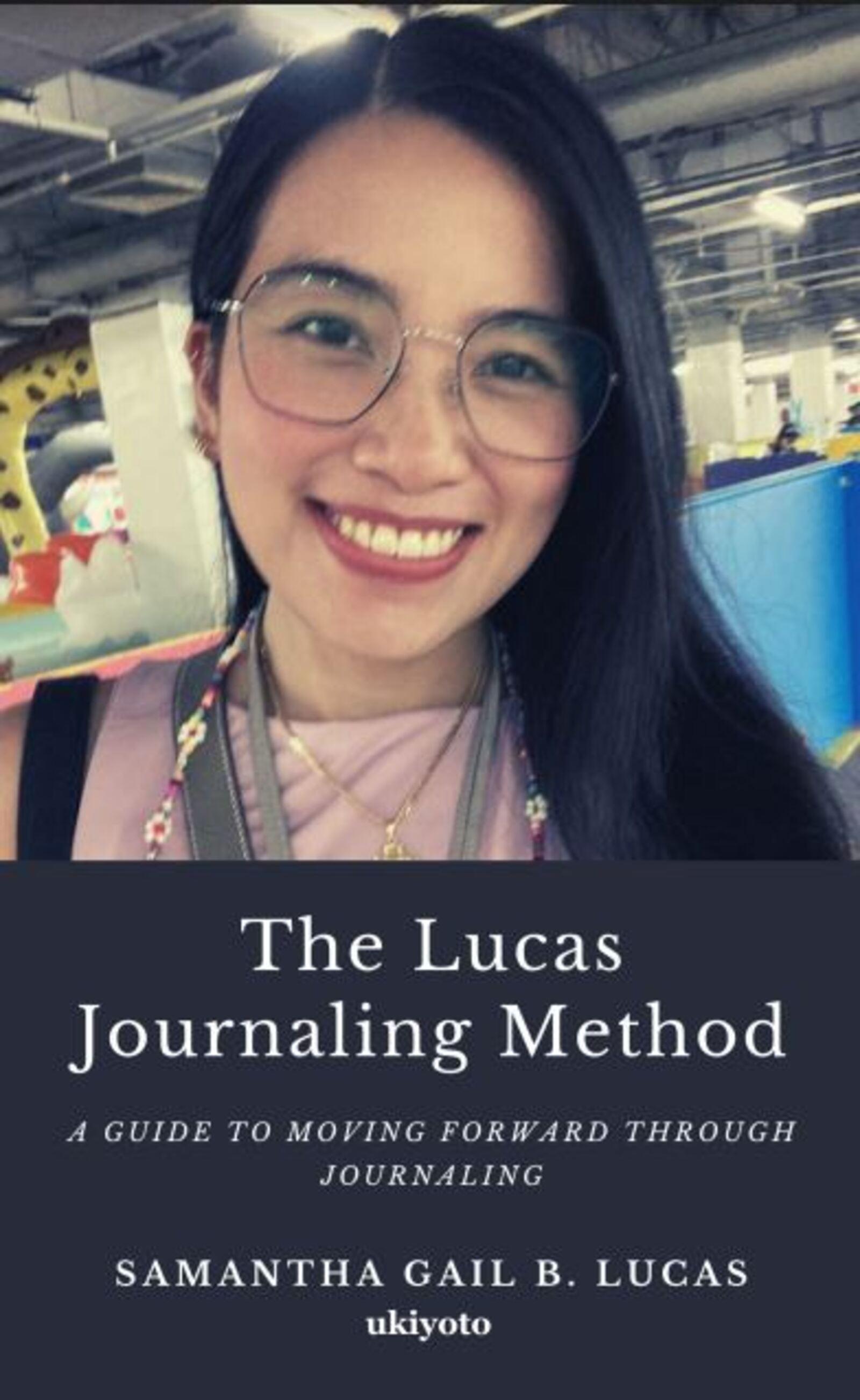
I attended at a series of talks yesterday at the World Trade Center on How to Write a Book. Each of the three speakers — Samantha Lucas, Kat Olana, and Anthony Shieh — talked about how they jumpstarted their writing careers through self-publishing. They offered insights on the opportunities and pitfalls, and encouraged aspiring writers to believe in their own message.

A self-published author is an entrepreneur. He or she makes the product, the book, and sells it. They might go door-to-door, but more than that, they use processes to identify their specific target audience, make them aware of and interested in the book, convert that interest to sales, and win loyal followers who will tell others to buy the book.
Writing, therefore, is much more than putting words into paper. It is a profession, different from regular jobs because it needs a lot of expertise in multiple skills, and education in and out of school.
Where do writers get their education? Shieh, Lucas, and Olan are college graduates. They then spent more than 10 years in marketing, advertising, sales and content generation for various companies. At the same time they worked on their own writing — Shieh on human interest and horror stories, Olan on sci-fi, and Lucas on self-help. They attended talks, workshops, and joined communities to sharpen their knowledge and skills in research, writing and editing.
They also found Central Books. Why was this important? Because, aside from publishing and marketing textbooks in the traditional manner, Central Books also provides production services such as editing, formatting, and printing for self-published authors. After they produce the book, the authors themselves sell it. This requires a totally different set of skills. We’re talking metrics, demographics, analytics, cold calls, optimizing search engines and platforms such as Facebook, Twitter, Tik Tok, Google, and Instagram.
Olan, a trained marketing professional, outlined a strategy that templates the process of marketing a book. The process consists of three steps: Know the Magic, Know the Reader, and Connect Those Two.
1. Know the Magic: This is the key step where the author articulates his or her Big Idea. What is your book about? Answer that in 2 or 3 sentences. What is your book’s Unique Selling Point, what makes it different from similar books? What are the events, characters, facts that make the story believable? What is your branding? We talk about color palettes, fonts, tonality, imagery. In short, why is the book worth buying?
2. Know the Reader: Authors write for a specific reader, so well defined one could describe him or her down to her shoes. You can’t sell to everyone; in fact, try to do that and you won’t sell. Testing that niche is a process of trial-and-error backed by calculated assessments of metrics. The author knows about the audience’s demographics: age, gender, where they live. The author knows their psychographics: hopes, dreams, fears, beliefs, likes, passions, hobbies. The audience’s attitude towards books, where and how they buy, in what platforms do they search, these an author researches.
3. Connect the Two. Olan presented a model called the “marketing funnel” (see below). It consists of 4 stages: Awareness (I learned about your book); Consideration (I’m interested); Conversion (I bought it); and Loyalty and Advocacy (I’ll recommend it). It’s a funnel, because out of 100 who are aware, 30 will check it out, 10 will buy, and 3 will tell their friends to buy it. The big insight is that those 3 friends? They’ll sell the book better than you will. Also, the funnel phenomenon means a writer must be constantly marketing and selling if he or she wants to sell a lot. The author will attend events: book launches, online and on-ground, partner with influencers, pen deals with bookstores. The author will see peaks and troughs in sales as with any business, and will monitor what readers are saying on social media. The author has about 2 or 3 years to maximize the book’s appeal, after which the product fizzles.

The speakers made it very clear that writing is just half the work; producing and marketing a book costs time and money.
The problem is: most writers don’t know this. Even if they did, such as our three successful writers, they must still take risks. That’s the nature of business. In fact, they all described themselves at some stage like standing at the edge of a cliff. Yet they insist: just jump. That’s when things really happen!
It’s not all flying and colors and what. The speakers did not talk much about their personal down moments. But their advice to find influencers who can sell the books better than they do, their insistence on never editing your own work, and their surprise at the kind of people who buy their work, indicate that they paid their dues in blood and sweat along the way.
To me, it seems that writing and selling gets easier as one learns to read the right metrics and click the right icons to increase the chances of selling the product. The risks themselves, however, are always there. A writer who has been through this will know that their belief in their own message gives them the clarity and determination needed to navigate the risks. As one of my favorite authors wrote, in a different context:
Those who hesitated at the moment of trial, who did not act with clarity and determination when the moments of crisis were upon them, deserved the limitations to which their fears committed them.
Robert Ludlum (1927-2001)
The more tries, the more sales. The more rejections, the more sales. The more fear, the more sales. Just believe in your work, all this throwing to the wind becomes just a thing you have to do.
So, to the question “Have I taken enough risks”, I echo the sentiment of those three writers and answer with another question: “Have I jumped off a cliff today?”
(Q.C. 230604)


 jaylazzo